
Samsung Patents a Camera That Turns Your Viewfinder Sketches Into AI Photos
Samsung is patenting a camera mode where you draw on the live viewfinder with your finger, and the phone uses that sketch to generate an AI-edited photo the moment you press the shutter.
What Samsung's sketch-to-photo camera system actually does
Imagine pointing your phone at a park bench, drawing a quick scribble of a dog on the live screen, and having the camera automatically turn that sketch into a finished photo with a real-looking dog sitting right where you drew it.
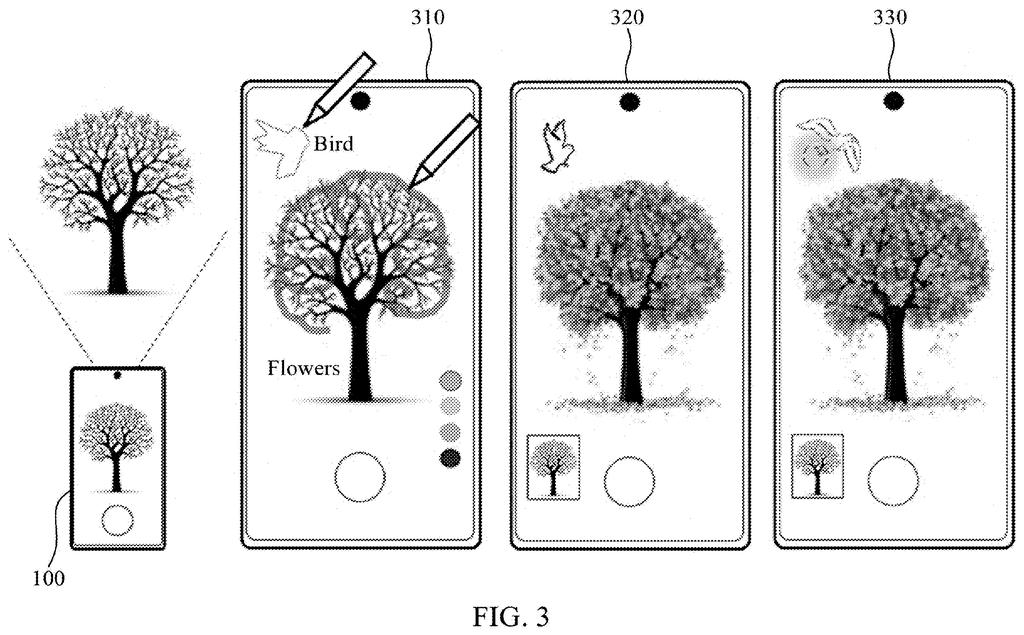
That's the core idea in this Samsung patent. You interact with the live preview on your screen, the phone's AI reads your input and builds a graphic object (a sort of visual placeholder), and when you tap to take the shot, the final image merges your actual photo with whatever the AI generated from your drawing.
It's essentially a two-step creative tool built directly into the camera app: first you direct the scene, then you shoot it. No editing apps, no post-processing menus, no hunting through filters after the fact.
… generate at least one artificial intelligence (AI) graphic object based on at least a portion of the first user input, display the at least one AI graphic object on the preview image …
Translation: The device turns your on-screen sketches into AI-generated graphics right inside the live camera viewfinder.
How the device converts a finger drawing into an AI image
The patent describes a device with a standard image sensor and a touchscreen display that works as both viewfinder and input surface. The system breaks the photo-taking process into two distinct user inputs.
First input: The user interacts with the live preview, such as drawing on the screen, tapping an area, or making a gesture. The device's AI reads that input and generates at least one AI graphic object, a computer-generated visual element placed on top of the preview image so you can see exactly where and how it will appear.
Second input: The user takes the actual photo (pressing the shutter). The device then combines the captured image with the AI graphic object to produce a finished AI image, the two elements merged into one output.
The claim is intentionally broad about what the "first user input" can be, which means the system could accommodate anything from a freehand sketch to a tap-to-select gesture. The patent also doesn't lock down a single AI model, leaving room for on-device generation, cloud processing, or a mix of both. The key architectural detail is that the AI object is previewed before the shutter fires, so the user can see and adjust the result before committing to a shot.
… generate an AI image based on an image captured in response to a second user input and at least a portion of the at least one AI graphic object …
Translation: When you snap a photo, it combines your real picture with your sketches to create a finished AI image.
What this means for everyday phone photography
For the person holding the phone, the payoff is control that happens in the moment rather than after the fact. Today, adding AI elements to a photo means shooting first and editing later, usually in a separate app. If this system ships in a Galaxy camera app, you would see the AI addition while you're still composing the shot, letting you reframe, re-draw, or back out entirely before anything is saved.
The practical gap this fills is the mismatch between what you pictured when you took the photo and what you actually got. Samsung's AI image filing sits alongside a steady stream of camera and on-device AI patents in the latest Big Tech patents space, where phone makers are racing to embed generative tools into the shooting moment rather than the editing workflow.
The part of this that will actually matter to users is the live-preview step: seeing the AI object sitting on top of the viewfinder before you shoot changes the creative loop in a real way, because you can fix a bad result without wasting a shot. Most AI photo tools today are undo-and-redo tools; this one is designed to be a pre-shoot compositing tool. Whether Samsung can make that feel fast and natural on a phone screen, rather than clunky and laggy, will determine if anyone uses it beyond the demo video.
There are more where this came from
We read every patent application Big Tech publishes and send you the ones worth knowing. Plain English, free, every week.
The drawings
11 drawing sheets from US 2026/0237123 A1 · click any drawing to enlarge


Want this weekly breakdown for a company we don't cover? Patentlyze Pro →
Be the first to weigh in