
IBM Patents a Snake Robot That Drills Curved Holes With Electrochemistry
Drilling a curved hole through metal sounds like something out of a spy gadget catalog — but IBM has filed a patent for exactly that, using a snake-like robot and chemistry instead of brute mechanical force.
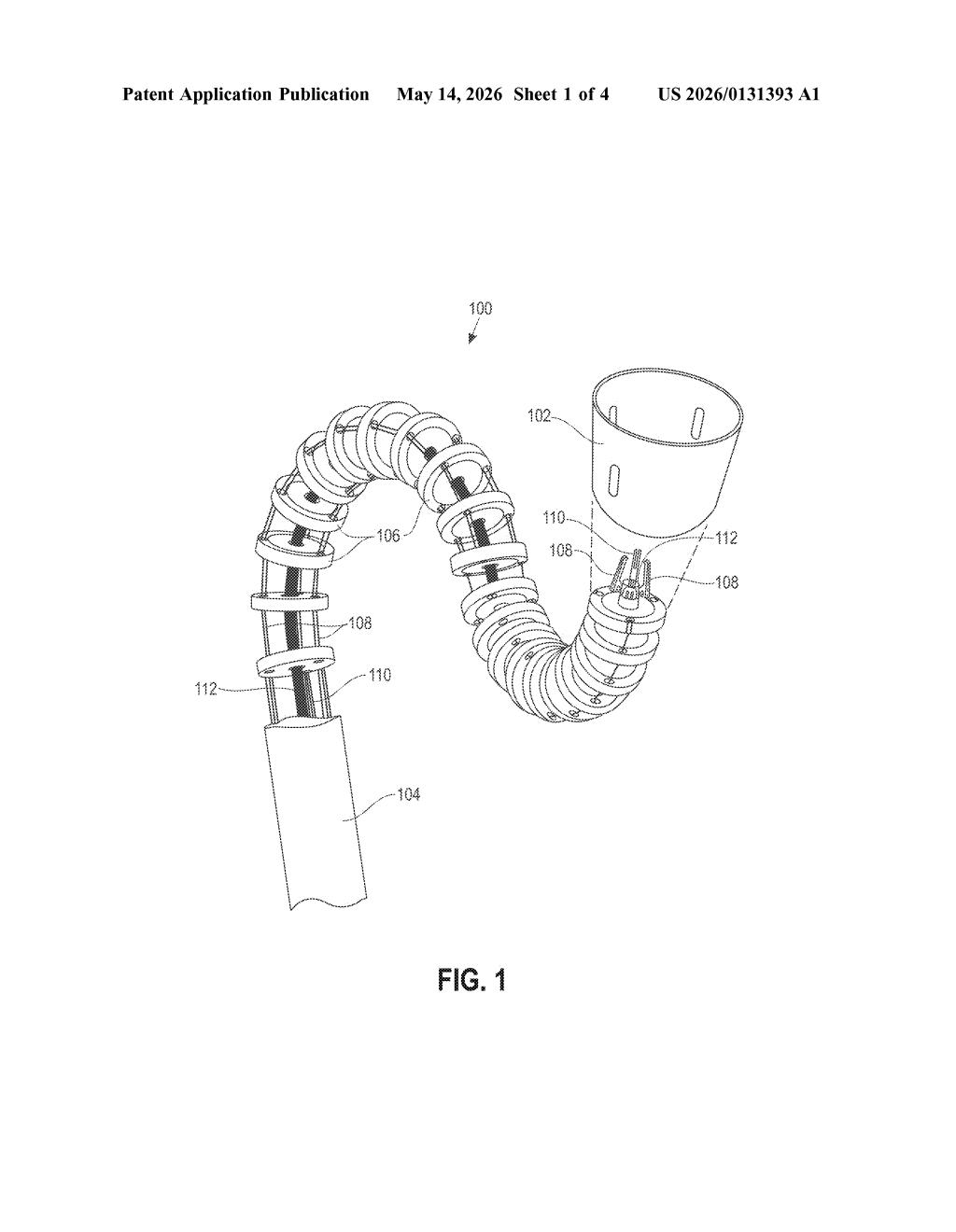
What IBM's snake robot ECM drill actually does
Imagine you need to drill a hole through a solid metal part — but it can't be straight. Maybe you're routing a cooling channel inside an aircraft engine component, or threading a passage through a complex industrial part with no straight-line access. Normal drill bits can't bend. This is a real engineering headache.
IBM's solution is a flexible snake robot tipped with an electrochemical machining (ECM) drill head. Instead of grinding through metal with a spinning bit, ECM dissolves the metal using an electrical charge and a liquid chemical — so there's no heat buildup, no mechanical stress, and the robot can bend its way through curved paths that rigid drills can't follow.
The robot carries internal tubes (conduits) that pipe the chemical solution to the drill tip and suck debris back out, keeping the process clean as it goes. A layer of insulating material wraps the outside so only the tip does the cutting — not the sides of the robot as it snakes through the hole.
How the snake robot steers, dissolves, and cleans as it cuts
The apparatus has three main components working together:
- ECM drill head — attached to the front of the snake robot, this is where metal removal actually happens. ECM works by running electrical current through an electrolyte solution (a conductive liquid) between the tool and the workpiece, dissolving metal atoms without any physical contact or cutting force.
- Snake robot body — a flexible, segmented robot that can steer and bend as it advances into the workpiece. A movement control assembly handles articulation, allowing the robot to navigate curved trajectories rather than drilling in a fixed straight line.
- Internal conduit system — multiple tubes run the length of the robot's body. One delivers fresh electrolyte to the drill head; another carries dissolved metal debris back out. This closed-loop fluid management keeps the cutting zone clear and the chemistry active.
The entire robot body is wrapped in an insulative material — essentially an electrical insulator — so that the electrochemical reaction is confined to the drill head tip. Without that insulation, current could leak along the robot's body and erode metal in unintended spots as the robot travels through the hole it's creating.
The result is a system that can machine non-linear, curved drill holes through solid workpieces — something conventional rigid drill bits physically cannot do.
What curved ECM drilling means for precision manufacturing
Curved internal channels are extremely valuable in high-precision manufacturing — think turbine blade cooling passages, complex hydraulic manifolds, or medical implant components where a straight-line approach is geometrically impossible. Today, engineers work around this with multi-part assemblies or expensive multi-axis CNC setups. A single snake robot that navigates and dissolves its own path could simplify that considerably.
ECM itself is already well-regarded in aerospace and defense manufacturing because it leaves no heat-affected zones and no mechanical stress in the surrounding material — both of which matter enormously in safety-critical metal parts. Combining ECM with a steerable robotic platform extends that advantage to geometries that were previously off-limits.
This is a genuinely clever piece of manufacturing engineering, not a software patent dressed up in hardware clothing. IBM isn't a major player in industrial robotics or precision machining today, but the underlying concept — snake robot plus ECM plus insulated body plus integrated fluid conduits — is clean and coherent. Whether IBM pursues this commercially or licenses it into aerospace or medical manufacturing supply chains is the real question worth watching.
There are more where this came from
We read every patent application Big Tech publishes and send you the ones worth knowing. Plain English, free, every week.
Want this weekly breakdown for a company we don't cover? Patentlyze Pro →