
Meta Patent Uses Skin Contact to Enable Data Transfer in Smart Eyewear
Meta is exploring a way to let your eyewear communicate with other devices by using your own body as the wire. No Bluetooth handshake, no radio signal bouncing through the air, just a tiny electrical signal running along your skin.
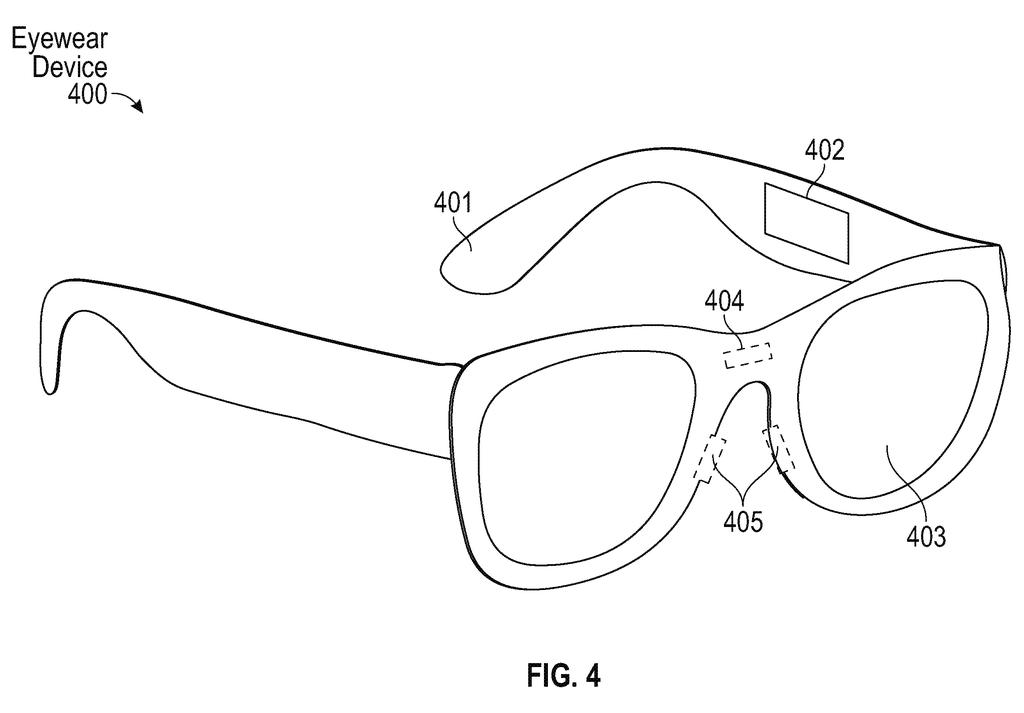
What Meta's body-as-a-wire glasses actually do
Ever touched a key fob to a car door and felt nothing but a click? That same basic idea, of sending a small signal through contact, is what Meta is applying to glasses.
This patent describes eyewear with two small electrodes built in, one that rests against your skin and one positioned elsewhere on the frame. Together they let the glasses pass data signals through your body to another device you're wearing or holding. Your body acts like a low-power wire connecting your gadgets.
The practical payoff is that two devices you're wearing could share information without needing a wireless radio link between them. That matters because radio signals burn battery life and can interfere with each other. A signal running along your skin uses far less energy and stays completely private, nobody nearby can intercept it.
… a first electrode electrically coupled to the HBC controller and arranged to contact skin of a user when the user wears the device …
Translation: A sensor touches your skin to send signals through your body.
How the HBC electrodes route signals through skin
The patent describes a Human Body Communication (HBC) system built into a pair of electronic glasses. HBC is a decades-old research concept that treats the human body as a conductor, a weak electrical signal placed on the skin at one point can be detected at another point on the body, much like a wire carries current.
The device at the center of the patent has three core parts:
- An HBC controller, the chip that generates and reads the signals
- A first electrode that physically contacts the wearer's skin (likely at the nose bridge or temple)
- A second electrode that completes the circuit from elsewhere on the frame
By coupling two electrodes to the same controller, the glasses can both send and receive data across the body. A smartwatch on your wrist, a ring on your finger, or a phone in your hand could all theoretically be on the same HBC loop.
The signal frequencies used in HBC (typically in the kilohertz to low megahertz range) pass through the body's tissues rather than radiating outward into the air, which is why the link is considered inherently short-range and physically private.
A device of the subject technology includes a human body communication (HBC) controller and a first electrode electrically coupled to the HBC controller …
Translation: The invention uses body communication hardware connected to a skin sensor.
What this means for AR glasses and wearable pairing
For anyone building or buying AR glasses, the hardest unsolved problem is battery life. Every radio transmitter, Bluetooth, Wi-Fi, UWB, draws power continuously to maintain a connection. HBC offloads some of that burden to a signal path that costs a fraction of the energy, which could mean a few extra hours of use on a single charge. It also simplifies pairing: if your glasses and your phone are touching you simultaneously, they're automatically on the same network.
The privacy angle is underrated here. Because the signal travels through your body rather than through the air, it physically cannot be picked up by a nearby device that isn't touching you. Meta has been filing steadily in the AR and wearables space, and this patent sits alongside a broader wave of new Big Tech patents targeting low-power connectivity for glasses, rings, and other body-worn devices.
Meta's 52nd filing we've tracked since May in our smart glasses watchlist, this follows one on a dedicated security chip and another on circuits inside clear lenses.
Short-range wireless signals are one of the biggest reasons wearable gadgets drain their batteries so fast, and anyone who has struggled to keep glasses, a watch, and a phone talking to each other knows how annoying that gets.
Scientists have spent over twenty years studying how to send those signals through your body itself, the way a small current travels across your skin, rather than through the air. The basic science is solid enough to trust.
Meta's patent covers just a control chip and two small contact points on a pair of glasses, which is a deliberately simple claim. That simplicity is the point. It means Meta is planting a flag on this whole approach, one that could meaningfully cut battery use and connection headaches across every device a person wears at once.
There are more where this came from
We read every patent application Big Tech publishes and send you the ones worth knowing. Plain English, free, every week.
The drawings
16 drawing sheets from US 2026/0244025 A1 · click any drawing to enlarge


Want this weekly breakdown for a company we don't cover? Patentlyze Pro →
Be the first to weigh in