
Qualcomm Patents a Frame-Timing Buffer to Smooth Cloud-Powered AR Headsets
When an AR headset outsources its graphics work to a nearby server, tiny network delays can make frames arrive at the wrong moment, turning smooth video into a stuttering mess. Qualcomm has patented a way to hold each frame in a buffer for exactly the right amount of time before showing it.
What Qualcomm's XR frame-timing trick actually fixes
A gamer wearing a wireless AR headset glances across a virtual battlefield, and every frame of that world is being rendered by a server a few milliseconds away. That hand-off is fast, but the network is never perfectly steady.
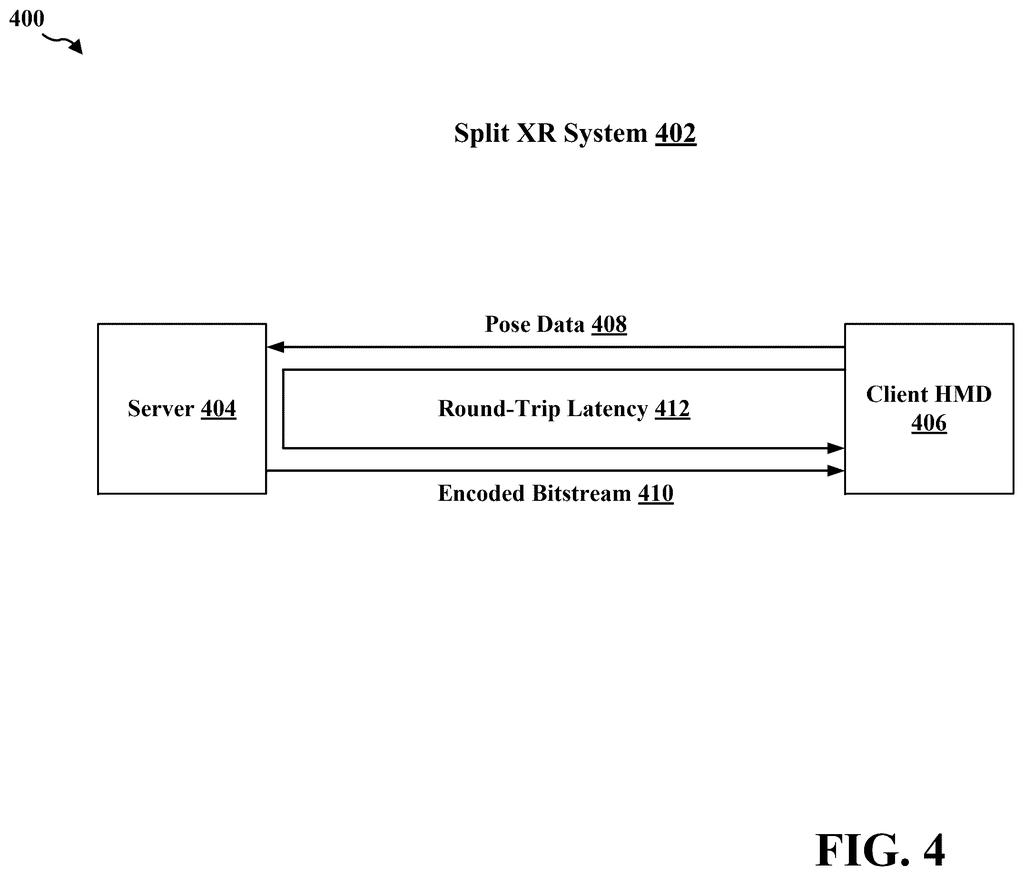
Qualcomm's patent describes a system that gives each arriving frame a short, calculated pause before it appears on your screen. Instead of showing frames the instant they land, the device waits for a specific window of time tied to how long data normally takes to make a round trip between your headset and the server. The idea is that if you know roughly how long the network takes, you can hold frames until they arrive in a predictable order, rather than letting early frames jump ahead or late ones create gaps.
The result, in theory, is a display that feels steady even when the wireless connection hiccups. For split rendering, where the heavy graphics work lives in the cloud and only the finished image travels to the headset, that steadiness is the whole game.
… calculate a wait time for the frame based on a target round-trip time (TRTT) of data associated with the frame, wherein the TRTT is a target time the data associated with the frame takes to travel between the client device and the server and back to the client device …
Translation: The headset calculates how long to pause a frame based on the expected time for data to travel to the server and back.
How the TRTT wait-time calculation works
The patent centers on a technique called a de-jitter buffer, a holding area for incoming video frames that smooths out the uneven gaps caused by network variability.
The key ingredient is the Target Round-Trip Time (TRTT): a pre-set estimate of how many milliseconds data takes to leave the client device, reach the server, and come back. Using that target, the processor calculates a wait time for each frame. When a frame arrives, instead of displaying it immediately, the system holds it until that wait time expires.
- Split rendering context: The graphics pipeline is divided between a remote server (which handles the expensive rendering work) and the local headset (which handles display and user input).
- Wait-time calculation: The buffer computes a per-frame delay based on the TRTT, so frames that arrive early are held back and frames that arrive on a consistent schedule flow through at the right cadence.
- Output trigger: The frame is released to the display only when the calculated wait time expires, not before.
The claim is written around a processor-and-memory apparatus, meaning the logic could live on a dedicated chip, a system-on-chip, or inside a software stack on the device.
This disclosure provides systems, devices, apparatus, and methods, including computer programs encoded on storage media, for a target round-trip time-based de-jitter buffer for split extended reality.
Translation: Qualcomm is patenting a way to smooth out video glitches in headsets that rely on cloud computing to render images.
What this means for wireless AR and VR glasses
Split rendering is the architecture that makes lightweight wireless AR and VR headsets possible: the headset stays thin and cool while a server or a connected phone does the hard graphics work. The catch is that every frame has to survive a network round trip, and any jitter in that trip shows up as a visual stutter that can cause nausea or disorientation. A reliable frame-timing buffer is a prerequisite for this kind of setup to feel comfortable to wear for more than a few minutes.
Qualcomm's chips are already at the center of most major XR headsets, so a patent in this area fits squarely into its existing hardware business. The TRTT-based approach is a relatively focused claim: it covers a specific mechanism for calculating the wait time from a target round-trip value, which is narrower than a general de-jitter buffer patent. You can track how this filing sits alongside other AR and networking work in this week's Big Tech patents from Qualcomm and its peers.
Qualcomm's 26th filing we've tracked in our AR glasses race watchlist since July builds on work like the phone offloading patent and the sleep-triggered tracker chip.
Claim 1 covers a specific, limited idea. It calculates wait time using a fixed target, not live network readings. Any product that watches the network and adjusts on the fly would probably fall outside this patent's protection.
That cuts two ways. The claim is easier to defend in court, but also easier for rivals to sidestep. If Qualcomm wants this patent to actually block competitors in the headset chip market, the other patents filed alongside this one will matter far more than this single claim.
There are more where this came from
We read every patent application Big Tech publishes and send you the ones worth knowing. Plain English, free, every week.
The drawings
12 drawing sheets from US 2026/0245166 A1 · click any drawing to enlarge


Want this weekly breakdown for a company we don't cover? Patentlyze Pro →
Be the first to weigh in