
Sony Patents a Dual-Camera Sensor That Skips Pixels It Doesn't Need to Read
Running two camera sensors simultaneously eats battery fast, but Sony's new patent describes a system where each sensor can simply skip the pixels it already knows haven't changed, using readings from either sensor as the guide.
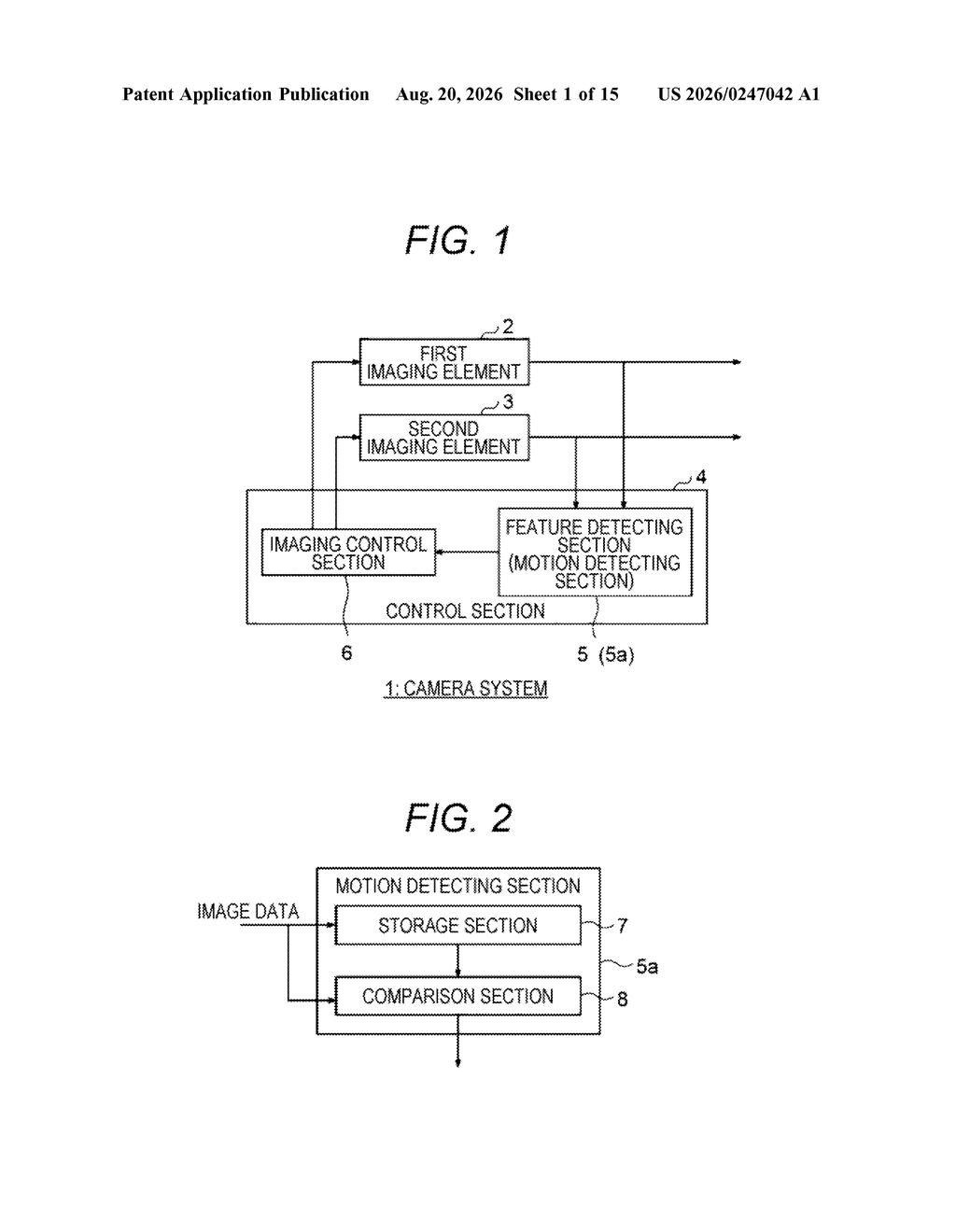
How Sony's dual-sensor power-saving approach works
Every time your phone's camera is live, every single pixel on the sensor is being read out, frame after frame, whether anything in that part of the image has changed or not. That's a lot of unnecessary work, and it drains the battery.
Sony's patent describes a two-sensor camera system that is smarter about this. Each sensor reads a small sample of its pixels first, then uses those early readings, or readings from the other sensor, to decide which remaining pixels are even worth reading that frame. If a region of the image hasn't changed, the sensor can skip it entirely, saving the power those readouts would have cost.
The two sensors coordinate with each other through a shared control unit. The result is that both sensors do less work per frame, but together they still capture a complete, accurate picture of the scene. The power savings come from skipping the boring parts.
… the first imaging element switches whether or not to output a pixel signal from at least some first pixel circuits among the plurality of first pixel circuits within a same frame period on a basis of a pixel signal output from some of the first pixel circuits or some of the second pixel circuits for each frame period …
Translation: The camera decides in real time which pixels to ignore based on the data it is currently receiving from its sensors.
How the sensors decide which pixels to skip each frame
The patent describes a dual imaging element camera system in which two sensors share information to reduce how many pixels each one needs to fully read out per frame.
Each sensor uses non-destructive readout (a technique where the charge stored in a pixel can be sampled without erasing it, so the same pixel can be checked multiple times without resetting). Both sensors also use global shutter-style simultaneous sampling, meaning all pixels capture light at the same instant rather than scanning row by row.
The key mechanism works in two stages per frame:
- A subset of pixels on either sensor is read first, acting as a low-cost scout sample.
- Based on those scout readings, the control section decides whether each remaining pixel block is worth a full readout that frame. If the scout data shows no meaningful change, the full readout is skipped.
Critically, each sensor can use the other sensor's scout data to make this decision, not just its own. That cross-sensor coordination is what makes the dual-element design useful rather than redundant: one sensor's early read can spare the other an unnecessary full readout, and vice versa.
Camera imaging elements with reduced power consumption are disclosed. In one example, a first imaging element of a camera system includes first pixel circuits that simultaneously sample and non-destructively read charges according to incident light photoelectrically converted in each pixel.
Translation: This technology saves battery life by reading light data from the sensor without destroying the stored charge.
What this means for low-power cameras and wearables
Power consumption is one of the hardest constraints in camera design for small devices like earbuds, AR glasses, security cameras, and robots. A sensor that only reads the pixels it needs to read is a meaningful step toward cameras that can run continuously without draining a small battery in an hour.
Sony Semiconductor Solutions supplies image sensors to a wide range of device makers, so the beneficiaries of this approach could span many product categories. Camera-chip efficiency is exactly the kind of slow, incremental engineering that compounds into real differences in device endurance over a product generation, and it sits alongside other interesting tech patents in low-power imaging that point toward always-on vision becoming practical in everyday wearables.
Sony's 352nd filing among the applications we track since May joins earlier work on farm soil irrigation and parallel image compression.
The design makes a real tradeoff: by relying on scout samples to decide what to skip, the system could miss a fast-moving object or a sudden scene change that falls outside the sampled pixels in that frame. Non-destructive readout helps, since the charge isn't lost if the system needs to go back, but the decision logic for choosing which pixels to scout and how to weight cross-sensor data will determine whether this saves power gracefully or introduces subtle motion artifacts. That tradeoff reads as worth taking in slow or static scenes, which describes most of the use cases where always-on cameras actually live, but it's a meaningful open question for anything with fast action.
There are more where this came from
We read every patent application Big Tech publishes and send you the ones worth knowing. Plain English, free, every week.
The drawings
15 drawing sheets from US 2026/0247042 A1 · click any drawing to enlarge


Want this weekly breakdown for a company we don't cover? Patentlyze Pro →
Be the first to weigh in