
Google Patents a Way to Read Body Gestures Using Both Cameras and Wearables
Google is working on a system that combines what a camera sees with what your smartwatch feels to figure out exactly what gesture you just made, then fire off a command without you ever touching a screen.
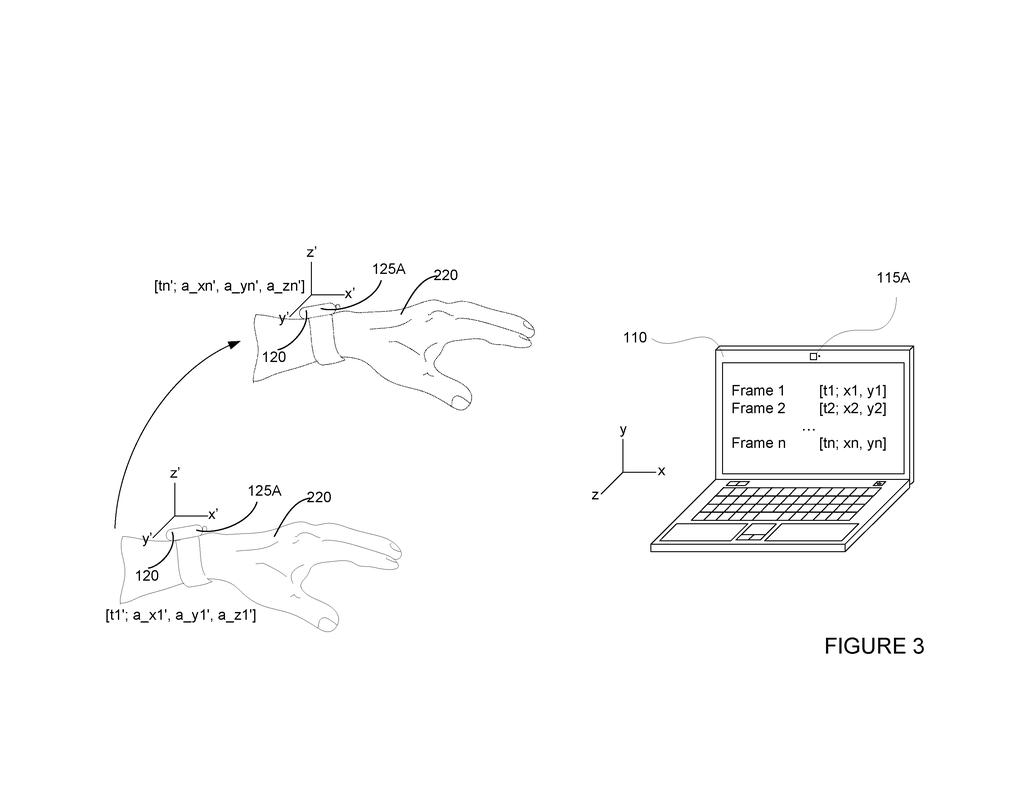
How Google combines your watch and a camera to read gestures
You're sitting across the room from your TV and you flick your wrist to skip to the next episode. A camera picks up the movement, your watch senses the motion, and the system figures out what you meant and does it.
That's the idea behind this Google patent. Instead of relying on just one sensor, the system cross-checks what it sees in video with what a wearable device (like a smartwatch or fitness band) detects in your movement. That double-check makes it much better at knowing which part of your body moved and what the gesture actually was.
The end result is that a device you're not even touching can respond to a gesture, run a command, and do it accurately enough to be useful in a real room with real distractions.
… identifying, by the one or more processors based on the time-based series of motion data, a gesture performed by the user; determining, by the one or more processors, a command associated with the identified gesture; and sending, by the one or more processors, instructions to a computing device configured to perform the command.
Translation: The system figures out what the movement means and tells a device to execute it.
How the system matches wearable motion data to camera frames
The patent describes a two-track sensing system. On one track, one or more visual sensors (cameras) capture video of the user and identify which part of the body is moving. On the other track, a wearable device worn by the user records motion data, essentially a time-stamped log of where parts of the body were at each moment.
The core step is correlation: the processors look for matches between the camera's view and the wearable's motion log. If the camera sees an arm move at the same time the watch registers a specific wrist arc, the system can confidently say, "That was gesture X," and trigger the associated command on a connected device.
- Sensor data ingestion: wearable sends a time-series of position readings to the processor
- Body-part recognition: camera footage is analyzed to identify which limb or segment is in motion
- Correlation check: motion data and image data are compared frame by frame to confirm the gesture
- Command dispatch: once the gesture is confirmed, instructions go out to whatever device should respond
The first independent claim is broad: it anchors to the wearable sensor data alone as the primary detection input, with cameras serving as supplemental confirmation. That framing means the system could work even in partially obstructed camera conditions, as long as the wearable data is clean.
The one or more processors may also determine one or more correlations between the image data and the received motion data. Based on the recognized portion of the user’s body and the one or more correlations between the image data and the received motion data, the one or more processors may detect the gesture.
Translation: The software compares camera footage with wearable sensor data to accurately spot the action.
What this means for hands-free control of Google devices
For anyone who has tried to use a camera-only gesture system and watched it misfire because the light was bad or another person walked through the frame, this approach is a direct answer to that problem. Pairing a wearable with a camera gives the system two independent sources of truth, and it only needs both to agree to act confidently.
Google makes products on both sides of this equation, from Pixel Watch to Google TV and Nest devices, so the patent points toward a tighter ecosystem where your wrist becomes a reliable remote control for the room around you. Wearable-driven gesture control is one of the more active areas tracked across new Big Tech patents, and Google's cross-sensor approach adds a layer of precision that pure computer-vision systems have struggled to deliver in everyday home environments.
Google's tenth filing we've tracked since May in our wearables and body data watchlist builds on earlier applications, including one on earbuds that track chewing and one on health data from a photo.
Claim 1 is written broadly enough to cover almost any setup where a wearable device and a camera work together to read gestures, not just one specific product or method. That scope could hand Google a wide legal fence around an entire category of how people interact with technology, from a watch paired with a TV to smart glasses working with a camera on your front door.
The breadth of that claim is the most important thing about this filing. The core idea, combining movement data from a wearable with footage from a camera, has been tried before, so the real question is whether the patent office decides Google's particular wording is original enough to approve.
If it does, any rival company building something similar would have to find a way around Google's patent.
There are more where this came from
We read every patent application Big Tech publishes and send you the ones worth knowing. Plain English, free, every week.
The drawings
9 drawing sheets from US 2026/0244277 A1 · click any drawing to enlarge


Want this weekly breakdown for a company we don't cover? Patentlyze Pro →
Be the first to weigh in