
Samsung Patents a Component That Combines Wi-Fi Antenna and Laptop Cooling Vent
Samsung is trying to solve a quiet structural headache in laptop design: fitting a good wireless antenna into a chassis that also needs to breathe. This patent describes a single carrier component that handles both jobs at once.
How Samsung fits a wireless antenna inside a laptop's vent frame
Laptop makers have always had to juggle two competing needs inside a thin chassis: cooling (which means big openings for airflow) and wireless performance (which needs antenna hardware positioned carefully near the device frame). Cramming both into a slim body forces trade-offs, and right now those trade-offs usually mean compromised placement for one or the other.
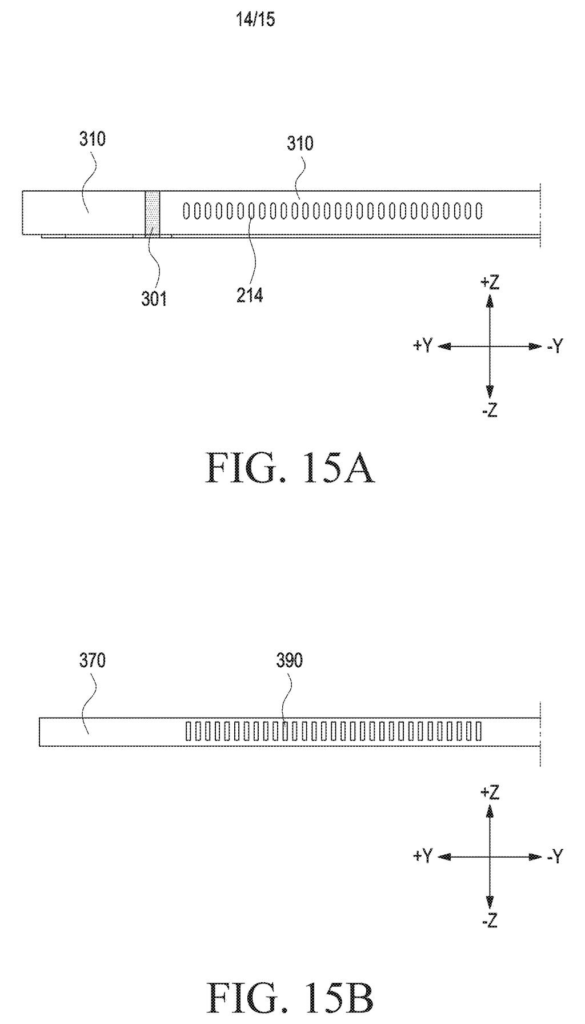
Samsung's patent describes a structural piece called an antenna carrier that sits inside the laptop housing and does both jobs. The carrier holds the antenna pattern (the actual wireless hardware) and also has vent holes cut into its sides so air from an internal fan can pass through. The conductive edges of the housing (the metal frame you can see around the laptop's sides) plug into the same system, acting as part of the antenna.
In short, instead of placing antenna hardware in whatever space is left over after cooling is sorted out, Samsung is designing a component that treats those two needs as one problem from the start.
… an antenna carrier comprising a first antenna pattern electrically connected to the first conductive portion; a fan disposed in the first housing; and a first printed circuit board disposed in the first housing …
Translation: The internal frame holds both the wireless antenna and the cooling fan right next to the main circuit board.
How the antenna carrier, fan, and vent holes connect
The patent centers on an antenna carrier, a structural bracket inside the device housing that serves as the mounting point for a first antenna pattern (the physical antenna trace, which is a precisely shaped conductive path that transmits and receives wireless signals).
What makes this design distinct is that the same carrier also includes vent holes along its side surfaces. Those holes let air pushed by an internal fan flow through the carrier itself, rather than routing airflow around a solid antenna mount. This means the antenna hardware does not have to be relocated to make room for thermal management.
The antenna connects to the rest of the electronics via a feeding portion (the point where the circuit board delivers electrical signal to the antenna) on the first antenna pattern, which links back to a first printed circuit board containing the communication module (the Wi-Fi or cellular radio chip).
The conductive portions of the housing frame, segmented strips of metal along the device's side surfaces, are also electrically tied into the antenna system. Using the metal housing edge as part of the antenna is a common approach in phones and tablets; this patent appears to apply a similar method to a device that also needs active fan cooling.
… wherein the antenna carrier further includes a first vent hole in at least a portion of the side surface of the antenna carrier, and a feeding portion disposed on the first antenna pattern …
Translation: The plastic piece holding the antenna also includes an exhaust vent for the laptop cooling system.
What this means for thin laptops and wireless signal quality
For anyone who has noticed a laptop running hot or losing Wi-Fi signal when the lid is nearly closed, this kind of design work is directly relevant. When antenna placement and cooling vents compete for the same narrow strip of real estate inside a thin laptop frame, engineers compromise on both. A carrier that physically combines those functions removes that trade-off at the component level, which can mean better airflow and better antenna positioning without making the chassis thicker.
The filing fits into a broader pattern of Samsung working out the internal geometry of thin computing devices, where millimeters matter enormously. Readers who follow Big Tech patent news around wireless antenna design will recognize this as part of an ongoing effort across the industry to treat structural components as multifunctional, especially as fanless and ultra-thin laptops push physical limits.
For anyone who actually uses a thin laptop, this patent addresses something real: antenna hardware shoved into whatever corner survives the thermal layout often produces mediocre wireless range, and that is a failure you notice every day. Designing the antenna mount and the airflow path as a single component, from the start, is a more disciplined approach than the usual after-the-fact placement. Whether Samsung applies this to a specific product line is unknown, but the engineering logic is sound and the user payoff, steadier wireless signal in a cooler machine, is concrete.
There are more where this came from
We read every patent application Big Tech publishes and send you the ones worth knowing. Plain English, free, every week.
The drawings
15 drawing sheets from US 2026/0246137 A1 · click any drawing to enlarge


Want this weekly breakdown for a company we don't cover? Patentlyze Pro →