Samsung
Samsung · Display · Filed Apr 7, 2026 · USPTO published Aug 20, 2026 · Aug 20 release
Samsung Patents a Foldable Phone That Tucks Its Antenna Inside the Hinge
Samsung may have found a clever place to hide a phone's antenna: right inside the hinge that lets the screen fold in half.
- Publication number
- US 2026/0246862 A1(US20260246862A1)
- Applicant
- Samsung Electronics Co., Ltd.
- Filed · Published
- Apr 7, 2026 · Aug 20, 2026
- Inventors
- Jongho PARK, Minsoo KIM, Yongwoon KIM, Taejeong KIM, Jaehyun BAE, Soogyu LEE, Yonggil HAN
- Status when we published
- Waiting for an examiner
- Document
- 20 claims
- US classification
- 455/575.1
- Parent application
- Continuation of PCT/KR2024/011633 (filed Aug 7, 2024)(PCTKR2024011633)
What Samsung's hinge-mounted antenna actually does
You are watching a video on your foldable phone and you fold it halfway to prop it up on a desk. The moment you do, the signal drops. That is a real problem with foldable phones today: the hinge is a mechanical feat, but it is also a dead zone for the signal hardware that keeps you connected.
Samsung's answer, based on this filing, is to place a small cluster of flat, stamp-sized signal tiles directly inside the hinge cover, the plastic or metal strip that hides the folding mechanism. These tiles sit on a thin flexible circuit board, tucked between the hinge itself and its outer cover.
In plain terms, Samsung is turning wasted space into signal space. Instead of cramming signal hardware into the phone's main body and hoping reception does not suffer when the device folds, the hinge cover becomes part of the system that pulls in a signal. Your foldable phone gets a better chance of staying connected no matter what angle it is folded to.
… a first hinge cover configured to cover the first hinge; a first flexible printed circuit board disposed between the first hinge and the first hinge cover; and an antenna including a plurality of patch antennas and disposed between the first flexible printed circuit board and the first hinge cover.
Translation: The phone hides its antenna inside the protective cover that sits over the folding hinge mechanism.
How the patch antennas fit inside the hinge cover
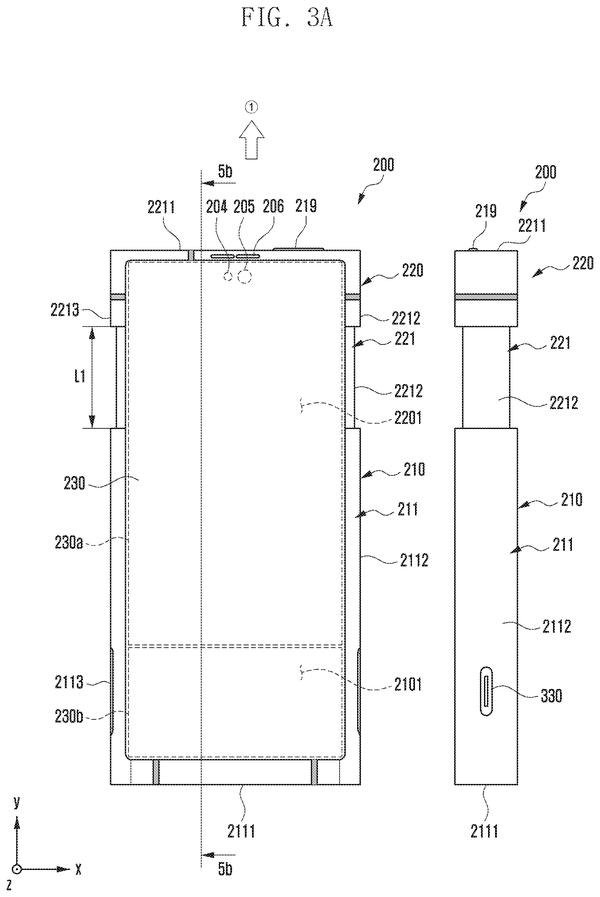
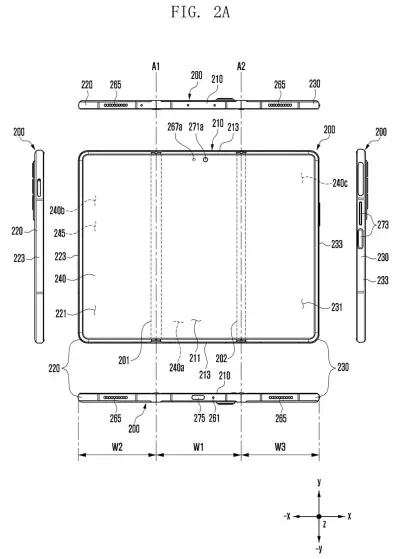
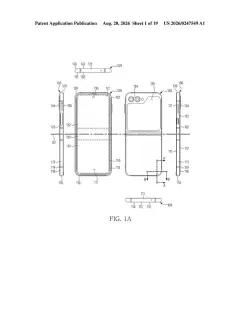
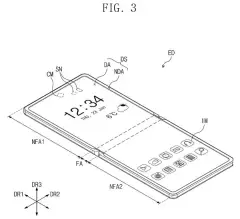
The patent describes a foldable phone with two housings (the two halves of the phone) connected by a hinge. A flexible display stretches across both halves. So far, that's a standard foldable design.
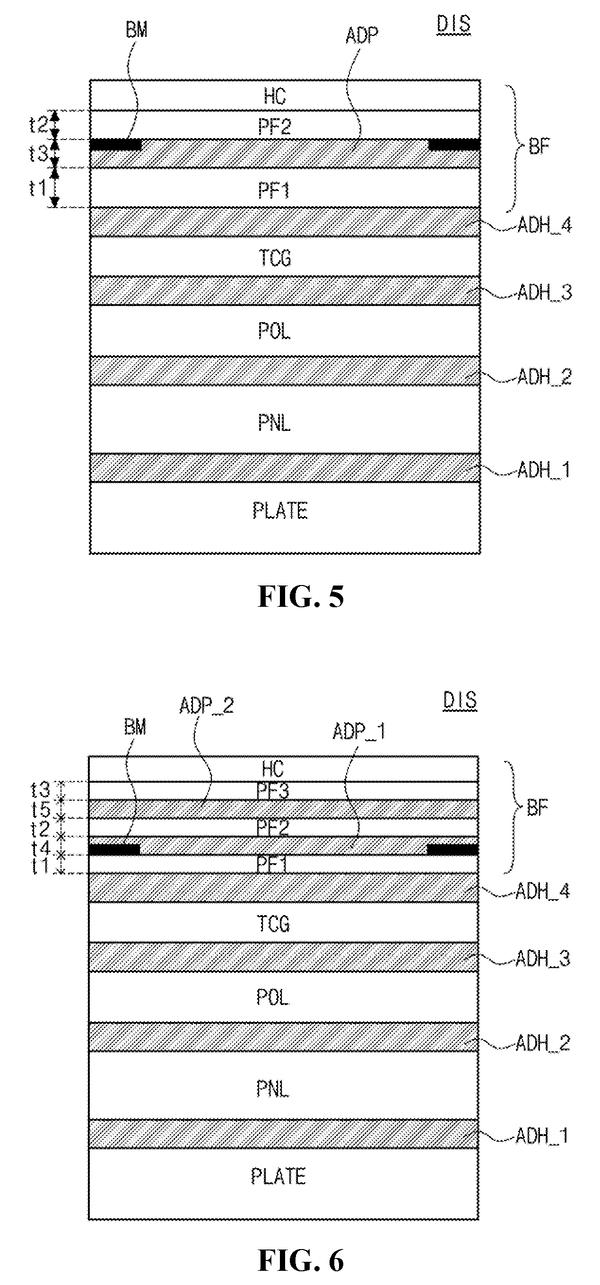
The new element is what Samsung stacks inside the hinge cover, the small bridge piece that hides the folding mechanism from view. Tucked in there are:
- A flexible printed circuit board (a thin, bendable sheet of conductive traces, basically wiring that can curve without snapping) positioned right against the hinge
- A patch antenna array (multiple flat, planar antenna elements, the kind used for high-frequency signals like 5G millimeter-wave) layered on top of the circuit board, between it and the outer hinge cover
Patch antennas work best when they have a clear line to the sky or a cell tower, so their placement matters a lot. The hinge cover sits at the center of the device and, depending on fold angle, can face outward toward the environment rather than being buried behind the phone's main body or battery. That positioning is the engineering bet Samsung is making here.
The flexible circuit board is the electrical bridge, carrying signals between the antenna and the rest of the phone's radio hardware, while being thin enough to fit in the gap between the hinge mechanism and its cover.
A foldable electronic device is provided. The foldable electronic device includes a first housing, a second housing, a first hinge disposed between the first housing and the second housing, a flexible display disposed on the first housing and the second housing, a first hinge cover configured to cover the first hinge …
Translation: This device uses two main body parts connected by a hinge that supports a single screen that bends in the middle.
What this means for foldable phone signal quality
Foldable phones have a persistent antenna problem. Every fold angle changes which parts of the device are exposed and which are tucked against a surface or the user's hand. Antenna designers on flat, candybar-style phones already fight hand-blocking issues; on a foldable, those problems multiply. Putting antenna elements in the hinge cover means there's always at least one patch facing outward, regardless of whether the phone is fully open, folded in half, or propped at some odd angle on a table.
For people who already own or are considering a Galaxy Z Fold or Z Flip, this kind of engineering is the difference between a premium device that drops calls in tent mode and one that holds signal reliably across postures. The hinge has historically been the structural centerpiece of foldables with no radio function; making it do double duty is a practical step. Antenna placement in foldables is one of the more active areas among new Big Tech patents, and Samsung's filing adds a concrete spatial answer to a problem the whole foldable industry is still working through.
Samsung's 51st filing we've tracked since May on foldable phone ideas joins earlier applications for charger placement guidance and a slide-out larger screen.
Source: US 2026/0246862 A1 at the USPTO (PDF). Full patent text and figures are in the official publication.
Get our take in your Top Stories
Liked this breakdown? Add Patentlyze as a preferred source on Google, and our plain-English take shows up more often in your Top Stories the next time Samsung patent news breaks.
Add Patentlyze on Google
One click.
There are more where this came from
We read the new patents from Big Tech, carmakers and more and send you the ones worth knowing. Plain English, free, every week.
The drawings · 14 sheets
14 drawing sheets from US 2026/0246862 A1 · click any drawing to enlarge


Show the other 6 sheets


More from Samsung
All 1,662 Samsung patents →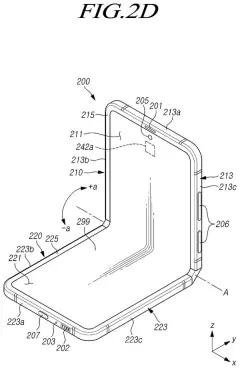
More in Cell phone
All 496 Cell phone patents →
Samsung
Samsung Patents a Stress-Absorbing Foam Layer for Foldable Phone Screens
Samsung
Samsung Patents a Corner Magnet Design to Keep Foldable Phones Sealed
Samsung
Samsung Patents a Tri-Fold Phone That Cancels Accidental Touches When You Open It
Samsung