
Microsoft Patents a System That Uses AI to Build Training Data for Other AIs
Training an AI model requires enormous amounts of carefully labeled data, which is expensive and slow to produce by hand. Microsoft has patented a system that lets one AI model generate that labeled data automatically, tailored to whatever task the student model needs to learn.
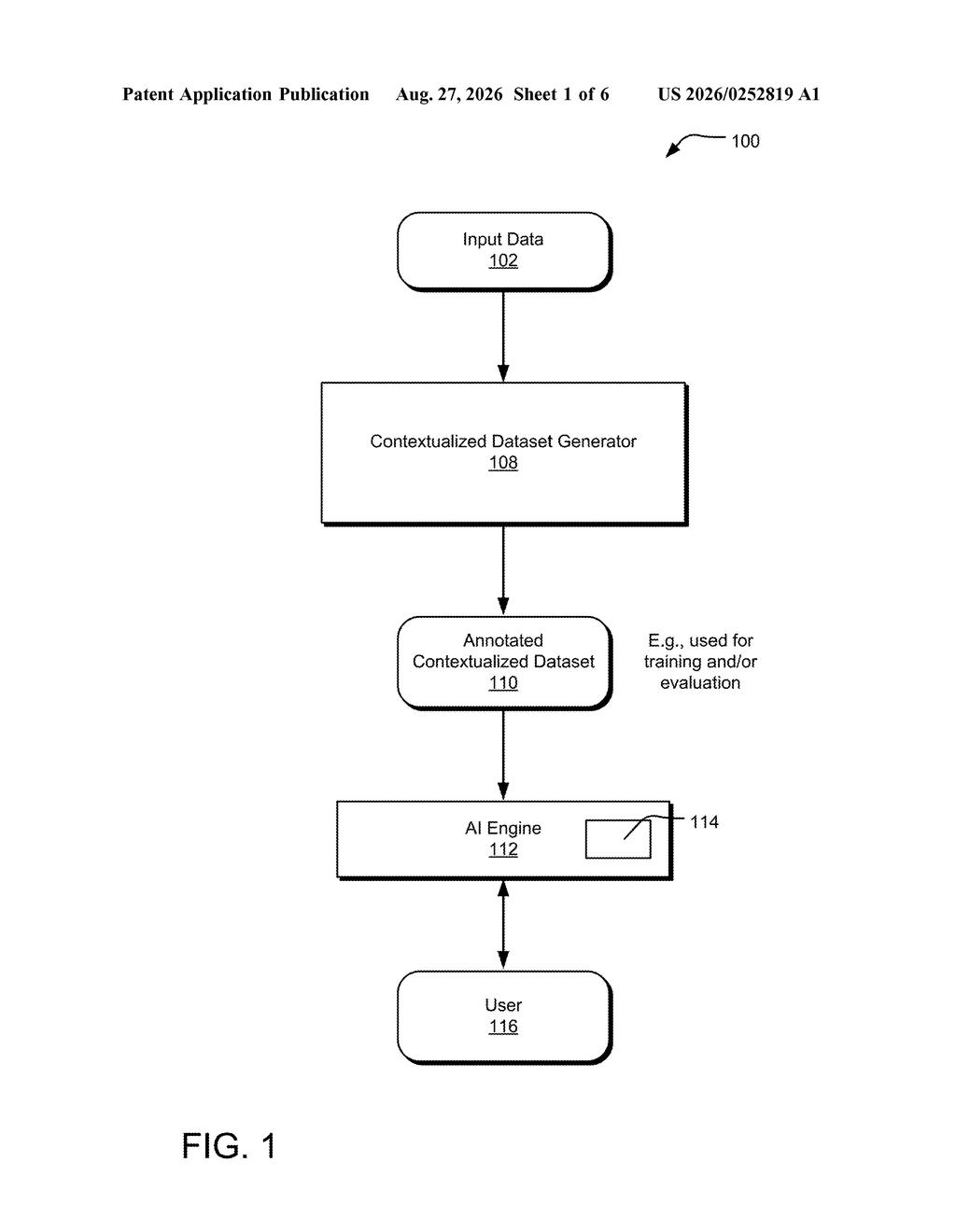
How Microsoft's AI trains itself on data it made up
Every time a company wants to build an AI assistant for, say, medical billing or legal document review, someone has to collect thousands of real examples and label each one by hand. That labeling work can take months and cost a fortune before a single line of code is trained.
Microsoft's patent describes a way to skip much of that grind. A "synthesizing" AI model reads a plain-language description of the job the new AI needs to do, then writes its own practice examples from scratch, complete with the correct answers already attached. You describe the task; the system invents the homework.
The clever part is that not everything is left to the AI's imagination. Some labels, the ones that need to be exactly right, are chosen from a fixed, pre-approved list before the AI ever starts writing. The AI then builds realistic examples around those locked-in facts, so the finished dataset is both varied and trustworthy.
… generating a first synthesizing instruction for input to a synthesizing language model based on the one or more first deterministic annotations, a synthesizing instruction template, and a scenario description specifying a task of a specified domain for which the machine learning model is to be trained or evaluated; …
Translation: The system creates custom instructions for an AI model using predefined labels, templates, and specific task details.
How the system mixes fixed rules with AI-written examples
The patent describes a pipeline Microsoft calls a "contextualized dataset generator." It works in four steps:
- Pick the fixed labels first. Some data points have answers that must be exact, like a category code or a numeric score. The system pulls these "deterministic annotations" from a pre-approved candidate pool, filtered by rules that match the data type needed.
- Write the instruction. Those locked-in labels get combined with a template and a plain-language "scenario description" (basically: "train a model to do X in domain Y") to produce a detailed prompt for a second AI.
- Generate the example and the soft labels. The synthesizing language model reads that instruction and writes two things: a realistic input prompt (the kind of text the future model will actually see) and one or more "probabilistic annotations" (softer judgments, like sentiment scores or confidence levels, that the AI estimates rather than calculates exactly).
- Package the datapoint. The fixed labels, the AI-written prompt, and the soft labels are bundled into a single training example and added to the growing dataset.
The loop repeats until the dataset is large enough, with each pass potentially selecting different fixed labels to keep the examples diverse. The result is an annotated dataset built almost entirely by machine, scoped precisely to the task described in the scenario.
The contextualized dataset generator synthesizes a first input prompt and one or more first probabilistic annotations by the synthesizing language model based on the first synthesizing instruction.
Translation: The tool uses an AI model to automatically generate training prompts and predicted answers.
What this means for companies building specialized AI tools
For companies trying to build specialized AI tools, the biggest practical barrier is almost never the model architecture; it's getting enough good training examples in the right domain. A hospital system, a law firm, or a logistics company rarely has tens of thousands of pre-labeled examples sitting around. This patent describes infrastructure that could let a team describe what they want in plain English and receive a ready-to-use training set in return, dramatically cutting the time between "we have an idea" and "we have a working model."
The broader pattern here is that AI companies are increasingly using existing large language models to bootstrap the next generation of smaller, task-focused ones, and Microsoft is filing heavily in this space. You can trace this filing alongside other newest Big Tech patents covering AI training infrastructure, where the race to automate the data pipeline is now just as competitive as the race to improve the models themselves.
This is the 16th Microsoft filing we've tracked in AI training & infrastructure since May, adding to work like one that shrinks and expands models and one using hybrid loss training.
Claim 1 is broad in a way that should make competitors pay attention. It covers the general act of combining fixed, rule-selected labels with AI-generated prompts and soft labels to build a training dataset, without tying the method to any particular model architecture, domain, or label type. That scope means the claim, if granted, could reach a wide range of synthetic data pipelines, not just Microsoft's specific implementation. The narrowing details live deeper in the dependent claims, not in claim 1.
A challenger would need to show that their system either skips the deterministic annotation step entirely or doesn't combine it with the scenario-based prompt generation. That's a meaningful design-around hurdle. The real question is prior art. Synthetic data generation and prompt-based dataset construction were active research areas well before this filing's May 2025 date.
The USPTO examiner will likely focus on whether the specific combination of rule-gated fixed labels plus scenario-scoped AI generation is genuinely novel, or whether it assembles known pieces in an obvious way. The answer to that question will determine whether this ends up as a broad platform patent or a narrow procedural one.
Get our take in your Top Stories
Liked this breakdown? Add Patentlyze as a preferred source on Google, and our plain-English take shows up more often in your Top Stories the next time Microsoft patent news breaks.
There are more where this came from
We read every patent application Big Tech publishes and send you the ones worth knowing. Plain English, free, every week.
The drawings
6 drawing sheets from US 2026/0252819 A1 · click any drawing to enlarge


Want this weekly breakdown for a company we don't cover? Patentlyze Pro →
Be the first to weigh in