
Nvidia Patent Reveals AI Models That Reshape Themselves Mid-Task Based on Chip Power
When a GPU is already busy, most AI models either slow to a crawl or crash entirely. Nvidia's new patent describes a system that lets an AI model reshape itself mid-run to match whatever chip resources are actually available at that moment.
What Nvidia's live AI model-switching actually does
AI chips are never sitting idle. Drivers, cameras, and other software are all fighting for the same processor at the same time, which means the AI model you're running often doesn't get the resources it was designed to expect.
Nvidia's patent describes a system that watches how busy the chip is and adjusts the AI model itself on the fly. Think of it like a streaming video that automatically drops from 4K to 1080p when your Wi-Fi gets congested, except instead of picture quality, it's the AI's internal structure that shifts to stay within whatever power or speed limits you've set.
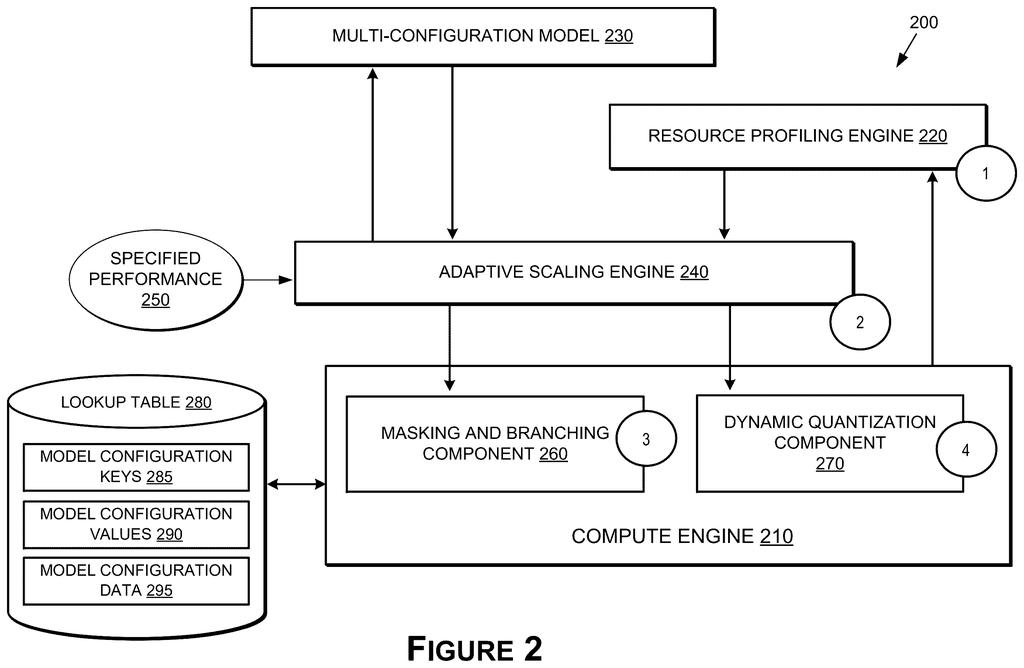
The idea is that one model can behave like many, switching between a leaner or fuller version of itself depending on what resources are free. You tell it your priorities, whether that's speed, accuracy, or battery life, and a small built-in selector picks the best version to run right now.
select, based at least on processing a representation of one or more performance constraints using a configuration selection model, a first configuration of a multi-configuration model; and obtain the first configuration of the multi-configuration model during execution of the multi-configuration model.
Translation: The chip uses a secondary AI model to choose and load a new version of the main AI while it is already running.
How the configuration selector picks and swaps model settings
The patent centers on what Nvidia calls a multi-configuration model: a single AI model that contains multiple versions of itself, each tuned for a different balance of speed, accuracy, and power draw. At any given moment, only one configuration is active.
A second, smaller AI called the configuration selection model watches the chip's resource profile in real time and in the near future (how much memory is free, how hot the chip is running, how many other tasks are queued) and picks which configuration to activate. This selector is itself a lightweight model, so it doesn't add much overhead to the system it's managing.
The system takes into account:
- Performance constraints set by the user or application (e.g., "keep latency under 10ms" or "don't exceed this power budget")
- Current and predicted resource availability on the GPU or AI accelerator
- Expected accuracy or output quality of each available configuration
When conditions change, the active configuration is swapped out during inference (the live, real-time phase when the model is actually doing work), not just at startup. This is the key difference from existing approaches, which typically require stopping and reloading a different model entirely.
… a multi-configuration model may be dynamically scaled or optimized by modifying its structure or parameters during inference or runtime based on specified performance constraints (e.g., latency, accuracy, power or energy consumption) and a (e.g., current, predicted future) resource profile of the processor …
Translation: The AI can change its own internal design while working to balance speed, accuracy, and battery usage.
What this means for AI chips running multiple workloads
For any device running AI in the background constantly, like a self-driving car, a robot, or a data center handling many simultaneous requests, resource contention is a fact of life. A fixed AI model has no way to adapt when the chip it lives on gets busy with something else. The result is either dropped accuracy or missed timing deadlines. This patent describes an architecture that treats that variability as an expected condition rather than an edge case.
The practical impact shows up most clearly in real-time systems where you can't pause and reload software, such as autonomous vehicles or always-on inference servers. The ability to stay within power and latency limits without human intervention is directly relevant to Nvidia's GPU and AI accelerator product lines, and this kind of chip-level AI management is part of a steady stream of new Big Tech patents aimed at making AI hardware work harder without drawing more power.
This is the 30th Nvidia filing we've tracked since July in the AI chip wars watchlist, following one on skipping blank pixels and one on smarter power delivery.
To make a model flexible, you have to build multiple versions of it upfront and keep them all loaded and ready, which means more engineering work, more storage, and more memory consumed even when none of that flexibility is being used. That is the fixed cost of adaptability, and it is real.
The piece doing the most dangerous work is the selector that decides which version of the model to run based on predicted future conditions. If it misjudges what resources will be available even a moment from now, the system either wastes capacity or blows past its power or timing limits, and a bad predictor could perform worse than simply running one fixed version at all times.
For something like a self-driving system where a chip is juggling many tasks simultaneously and a late response has physical consequences, that cost reads as clearly worth paying. For a server running one predictable job, it probably is not.
Get our take in your Top Stories
Liked this breakdown? Add Patentlyze as a preferred source on Google, and our plain-English take shows up more often in your Top Stories the next time Nvidia patent news breaks.
There are more where this came from
We read every patent application Big Tech publishes and send you the ones worth knowing. Plain English, free, every week.
The drawings
14 drawing sheets from US 2026/0252953 A1 · click any drawing to enlarge


Want this weekly breakdown for a company we don't cover? Patentlyze Pro →
Be the first to weigh in