
Google Patent Targets AI That Learns to Fix Account Problems Automatically
Google is patenting an AI support system that doesn't just search a help database, it reads your specific account details, guesses your exact problem, writes a personalized fix, then grades its own answer and retrains itself if the answer wasn't good enough.
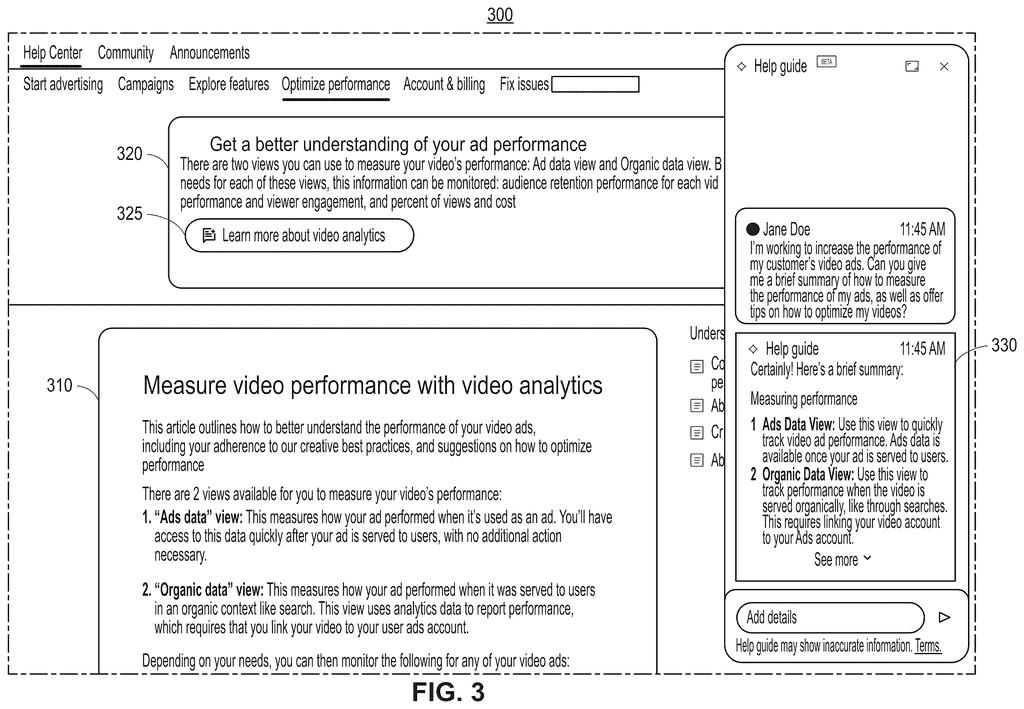
How Google's account-diagnosis AI actually works
You're locked out of your Google account and you type "I can't sign in" into the help chat. Instead of dumping a generic FAQ on you, the system looks at your account history, figures out which sign-in problem you probably have, and writes you a custom explanation that fits your situation.
That's the core of this patent. Google's system pulls a relevant help article, combines it with what it already knows about your account, feeds both into an AI model, and generates a tailored summary. Then it checks whether that summary actually meets quality standards. If it doesn't, the system uses that failure as a lesson to retrain itself, so the next person with a similar problem gets a better answer.
The result is a support tool that keeps getting more specific over time, without engineers having to rewrite help articles manually every time something changes.
… inferring, by the one or more processors and based on the user account data, a problem associated with the information resource and the account profile …
Translation: The system figures out what went wrong by looking at your account details.
How the model infers problems and grades its own answers
The patent describes a pipeline with several distinct steps working together.
- Error intake: When a user reports a problem (say, a billing error or a failed login), the system logs it as an "error indication" tied to that user's account profile, which includes data like account age, payment history, or recent activity.
- Resource retrieval: The system pulls the most relevant help document from a library of information resources, think of it like picking the right chapter from a giant internal manual.
- Problem inference: Using the account data, it doesn't just match keywords. It infers what the specific underlying problem is for that user, even if they described it vaguely.
- Summary generation: A trained machine learning model takes both the help document and the inferred problem as inputs and generates a personalized summary, not a copy-paste of the original article.
- Quality gating: The system measures whether that summary meets defined quality metrics (accuracy, relevance, completeness) before sending it.
- Self-retraining: Whether or not the summary passes those quality checks, the outcome is fed back into the model as a training signal, updating it continuously.
This feedback loop (called online learning, meaning the model updates from real-world results rather than a fixed training dataset) is what distinguishes this from a standard chatbot that gives the same canned answer to everyone.
… generating, using a trained machine learning model, an information resource summary for the information resource by using the information resource and the inferred problem as inputs to the trained machine learning model …
Translation: An AI creates a personalized fix summary using the details of the problem.
What this means for Google account support
For anyone who has ever spent twenty minutes reading a Google support article that had nothing to do with their actual problem, this patent describes a real fix. The personalization step, pulling in account-specific data before generating the answer, is what separates it from a fancier search bar. A generic answer that scores well on average is often useless to the person whose problem is slightly unusual, and Google's system is specifically designed to close that gap.
The self-retraining loop is also notable from a product strategy angle. Most AI support tools are deployed and then periodically updated by engineers; this one is designed to update itself from every interaction. Google's account ecosystem spans Gmail, YouTube, Google Pay, and Workspace, so a support model that sharpens continuously across millions of daily error reports could compound quickly. Customer support AI is a busy area right now, and this filing sits alongside this week's Big Tech patents showing how companies are racing to make AI systems that improve from their own outputs rather than waiting for human intervention.
That makes this Google's 73rd filing we've tracked in Language AI since May, a body of work that includes applications like turning videos into searchable text and ranking search results.
The system trades user judgment for internal scorecards. Google decides whether a summary is good enough, not the person who asked the question, and a summary can pass every internal check while still leaving someone stuck. That gap is the real cost, and the patent doesn't close it.
Personalization also costs privacy. To guess your specific problem, the system reads your account history, and the more it reads, the more is exposed if something goes wrong upstream.
The self-improving loop is the strongest part of this design, because bad outputs get flagged and the model adjusts over time. Whether that adjustment tracks what users actually need depends entirely on whether Google's quality measures match real human confusion, and the patent asks you to accept that they do.
Get our take in your Top Stories
Liked this breakdown? Add Patentlyze as a preferred source on Google, and our plain-English take shows up more often in your Top Stories the next time Google patent news breaks.
There are more where this came from
We read every patent application Big Tech publishes and send you the ones worth knowing. Plain English, free, every week.
The drawings
6 drawing sheets from US 2026/0252859 A1 · click any drawing to enlarge


Want this weekly breakdown for a company we don't cover? Patentlyze Pro →
Be the first to weigh in