
Google Patents a Way to Teach AI to Categorize Your Search Queries
Google has filed a patent for a system that trains an AI to read your search queries and automatically assign category tags to them, potentially letting search engines organize and retrieve information without as much human labeling work.
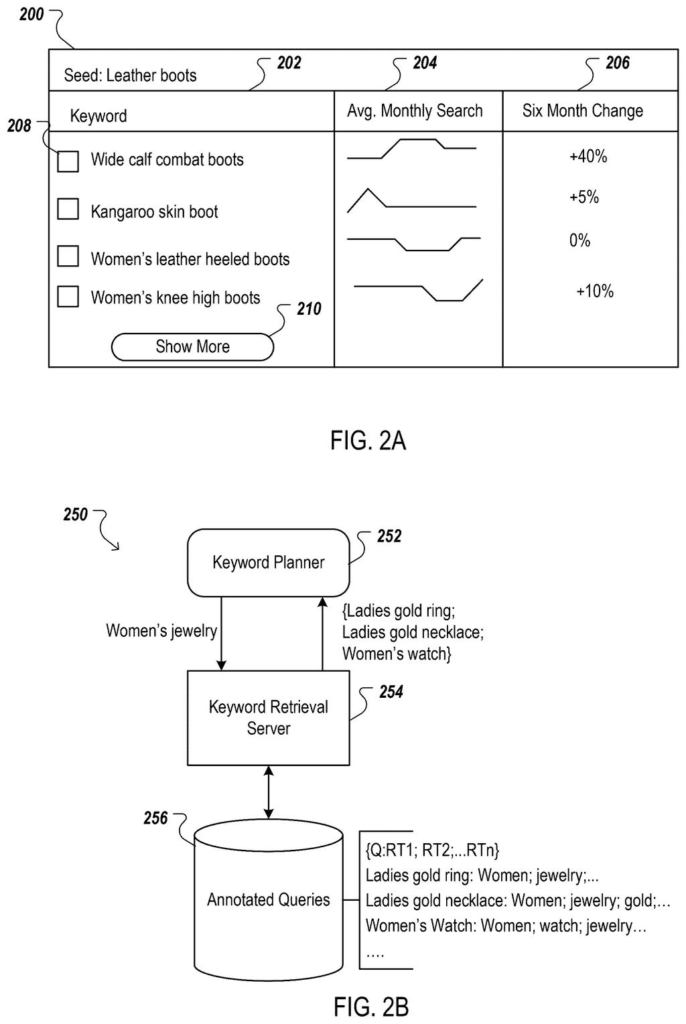
What Google's query-tagging system actually does
Every time you type something into Google, your query gets processed alongside millions of others. Organizing all those queries so the search engine can find patterns in them is an enormous task, and right now it often requires a lot of human effort to label and categorize them.
What Google's new patent describes is a way to hand that labeling job to an AI. The system trains a language model on example queries, teaching it to recognize what a group of searches is generally about. Once trained, the AI reads through Google's full library of stored queries and stamps each one with a short descriptive tag called a retrieval token.
Think of it like a librarian who reads every book title and scribbles a subject tag on the spine, except the librarian can process billions of entries and never needs a coffee break. Those tags then make it much faster to pull up the right group of queries when the search engine needs them.
… training a language model to generate a trained language model, wherein the trained language model predicts, for each training sample, one or more generalizations that describe the training sample, each generalization of the one or more generalization being an n-gram; …
Translation: The system trains AI to create short phrases that summarize search queries.
How the language model turns queries into retrieval tokens
The patent describes a training-and-tagging pipeline built around a large language model (LLM), the same class of AI behind tools like ChatGPT.
The process works in two stages:
- Training: Google feeds the model batches of real search queries drawn from a query store (a large database of past searches). The model learns to produce generalizations, short phrases called n-grams (any sequence of one or more words) that describe what a group of queries has in common. For example, queries like "best running shoes" and "trail running sneakers" might both get the generalization "running footwear."
- Tagging: Once trained, the model sweeps through every query in the store and predicts the best generalization for each one. Those generalizations are then converted into retrieval tokens, compact identifiers that get saved alongside each query in a separate data store.
- Storage: Every query ends up linked to its retrieval tokens, creating an index that groups similar queries together under shared labels without humans manually categorizing them.
The key technical idea is that the AI learns to abstract upward from a specific question to a broader theme, making it possible to cluster millions of varied queries under a manageable set of tags.
Methods, systems, and apparatus, including computer programs encoded on a computer storage medium, for training a large language model (LLM) to predict generalizations of public queries.
Translation: Google invented a way to train AI models to categorize public search queries automatically.
What this means for how Google's search index works
For Google, the practical payoff here is about scale. Manually labeling billions of search queries is expensive and slow. A system that generates consistent category tags automatically could make it cheaper to maintain the internal indexes that power features like query suggestions, ad targeting, and related-search recommendations.
For everyday users, the effects would be indirect but real: better organized query data tends to produce more accurate search results and more relevant suggestions. This is the quiet infrastructure side of search, the part nobody sees but everyone benefits from. Google's search-infrastructure filings sit alongside the broader stream of this week's Big Tech patents in ad tech and AI-assisted indexing, where the competition to automate data labeling at scale is intensifying.
That makes this Google's 75th filing in Language AI we've tracked since May, joining work like one matching search to formats and one teaching AI to fix accounts.
Letting an AI decide what a query is "about" trades control for scale. Google no longer needs armies of human labelers, but the categories are only as good as the training data, and if that data skews toward certain users or time periods, every label the model stamps from then on inherits that skew.
The second cost is opacity. A human-written label is auditable: you can read it and argue about whether it is right. A model-generated shorthand that groups billions of queries together is much harder to interrogate, especially when the model is confidently wrong at scale.
Still, the trade probably reads as worth it here. This layer is about organizing internal search records, not ranking what actually appears on screen, so a labeling mistake is recoverable. The cost of hiring humans to do this job at Google's volume is not.
Get our take in your Top Stories
Liked this breakdown? Add Patentlyze as a preferred source on Google, and our plain-English take shows up more often in your Top Stories the next time Google patent news breaks.
There are more where this came from
We read every patent application Big Tech publishes and send you the ones worth knowing. Plain English, free, every week.
The drawings
4 drawing sheets from US 2026/0252559 A1 · click any drawing to enlarge


Want this weekly breakdown for a company we don't cover? Patentlyze Pro →
Be the first to weigh in