
Apple Patents Siri That Shifts to Different Privacy Rules During Phone Calls
Apple wants Siri to know when you're on a phone call and automatically dial back what it shares or does with your data so the person on the other end of the line isn't accidentally looped in.
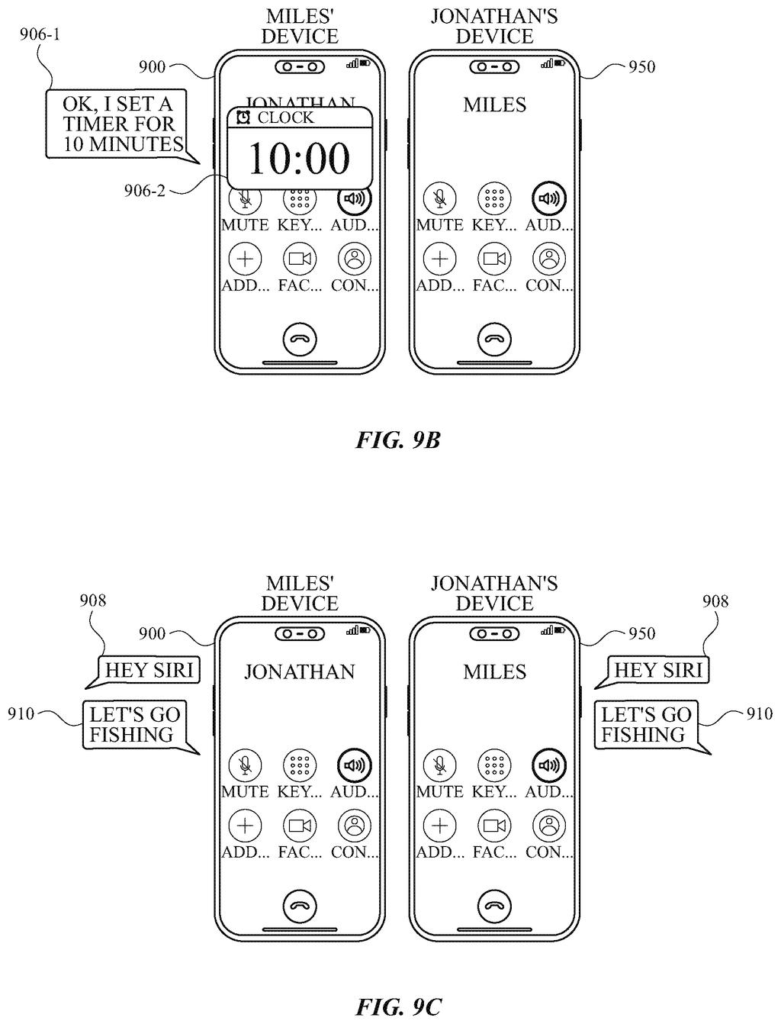
What Apple's call-aware Siri privacy switch does
You're on a call with your doctor and you suddenly ask Siri to remind you about your medication. Should Siri behave the same way it does when no one else is listening? Apple apparently thinks the answer is no.
This patent describes a system where Siri automatically switches to a more cautious set of privacy rules the moment it detects you're already in a voice call. When the call ends, it shifts back to its normal behavior. The idea is that whatever Siri does on your behalf, whether it's reading out a message, looking up information, or accessing your contacts, it should factor in that another person is present and can potentially hear things.
The privacy change is automatic, meaning you wouldn't have to remember to manually adjust any settings before asking Siri something sensitive mid-conversation. The phone figures it out for you.
How the two privacy settings differ on a live call
The patent describes two distinct operating modes for a digital assistant (in Apple's case, almost certainly Siri) tied directly to whether the device is currently in an active voice communication session, meaning a phone call, FaceTime call, or similar real-time voice link with another person.
Mode one kicks in when a call is active. In this state, Siri follows a "first set of privacy settings" that the patent keeps intentionally vague but implies are more restrictive. The goal is to limit what information Siri surfaces out loud or processes in ways that could expose sensitive data to whoever is on the other end of the line.
Mode two is the default, used when no call is active. Here, Siri operates under a "second set of privacy settings" that presumably allows it to behave with fewer restrictions, reading out messages, announcing personal details, or accessing more of your data freely.
The switching logic is handled automatically by the device. It checks whether a voice communication session is in progress at the exact moment you invoke the assistant, then routes Siri into whichever mode fits. The patent covers this as a software-level process stored on the device itself, not as a server-side decision.
What this means for Siri and on-call data sharing
For anyone who has ever asked Siri something personal while on speakerphone in a crowded room or with a family member on the line, this addresses a real gap in how voice assistants handle context. Voice AI tools generally treat every invocation the same way regardless of who might be listening, and that creates obvious privacy risks.
Apple has spent years positioning privacy as a core product value, and this patent fits that strategy at the assistant level. The coverage of new Big Tech patents around voice AI and on-device privacy shows Apple is filing steadily in this space, pushing the assistant to make more context-aware decisions rather than relying on users to manage sensitive situations themselves.
This is the seventh Apple filing we've tracked since July in our on-device AI privacy watchlist, building on a pre-transfer safety check and accessory identity protection.
Claim 1 covers any electronic device that runs a digital assistant under one set of privacy rules during an active voice call and a different set of privacy rules when no call is active. The claim does not specify what those rules must contain or how different they need to be, only that the two profiles are not identical. That gap matters.
A product could fall inside this claim by making even a minor privacy-related adjustment when a call is detected, because the claim requires no particular outcome, no specific data protected or exposed, just the act of switching modes based on call status. If this claim survives examination at its current breadth, it would cover a wide category of assistant behavior rather than one specific design.
That has real consequences for which privacy-aware assistant features reach consumers and on what terms.
Get our take in your Top Stories
Liked this breakdown? Add Patentlyze as a preferred source on Google, and our plain-English take shows up more often in your Top Stories the next time Apple patent news breaks.
There are more where this came from
We read every patent application Big Tech publishes and send you the ones worth knowing. Plain English, free, every week.
The drawings
20 drawing sheets from US 2026/0253588 A1 · click any drawing to enlarge


Want this weekly breakdown for a company we don't cover? Patentlyze Pro →
Be the first to weigh in