
Samsung Patents Software That Builds Sharp Photos by Combining Multiple Low-Res Frames
Your phone's camera sensor has physical limits on how many pixels it can capture, but software can cheat those limits by combining multiple quick shots into one sharper image. Samsung's new patent describes an end-to-end AI model designed to do exactly that, more efficiently and accurately than current approaches.
How Samsung's multi-frame sharpening AI actually works
Phone cameras have always faced a hard physical constraint: a small sensor can only capture so much detail. Software tricks that try to add sharpness after the fact often look artificial or blurry around edges.
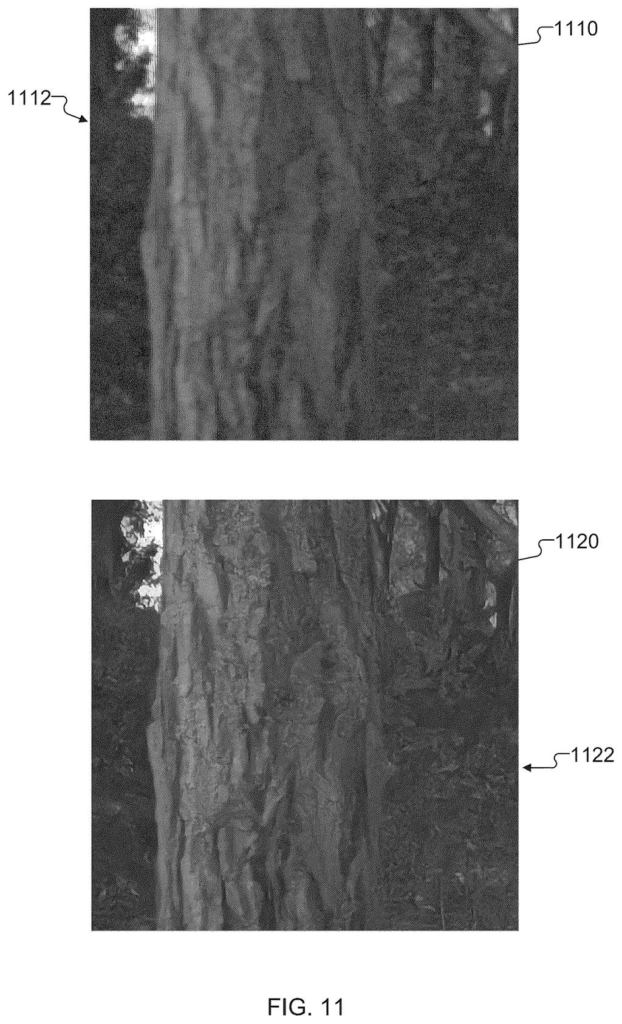
Samsung wants to change that by having its AI look at several frames at once rather than just one. Instead of guessing what extra detail should look like, the system pulls real detail from slightly different versions of the same scene captured in rapid succession, then fuses them together into a single, higher-resolution image. Think of it like how your brain stitches together a complete picture from two slightly different viewpoints through your eyes.
The result is an output photo with more real detail than any single frame could contain, without the plastic-looking over-sharpening that AI photo processing is sometimes criticized for.
… generating, by the at least one processor, an output image using the MFSR model based on the multi-frame input image, the output image having an output image resolution higher than the first image resolution.
Translation: The device uses software to combine several low-quality images into one final photo with much higher detail.
Inside the four-stage MFSR processing pipeline
The patent describes a multi-frame super-resolution (MFSR) model, an AI system that takes several consecutive low-resolution images from the same camera sensor and produces one higher-resolution output.
The process runs in four stages:
- Base frame enhancement: The model first examines a reference frame at multiple scales simultaneously (think zooming in and out digitally to catch both fine texture and broad structure at the same time).
- Multi-frame feature fusion: The AI then aligns and merges the useful detail found across all the input frames. Features here means the abstract patterns the neural network detects, not pixels directly.
- Residual feature block: A refinement layer corrects errors and adds back fine detail that earlier steps might have blurred or missed. "Residual" means it works by computing what's missing from the current image and adding it back in.
- Upsampling: Finally, the refined intermediate image is mathematically stretched to the target resolution, guided by everything the AI has already learned about the scene.
The patent also describes a synthetic data engine for training the model. Because real matched pairs of low- and high-resolution images are hard to collect at scale, Samsung proposes generating artificial training data that mimics real optical sensor behavior, including lens blur, sensor noise, and motion between frames.
Generating the output image using the MFSR model based on the multi-frame input image may also include constructing an intermediate output image using a residual feature block using the fused feature output and generating the output image by upsampling the intermediate output image.
Translation: The system creates a rough draft of the photo and then enlarges it to produce the final high-resolution version.
What this means for Samsung camera quality
For Samsung phone buyers, better multi-frame super-resolution means the camera squeezes more real detail out of the same hardware you already own, without requiring a bigger or more expensive sensor. This is especially relevant for video and photos shot in low light, where sensors capture fewer photons per frame and individual shots are noisier.
The synthetic training data angle is also significant. Training AI image models requires enormous datasets, and building a reliable engine to generate realistic fake sensor data could speed up how fast Samsung improves camera performance across its entire lineup. Samsung's camera software is one of the most competitive battlegrounds in the phone industry right now, and filings like this one sit alongside this week's Big Tech patents showing how heavily companies are investing in computational imaging to close the gap between sensor physics and what users actually see.
This is the 104th Samsung filing we've tracked in our camera sensor push watchlist since May, adding to work like one on sharper, less noisy shots and one on bright and dark scenes.
The problem this patent addresses is real and matters to millions of people every day. Small phone sensors are a genuine constraint, not a marketing talking point, and multi-frame processing is currently the most credible way to push past that physical ceiling. Samsung is not alone in this space, but the combination of an end-to-end AI model with a dedicated synthetic data pipeline for training suggests the company is thinking about the full production problem, not just the algorithm.
What's less clear from the patent is how much of this represents a meaningful step beyond existing multi-frame techniques already shipping in Samsung and competitor devices. The architecture described is coherent and well-structured, but the patent claim itself is fairly broad, covering the general idea of taking multiple frames in and producing a higher-resolution image out. The competitive differentiation, if any, lives in the implementation details Samsung has not fully disclosed here.
Still, for anyone who has ever taken a photo that looks great on a phone screen but falls apart when you zoom in, the problem this patent is trying to solve is exactly the right one to be working on.
Get our take in your Top Stories
Liked this breakdown? Add Patentlyze as a preferred source on Google, and our plain-English take shows up more often in your Top Stories the next time Samsung patent news breaks.
There are more where this came from
We read every patent application Big Tech publishes and send you the ones worth knowing. Plain English, free, every week.
The drawings
12 drawing sheets from US 2026/0253237 A1 · click any drawing to enlarge


Want this weekly breakdown for a company we don't cover? Patentlyze Pro →
Be the first to weigh in