
Sony Patents a Camera Lens That Controls Light Differently Across Its Surface
Sony is patenting a lens surface covered in tiny bumps or pits that scatter light at different intensities depending on where on the lens you look. The goal: sharper, more useful images from fixed cameras that can't tilt or zoom to compensate for tough lighting.
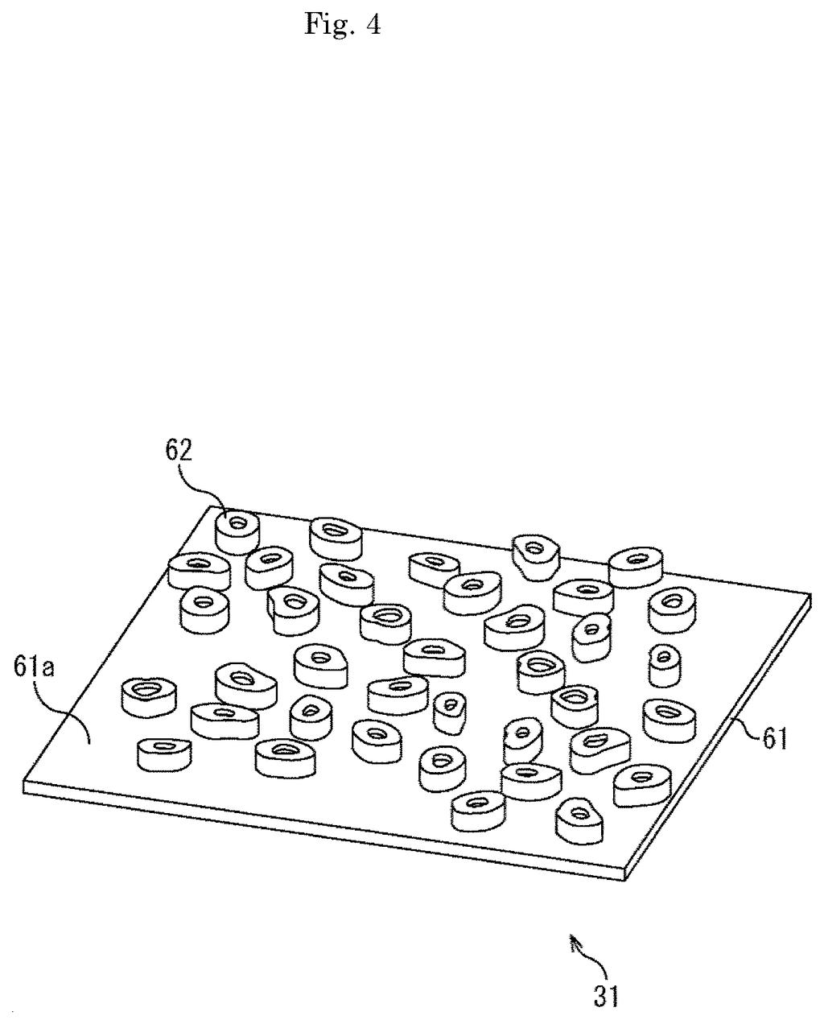
What Sony's textured optical element actually does
A security camera stares at an empty hallway all night. When someone finally walks in, one corner of the frame is blown out by a window and another is too dark to make out a face. That's not just a software problem, it's physics.
Sony's new patent describes a lens with a surface covered in microscopic pits or bumps arranged so that different zones of the lens spread incoming light at different rates. Think of it like a pair of progressive glasses, where the top part of the lens does something different from the bottom, except instead of correcting your vision, each zone of the lens is tuning how light fans out before it hits the camera's sensor.
The company specifically calls out use cases like vehicle cameras, drones, ships, and cameras mounted on electric poles, all places where you can't just repoint the camera or swap the lens when lighting gets difficult. The idea is to bake the compensation right into the glass itself.
An optical element that is disposed on an optical path from a subject to an imaging element, wherein the optical element is configured such that a plurality of fine recess parts or protrusion parts are disposed on a surface of the optical element so as to have different ray diffusion characteristics depending on a position on a cross section of an optical path.
Translation: The lens uses tiny bumps and dips across its surface to scatter light differently in different spots.
How the micro-bumps steer light across the lens face
The patent covers an optical element (a lens or lens-like disc) placed in the light path between a scene and the image sensor. Its surface is etched or molded with a grid of fine recesses or protrusions, microscopic pits or bumps, but they aren't uniform. The pattern is arranged so that different positions on the lens cross-section produce different ray diffusion characteristics (meaning light spreads out at different angles and intensities depending on where it enters).
The key technical claim is spatial variation: the diffusion behavior changes depending on position across the optical path's cross-section. A zone near the lens edge might scatter light broadly to reduce harsh glare, while a central zone scatters it narrowly to preserve fine detail.
The patent envisions this element working alongside:
- Fixed installation cameras (vehicles, drones, poles, ships)
- Image processing software that converts the raw captured image into a "restored image" that corrects for the intentional diffusion
- Imaging systems that also include a display device
That last point matters: the optical element and a software correction layer are designed as a pair. The lens intentionally distorts the light in a known, controlled way, and then an algorithm undoes the distortion selectively to produce a cleaner final image than a plain lens would.
The present technology is applicable to, for example, installation-type imaging devices to be installed in vehicles, drones, electric poles, ships, or the like, image processing devices that perform image processing of converting a captured image captured by the imaging device into a restored image that is an image of a subject …
Translation: Sony suggests putting these cameras on cars, drones, and utility poles to capture and fix images.
What this means for cameras on cars, drones, and poles
For cameras bolted to a car pillar or a street pole, there's no operator adjusting the zoom or angling a reflector. The camera has to handle whatever light arrives, bright sky at the top of the frame, dark road at the bottom, glare from oncoming headlights somewhere in the middle. Baking zone-specific light control directly into the lens material is one way to give a fixed camera the adaptability it would otherwise need a mechanical iris or a post-processing AI to achieve.
Sony is a major supplier of image sensors to the automotive and surveillance industries, so this isn't abstract research, it fits a product line the company already sells into. The filing also pairs the physical lens with a software restoration step, which suggests Sony sees this as a system patent covering both the glass and the processing pipeline. Readers who follow camera and automotive imaging patents will find this sits alongside the wave of plain-English patent summaries covering how sensor makers are pushing optical design further into the computational photography era.
That makes this Sony's 50th filing in our Camera patents we cover since May, a group that includes one on detecting tiny cracks and one on sound via motion camera.
Claim 1 is broad in a way that should give Sony's lawyers something to work with, and should give competitors something to worry about. It covers any optical element, in any imaging application, where the surface features (pits or bumps) produce spatially varying diffusion. That's a wide net: the claim doesn't specify the shape of the features, the material, the imaging wavelength, or how extreme the variation must be. In practice, that breadth means the claim could read on a lot of different lens manufacturing approaches that happen to produce non-uniform scattering, whether the designer intended that effect or not.
Whether the USPTO grants it at that scope is another question; examiners will look hard at prior art in structured-light optics and anti-glare coatings, both of which involve patterned surfaces with varying optical properties. What makes this filing commercially interesting rather than just broad is the explicit tie to fixed-installation cameras, vehicles, drones, poles. That's a real market with a real unsolved problem, and pairing the lens with a software correction step is a credible engineering approach to it.
The claim as written gives Sony a potential monopoly on the concept before anyone else locks it down.
Get our take in your Top Stories
Liked this breakdown? Add Patentlyze as a preferred source on Google, and our plain-English take shows up more often in your Top Stories the next time Sony patent news breaks.
There are more where this came from
We read every patent application Big Tech publishes and send you the ones worth knowing. Plain English, free, every week.
The drawings
23 drawing sheets from US 2026/0251824 A1 · click any drawing to enlarge


Want this weekly breakdown for a company we don't cover? Patentlyze Pro →
Be the first to weigh in