
Sony Patent Describes Camera Technology That Monitors and Detects Its Own Lens Degradation
What if your camera could tell you, or your car, that its lens is too dirty or damaged to be trusted? Sony has filed a patent for exactly that: a system that measures physical lens degradation in real time and adjusts how the whole device operates in response.
What Sony's self-diagnosing camera system actually does
Imagine you're driving a car that relies on cameras to spot pedestrians, and the lens has a smear of mud across it. The camera still produces images, but they're misleading, and the car's system has no idea anything is wrong.
Sony's patent describes a chip-level system that looks at the images a camera produces and figures out how physically degraded that camera has become. We're not talking about a blurry photo here, the system is trying to detect real, lasting damage to the camera's imaging ability, like a scratched or fogged lens. Once it measures that degradation, it decides how the device should behave.
That last part is key. The system doesn't just flag a warning, it actively switches the device into a different operating mode based on how bad the damage is. That could mean falling back to a safer mode, alerting a user, or handing off to a backup system entirely.
… determine a degree of image degradation based on the obtained image data, wherein the degree of image degradation indicates a degree of a physical reduction of an imaging capability of the camera …
Translation: The system analyzes photos to figure out if the camera lens is physically damaged or wearing out.
How the chip scores lens damage and picks an operating mode
The patent describes a processing unit (a piece of circuitry, meaning dedicated hardware logic) that handles three tasks in sequence.
- Capture: It takes in image data from a camera.
- Score: It calculates a "degree of image degradation", a number that reflects how much the camera's physical imaging capability has been reduced. This is distinct from ordinary image quality variation caused by lighting or motion blur; the patent specifically frames this as a physical reduction, meaning damage or contamination to the camera hardware itself, such as a scratched lens, condensation buildup, or sensor fouling.
- Respond: Based on that score, it selects an "operation mode" for the device. The patent does not enumerate every possible mode, but the structure implies a tiered response, a mildly degraded camera might trigger a warning, while a severely degraded one might force a fallback behavior or disable certain features.
The cleverness here is that the degradation score is derived from the image data itself, the system is essentially using the camera's own output as a self-diagnostic signal. No external sensor or manual inspection is required. The circuitry watches for patterns in the image that indicate the lens or sensor is compromised rather than just showing a difficult scene.
… determine, based on the determined degree of image degradation, an operation mode of the information processing apparatus.
Translation: The device automatically changes how it functions once it detects that the camera lens quality has dropped.
What this means for cameras in cars, phones, and factories
In safety-critical applications, autonomous vehicles, industrial robots, medical devices, security systems, a camera that silently degrades is more dangerous than one that fails outright. A failed camera is obvious; a partially working one can feed bad data to a system that believes it is still getting good input. Sony's patent addresses that gap by making the camera aware of its own physical condition and able to act on that awareness automatically.
This kind of sensor self-monitoring is increasingly relevant as cameras move from being passive recorders to active decision-makers in AI-driven systems. Sony Semiconductor Solutions, which supplies image sensors to a wide range of device makers, is in a natural position to embed this logic at the chip level rather than leaving it to software layers above. Coverage of imaging-related new Big Tech patents shows a consistent push toward sensors that do more than capture, they evaluate, filter, and report on their own reliability.
That makes this Sony's 20th filing we've tracked since July in the self-driving sensing race, joining the human takeover patent and the dual-focus camera patent.
Sony's design asks the camera to judge its own health using the same pictures it takes, which means a dirty lens, a rainy night, or a dim garage can look identical to permanent physical damage. There is no independent reference to settle the question, so the system is only as trustworthy as the software making that call.
That software judgment is the real cost of keeping the hardware simple. A rough scoring algorithm turns every foggy morning into a false alarm, and if people get enough false alarms they stop believing the warnings, which defeats the purpose entirely.
For a car or a factory robot, some self-awareness about camera health is far better than none, and a system that dials back its own workload when the image degrades beats one that fails silently. The trade reads as reasonable, but only if the false alarm rate is low enough that the people relying on it actually trust what it tells them.
Get our take in your Top Stories
Liked this breakdown? Add Patentlyze as a preferred source on Google, and our plain-English take shows up more often in your Top Stories the next time Sony patent news breaks.
There are more where this came from
We read every patent application Big Tech publishes and send you the ones worth knowing. Plain English, free, every week.
The drawings
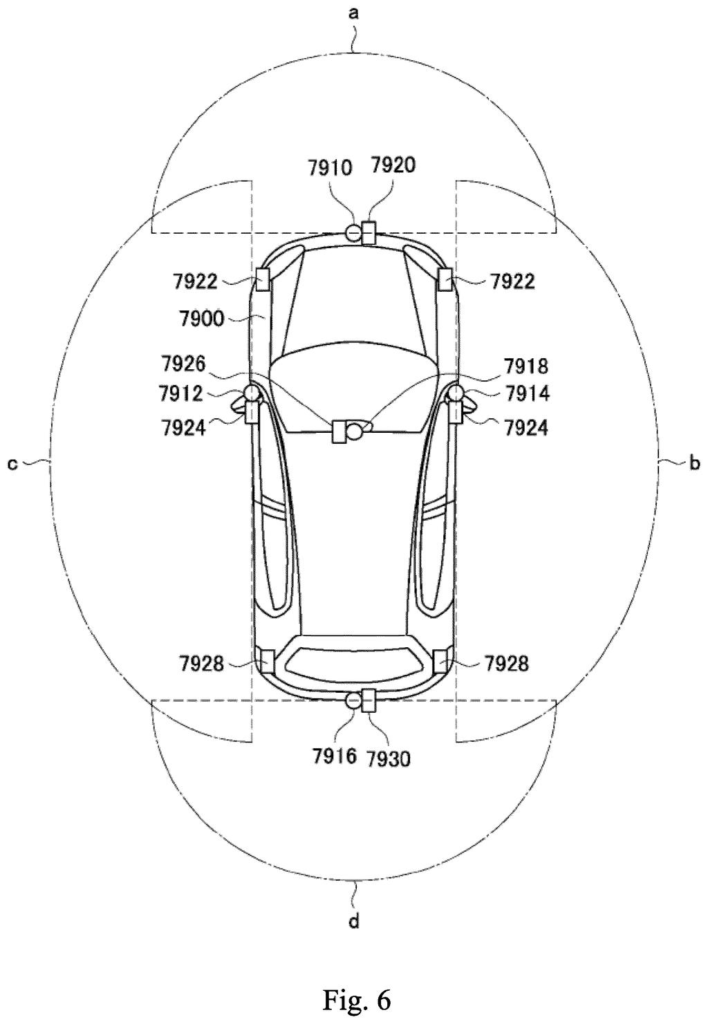
6 drawing sheets from US 2026/0253204 A1 · click any drawing to enlarge


Want this weekly breakdown for a company we don't cover? Patentlyze Pro →
Be the first to weigh in