
IBM Patents a Way to Search Version History Using Plain English
Tracking down exactly when a document or piece of code changed is usually a job for specialists who know the right commands. IBM is patenting a system that lets you just ask, in plain English, and lets AI figure out the rest.
How IBM wants to make version control searchable for everyone
Anyone who has ever dug through a document's revision history to find when a specific change happened knows how frustrating it can be. You often need to already know what you're looking for before the tool will help you find it.
IBM's patent describes a system that watches for changes in content (think edits to a document or updates to a codebase) and keeps a running log. When you type a question in plain English, like "when did the refund policy get updated?", an AI layer takes your words, matches them against that change history, and decides whether it has enough information to give you a confident answer or needs to dig deeper.
The key idea is that the AI contextualizes your query. It doesn't just run a keyword search; it weighs whether the results it found are actually good enough to answer what you meant, not just what you typed.
a tracking component that tracks content changes, wherein the tracking component monitors and detects changes made to content, including additions, deletions, or updates; a natural language processing component that interprets a natural language query …
Translation: The system watches for edits and understands everyday search requests.
How the AI fills in what your search query left out
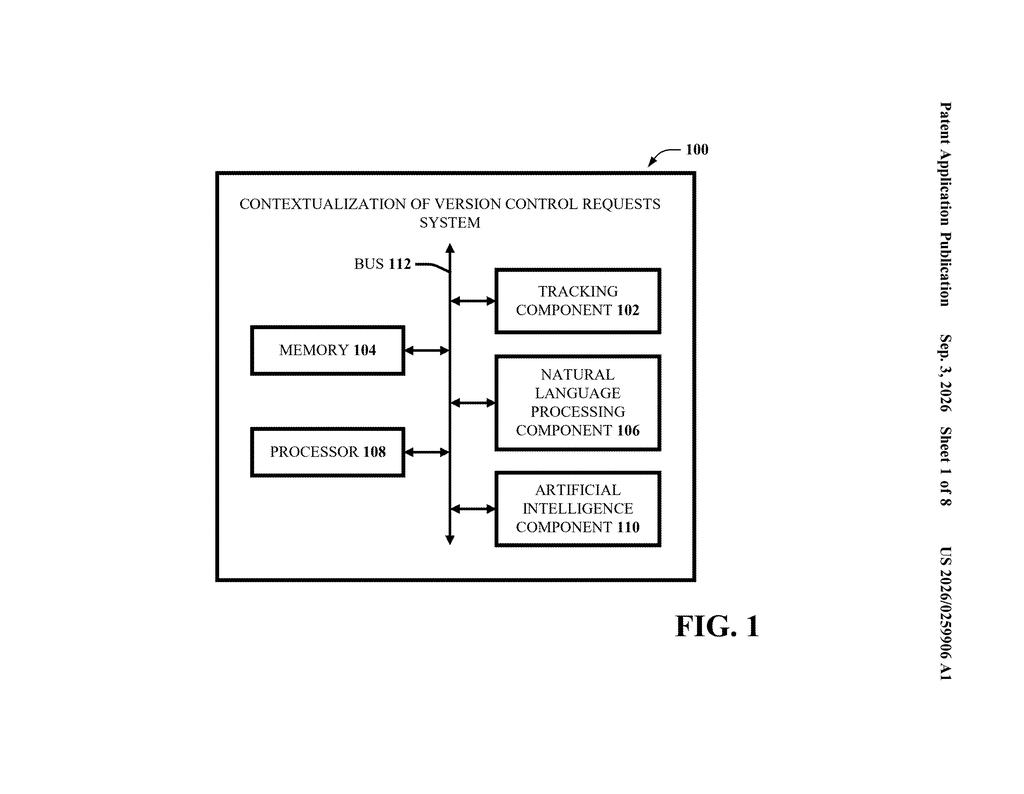
The system has four working parts that operate in sequence.
- Tracking component: Monitors content continuously and logs every addition, deletion, or update, building a timestamped record of what changed and when.
- Natural language processing (NLP) component: Takes a plain-English question, pulls out the key terms and intent, and prepares a structured version of the query the AI can work with. NLP is the same family of technology that powers chatbots and voice assistants.
- AI component: This is the core step. It takes the structured query, layers in the tracked change history as context, and then asks a second question internally: is there enough information in the likely results to actually answer the user's question correctly? If not, it can adjust the query before returning an answer.
- Search component: Executes the finalized, AI-refined query against the metadata of the stored content changes and surfaces the result.
The sufficiency check is what separates this from a standard search. Most systems return whatever matches your keywords and leave you to judge. This system has the AI pre-judge the quality of its own answer before showing it to you.
… an artificial intelligence component that contextualizes, based at least in part on the tracked content changes, the query and infers sufficiency of a potential result of the contextualized query.
Translation: Smart software uses the edit history to figure out if search results actually answer the question.
What this could mean for everyday software teams
For anyone working on a team that edits shared documents or code, the practical payoff is time saved chasing down change history. Today that usually means knowing a specific tool's command syntax or scrolling through long revision logs manually.
If IBM builds this into a product like IBM's push into AI-assisted developer tooling, even non-technical team members could ask questions about content history directly. The sufficiency check is also meaningful: a system that knows when it doesn't have a good answer, and says so, is more trustworthy than one that always returns something plausible-looking but potentially wrong.
This is the 33rd IBM filing in Language AI we've tracked since May, following one on rewriting prompts with company data and one on catching made-up AI summaries.
The most useful thing this system does is tell you when it does not know enough to answer. That single behavior saves the person asking from having to verify the answer themselves, which is usually the whole reason they asked in the first place.
For someone in a legal, compliance, or policy role, this matters immediately. Right now, finding out what changed in a document and when requires either learning a specialized tool or waiting for someone else to dig it up. A system that takes a plain question, connects it to the full history of changes, and only responds when it can stand behind the answer puts that information within reach of far more people.
The real question is how well the confidence check is calibrated. Flag uncertainty too often and people stop trusting it; flag it too rarely and nothing has changed. That one judgment call determines whether this becomes a tool people rely on or one they stop using.
Get our take in your Top Stories
Liked this breakdown? Add Patentlyze as a preferred source on Google, and our plain-English take shows up more often in your Top Stories the next time IBM patent news breaks.
There are more where this came from
We read every patent application Big Tech publishes and send you the ones worth knowing. Plain English, free, every week.
The drawings
8 drawing sheets from US 2026/0259906 A1 · click any drawing to enlarge


Want this weekly breakdown for a company we don't cover? Patentlyze Pro →
Be the first to weigh in