
Sony Patents a System That Checks Its Own Soil Sensors for Interference
Soil sensors only work well if nothing is blocking them. Sony has filed a patent for a system that can tell, on its own, when a rock, root, or other object is getting in the way.
What Sony's self-checking soil sensor actually does
Farmers and agricultural researchers use sensors buried in soil to measure moisture, but those sensors can give bad readings if something solid sits between them and blocks the signal. Sony wants to fix that by giving the sensor system a way to catch its own errors before they cause problems.
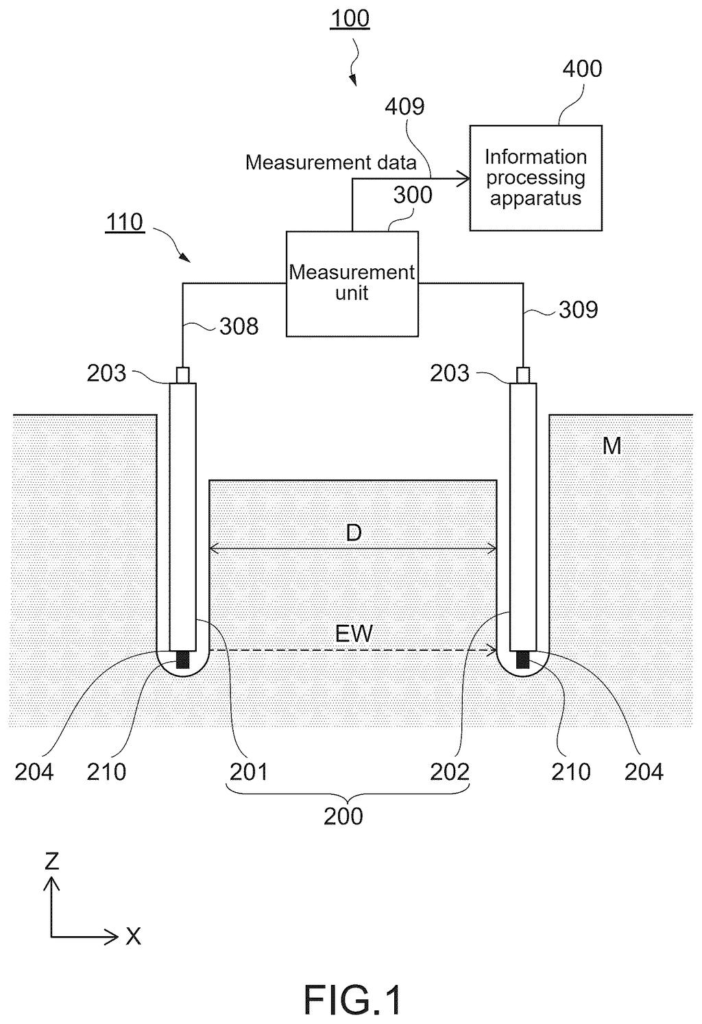
The idea uses two probes placed in the soil facing each other. One sends out a radio signal, the other receives it. By analyzing how that signal changes as it travels through the soil between the probes, the system can figure out whether something solid, like a stone or a root, is sitting in the path and throwing off the reading.
If the system detects an obstruction, the sensor can be moved or the reading can be flagged as unreliable. Sony also notes this could connect to crop irrigation systems, letting farms water their fields more precisely based on trustworthy moisture data.
a transmission coefficient calculator that calculates a transmission coefficient from a time waveform of a transmitted wave that is transmitted through a region in a medium and received by a receiver …
Translation: The system measures how a wave travels through soil to check for interference.
How the probe pair measures signal interference
The patent describes a pair of probes, each fitted with an antenna, that are positioned in a growing medium (think soil or another agricultural substrate). One probe acts as a transmitter, sending an electrical signal that includes what the patent calls an incident wave, essentially a radio pulse. The other probe acts as a receiver, picking up whatever of that signal made it through the soil between them.
A processing unit called the transmission coefficient calculator then analyzes the received signal's time waveform (a graph of how the signal's strength and shape change over time). It computes a transmission coefficient, which is a measure of how much signal got through versus how much was absorbed or blocked. A soil-only path produces a predictable coefficient; a solid object in the way produces a different one.
A determination section compares the calculated coefficient against expected values and flags whether a foreign object sits in a specific zone between the probes. The claims are written to cover the medium broadly, so the same approach could apply to other materials beyond agricultural soil.
Sony's abstract also mentions connecting this detection capability to irrigation control, so a system that confirms its sensors are unobstructed could automatically adjust how much water gets sprayed on crops.
Water spraying on crops can also be controlled according to a result of measurement performed by a moisture sensor. This could result in contributing toward using water more efficiently in the field of agriculture.
Translation: Soil data helps automate irrigation to save water on farms.
What this means for precision agriculture tech
Bad sensor data in farming costs real money. A moisture sensor that reads incorrectly because a rock is blocking it can trigger unnecessary irrigation, waste water, or leave crops under-watered. A self-auditing system that can flag its own interference before acting on bad data is a practical fix for a concrete operational problem.
Sony's filings in agricultural sensing sit alongside broader industry work on precision agriculture, where reducing water waste is both an environmental and an economic target. If this detection layer can be built into existing probe-based sensors without major added hardware, it could slot into soil-monitoring setups that are already commercially deployed.
This is the 11th Sony filing we've tracked in our sensor coverage since June, adding to work like one on streaming 3D scans and one on a self-cleaning gas sensor.
Soil sensors fail. A rock or air pocket between the probes gives you a confident-looking reading that is simply wrong, and in farming, wrong data means wrong decisions about water and fertilizer across entire fields. That silent error is the problem Sony is trying to catch.
The patent's core idea is to check whether the signal traveling between two buried antennas arrives weakened or distorted, which would suggest something physical is sitting in the way. If it is, the system flags the placement as unreliable before that bad data ever reaches the farmer.
Whether this becomes a real product depends almost entirely on whether the detection hardware can be made cheap enough to include in every probe without adding meaningful cost. The problem is the right size to solve; the economics will decide whether it gets solved at scale.
There are more where this came from
We read every patent application Big Tech publishes and send you the ones worth knowing. Plain English, free, every week.
The drawings
35 drawing sheets from US 2026/0266796 A1 · click any drawing to enlarge


Want this weekly breakdown for a company we don't cover? Patentlyze Pro →