
Meta Patents a Camera Housing That Electrically Controls Focus From Inside
Meta has filed a patent for a lens barrel with a built-in electrical wire running straight through its wall, letting a small voltage change the focus of a lens without any moving parts. It is a simple idea with a surprisingly large impact on how thin and fast future AR glasses could be.
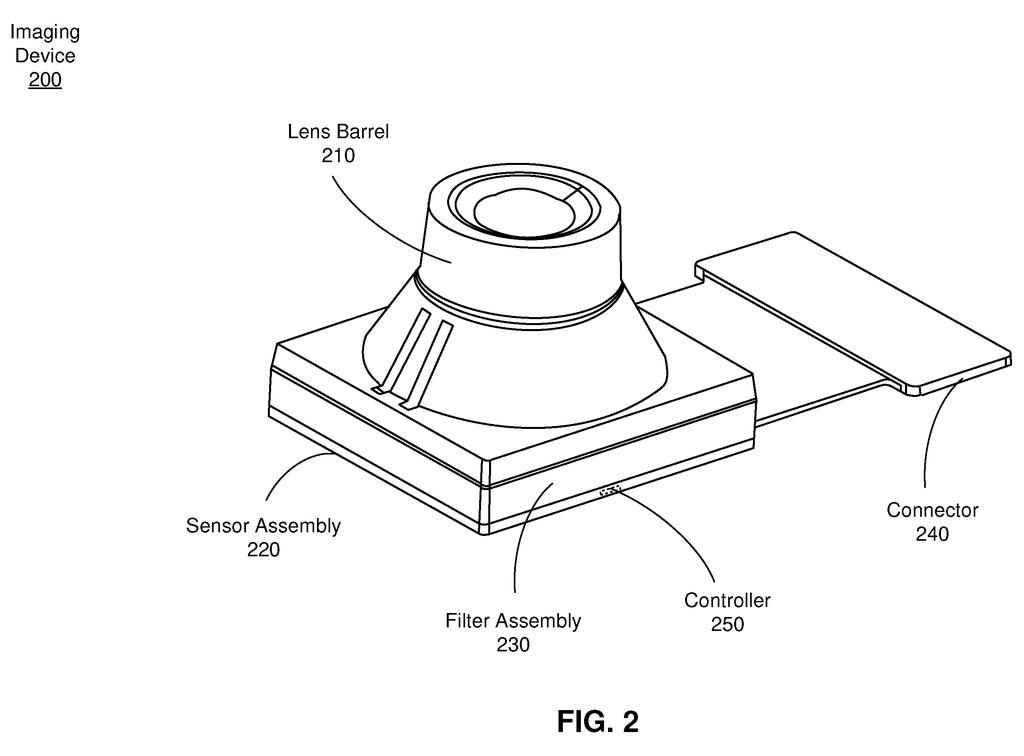
What Meta's electrically adjustable lens actually does
Imagine you put on a pair of AR glasses and they instantly sharpen the virtual image to match exactly where your eyes are looking, no whirring motors, no mechanical clicks. That is the kind of experience Meta is working toward with this filing.
The patent describes a special lens holder (called a lens barrel) with a tiny electrical conductor built right into its wall. Instead of using external wires or moving mechanical parts to change focus, a small electrical signal travels through that built-in conductor to a tunable lens, which changes its optical power on demand.
Think of a tunable lens the way you think of a camera app's digital zoom, except this works with real optics. Send more voltage, the lens bends light more. The result is instant, silent focus adjustment baked into the hardware itself.
… a tunable lens configured to adjust an optical power of the tunable lens in accordance with an electrical signal; and a lens barrel including an integrated electrode for providing the electrical signal to the tunable lens …
Translation: The lens changes how it focuses using electricity delivered through the lens housing.
How the conductive via carries the signal to the lens
The patent centers on a conductive via, a tiny channel of electrically conductive material drilled or molded directly through the wall of the lens barrel. It runs from the outside surface of the barrel, through the barrel's body, and connects to the tunable lens sitting inside.
A tunable lens is a lens whose optical power (how sharply it bends light) can be changed by applying an electrical signal. Common examples use liquid crystal layers or electrowetting (a technique where voltage reshapes a droplet of fluid to change how it focuses light). No gears, no servos, no physical movement required.
By building the electrode directly into the barrel wall as a via, Meta eliminates the need to route wires around the outside of the barrel or attach separate electrodes to the lens after assembly. The barrel itself becomes part of the electrical circuit.
The claim also mentions a conventional fixed lens sitting alongside the tunable lens inside the same barrel, suggesting the two work together: the fixed lens handles the bulk of the focusing work while the tunable element makes fine, rapid corrections.
A conductive via runs through lens barrel so an electrical signal can adjust an optical power of the tunable lens held by the lens barrel.
Translation: A tiny electrical pathway goes right through the lens holder to control the focus.
What this means for thinner, faster-focusing AR glasses
For AR headsets and smart glasses, every millimeter of thickness and every gram of weight matters. Routing external wires to a tunable lens adds bulk and introduces failure points. Integrating the electrode into the barrel wall solves both problems at once, letting engineers build thinner, cleaner optical stacks.
Focus speed matters too. If your AR glasses can adjust focus electrically in milliseconds, the virtual images they overlay can keep up with your eyes as they shift gaze, reducing the eye strain that plagues many current headsets. a growing pile of Meta optics filings this year suggests the company sees tunable optics as a foundational piece of its next-generation wearable hardware.
That makes this Meta's 64th filing we've tracked since May in the AR glasses race, adding to work like pupil-matched display light and multi-camera sharpness.
Claim 1 covers any imaging device that pairs a fixed lens with a tunable lens inside a barrel where the wire carrying the control signal runs through the barrel wall itself. The claim sets no limits on the type of tunable lens, the voltage, the material, or the product category, so the protected design is the structural combination, not any particular optical trick.
That breadth has real consequences. Any engineer building AR glasses or a compact camera who routes the focus-control signal through the barrel wall rather than attaching an external wire or clip would fall inside this claim.
The barrel is the piece every lens in the device passes through, which makes a structural patent on it commercially significant. If granted, this claim gives Meta standing over a space-saving design choice that other manufacturers might reach on their own, simply by trying to keep their products small.
There are more where this came from
We read every patent application Big Tech publishes and send you the ones worth knowing. Plain English, free, every week.
The drawings
8 drawing sheets from US 2026/0276939 A1 · click any drawing to enlarge


Want this weekly breakdown for a company we don't cover? Patentlyze Pro →
Be the first to weigh in