
Apple Patents a Way to Stretch Your Phone Screen Into Thin Air Using AR
Your phone's tiny display could one day spill out beyond its physical edges, filling the space around it with a virtual version of its own screen. A newly published Apple patent describes exactly how that would work.
How Apple's virtual phone screen expansion actually works
Every time you squint at a video or try to read a document on your phone, you hit the same wall: the screen is only so big, and there is nothing you can do about it. Apple's new patent describes a way around that.
The idea is that a second device, think a pair of AR glasses or a headset like Vision Pro, looks at your phone sitting on the desk in front of you. It sees the phone, understands where its screen is, and then draws a virtual extension of that screen into the space around it. You can see your phone's actual apps and content beyond the physical edges of the glass.
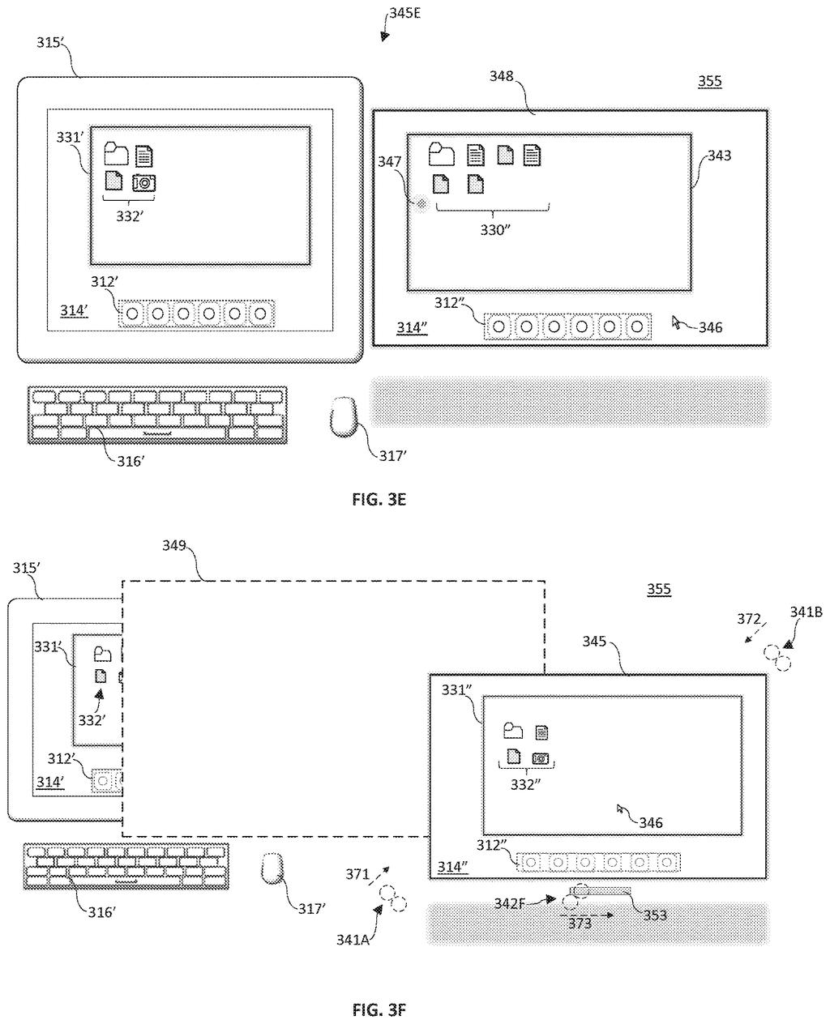
The patent goes further than just mirroring. A file stored on the glasses (or whatever the second device is) can appear floating next to the phone's screen, and you can drag it over to transfer it. So the two devices don't just look connected; they behave as one workspace.
… transferring the data corresponding to the first object from the first electronic device to the second electronic device.
Translation: Dragging a file from one device to another through midair.
How the AR device maps, mirrors, and extends the phone UI
The patent describes a system where a first device, likely a headset or AR glasses, uses its cameras to capture a real-world scene that includes a second device like an iPhone or iPad. From that camera feed, it builds a three-dimensional environment that the wearer sees, overlaying virtual elements on top of the real picture.
Inside that 3D environment, the system displays three things simultaneously:
- A representation of the real phone as it physically sits in the room
- A virtual copy of whatever user interface (apps, home screen, or a specific app's content) is running on that phone
- A separate virtual object representing data that lives on the headset itself, displayed outside the phone's virtual screen boundary
The virtual UI isn't just decoration. The claim specifically covers transferring data from the first device to the second: the user receives some kind of input (a gesture, a tap, or a look-and-pinch) and in response, the file moves. The phone's screen, in other words, becomes a drop zone inside an augmented workspace.
The claim language is broad enough to cover a physical phone that's actually present in the room or one that's represented virtually even when not visible. The augmented screen can show all or part of the phone's active interface, meaning it could function as a selective projection of specific content rather than a full mirror.
… a virtual user interface element representing an extension of the physical display of the first electronic device.
Translation: An extra screen area floating in the air that enlarges your device's display.
What this means for Vision Pro and iPhone together
Screen size has been a persistent friction point for mobile computing, and every software workaround (split view, Stage Manager, external displays) has required either a big screen to begin with or a cable. This patent describes an approach that needs neither: just a phone and a wearable that can see it.
For Apple specifically, this filing points at a clear use case for Vision Pro and future, lighter AR glasses alongside iPhone. Apple keeps filing on AR-as-a-second-screen concepts If the transfer mechanic works as described, the friction of moving a file from a headset to a phone collapses into a single gesture. That's a meaningful quality-of-life shift for anyone who already switches between their phone and a larger screen throughout the day.
Apple's 46th patent application we've tracked since May joins earlier work on sliding screens to fit your eyes and when devices decide to speak up in our Apple AR glasses watch.
Small phone screens exhaust people every day. Reading, working, and watching on a tiny rectangle pushes most of us toward tablets and laptops we would not otherwise need to buy or carry.
This patent addresses that directly by letting a pair of glasses extend your phone's screen into the space around it, so what you see stretches far beyond the physical edges of the device in your hand. Files and content move between the two through simple physical gestures, turning them into a single coordinated tool.
Whether the experience holds up in a bright, crowded room is a fair question that a patent cannot answer. But the problem it targets is large, daily, and shared by nearly everyone who owns a phone, and that alone makes the ambition here hard to dismiss.
There are more where this came from
We read every patent application Big Tech publishes and send you the ones worth knowing. Plain English, free, every week.
The drawings
23 drawing sheets from US 2026/0278965 A1 · click any drawing to enlarge


Want this weekly breakdown for a company we don't cover? Patentlyze Pro →