
Apple Patents an XR Headset Feature That Guides Users Through Physical Spaces
Apple is exploring a way for extended reality headsets to watch how you're moving and behaving, figure out that you might need help, and then overlay directions tied to your own body's position, all without you having to ask.
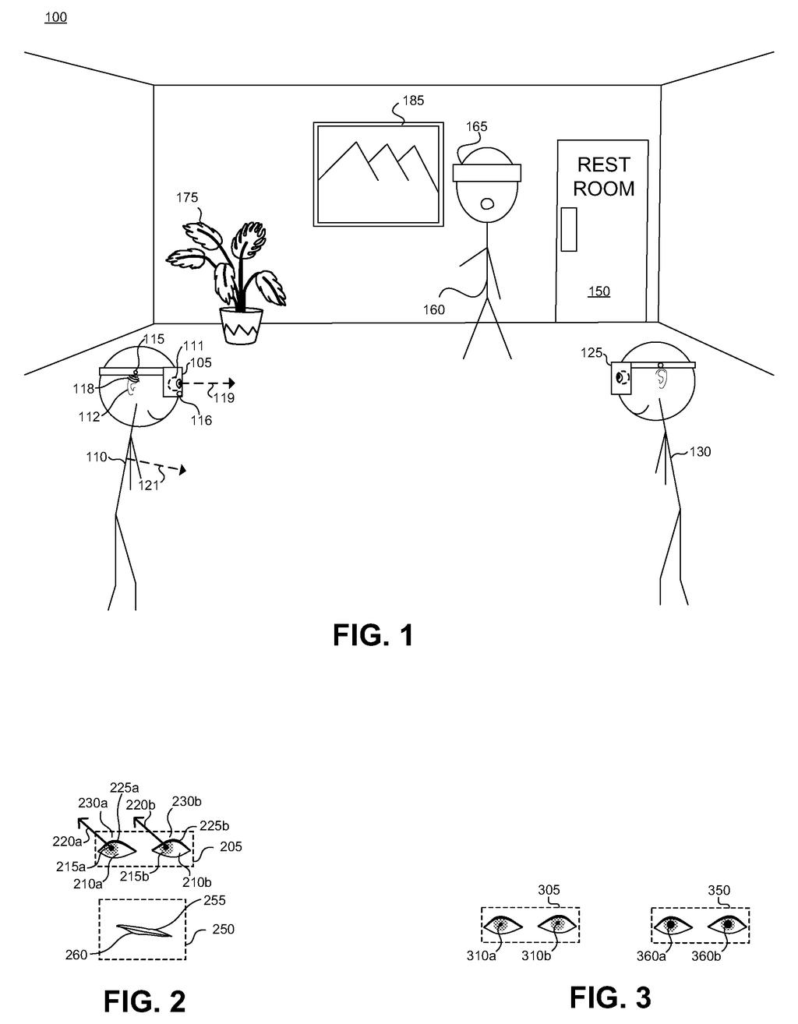
What Apple's sensor-based navigation assist actually does
Every time someone wearing a vision headset pauses too long, looks the wrong way, or misses a sign, there's a small window where a nudge could make a real difference. Apple's patent describes a system that watches for exactly those moments.
The idea is that a wearable XR device (think a headset or smart glasses) continuously reads sensor data about both you and the space around you. If it detects that your state matches a pattern suggesting you need help, it puts visual or other guidance directly in your field of view. The directions aren't abstract arrows on a map; they're anchored to your body, telling you to move left or right relative to the way your torso is already facing.
The patent specifically calls out assistance for people who are disabled or impaired, which puts this squarely in the accessibility space rather than general navigation. It's less about turn-by-turn GPS and more about a headset that notices you're struggling and steps in.
determining the user state in the physical environment based on monitoring the sensor data, wherein the user state corresponds to a user requirement for assistance in the physical environment; and presenting content based on the user state …
Translation: The headset figures out when you need help based on sensor data and shows helpful content.
How the device reads your state and builds guidance cues
The patent describes a method running on a wearable electronic device, most likely a headset, that performs three main jobs continuously.
First, it captures sensor data. The device monitors the environment and the user simultaneously using onboard sensors (cameras, motion sensors, possibly depth sensors). The exact sensors aren't enumerated in the claim, but the system needs enough information to understand both what's around the user and how the user is behaving.
Second, it determines user state. From that sensor stream, the system infers a "user state" (essentially a snapshot of what the person needs right now). The claim says this state must correspond to a "user requirement for assistance," meaning the device has to recognize that help is actually needed, not just that the user is moving. This is the core inference problem: distinguishing someone confidently navigating from someone who is lost, disoriented, or physically unable to proceed without guidance.
Third, it presents content. Once a need is detected, the device overlays content into the extended reality view. Critically, the guidance is expressed relative to the direction the user's torso is facing, not a fixed compass direction. So instead of "go north," the user might see an indicator saying "turn to your left" based on how their body is currently oriented.
The patent also ties this to an explicit accessibility feature toggle, suggesting it's designed as an opt-in system for users who know they need that layer of help.
The sensor data may be used to understand that a user’s state is associated with providing user assistance, e.g., a user’s appearance or behavior or an understanding of the environment may be used to recognize a need or desire for user assistance.
Translation: Sensors track your behavior and surroundings to figure out if you are struggling and need guidance.
What this means for accessibility in AR headsets
For people with visual impairments, cognitive conditions, or mobility challenges, spatial orientation in unfamiliar environments is a real daily problem. Current assistive technology often requires a separate device or app. A headset that watches passively and intervenes only when needed could lower that barrier considerably, folding assistance into a device the person is already wearing.
For Apple, Apple has been filing around XR accessibility since 2023, this fits a pattern of treating Vision Pro and its successors as platforms that serve people with disabilities, not just early-adopter enthusiasts. The body-relative framing of the directions is a small but telling detail: it shows the system is designed around how a real person thinks about movement, not how a map is laid out.
Apple's 50th filing we've tracked since May in our AR glasses watch builds on work like room scan completion and floating recessed windows.
The ship path for this feature is shorter than most XR patents because it doesn't appear to require new hardware. A headset with cameras and motion sensors, which Apple's Vision Pro already has, is the starting point. The gap is software: building a reliable classifier that can tell "this person needs help" from "this person is just pausing to look around" is genuinely hard and will require a lot of real-world training data.
The body-relative instruction approach ("move left relative to your torso") is a considered design choice. Standard turn-by-turn navigation assumes the user can orient themselves on a map; this system assumes they can't or shouldn't have to. That's a meaningful distinction for someone with a vestibular disorder or low vision.
The accessibility framing also gives Apple a regulatory and reputational reason to ship this even if the general audience is small. Expect to see this kind of sensor-driven awareness woven into whatever follows Vision Pro, probably as an accessibility setting that ships alongside the headline features.
There are more where this came from
We read every patent application Big Tech publishes and send you the ones worth knowing. Plain English, free, every week.
The drawings
4 drawing sheets from US 2026/0278925 A1 · click any drawing to enlarge


Want this weekly breakdown for a company we don't cover? Patentlyze Pro →