
Samsung Patents an AI Photo Eraser That Reshapes Its Own Selection Before Filling In the Background
Removing an unwanted object from a photo sounds simple, but the selection edge is usually where things go wrong. Samsung is filing a patent that tweaks the shape of the selected region before handing it to an AI generator, trying to get cleaner results at the boundary.
What Samsung's object-removal tool actually does
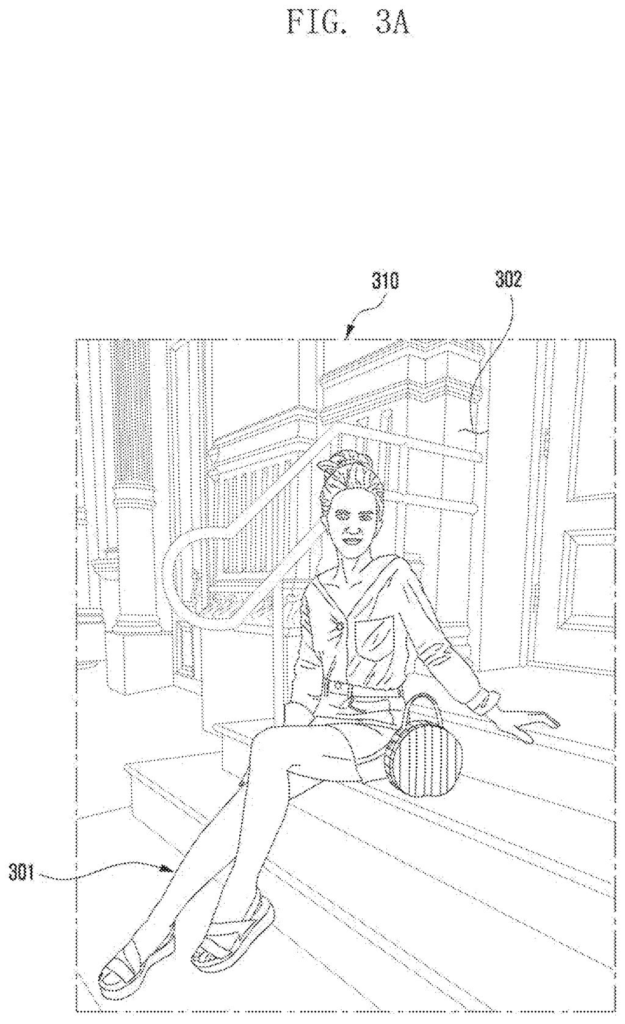
Imagine you take a family photo and there's a stranger standing right in the middle. You want to erase them and let the background fill in naturally, but every time you try, the AI leaves a weird blob or a smeared edge where the person used to be.
Samsung's patent tackles that edge problem directly. When you tap to select the object you want removed, the device traces its outline and creates a "mask" (basically a shape stencil). Before sending anything to the AI, the system reshapes that stencil, adjusting its border. The idea is that a slightly modified selection boundary gives the AI generator a cleaner starting point, so the replacement background looks like it was always there.
The result is a second image where the object is gone and the background has been filled in using generative AI. It's the same broad category of feature you've seen in Google Photos or iPhone's Clean Up tool, but Samsung is patenting a specific pre-processing step: reshape first, generate second.
… transform the mask region to have a different outline; and based on information related to the first image including the transformed mask region, generate, through a generative artificial intelligence, a second image in which the object image region is changed to the background image region.
Translation: The AI alters the shape of your selection before filling in the missing background.
How the mask transforms before the AI generates
The patent describes a pipeline that runs on the device before any AI generation starts.
- Selection: You tap or draw around the object you want removed. The device identifies the precise outline of that region within the photo.
- Mask generation: The system creates a mask region tied to that outline, essentially a digital stencil marking the area to be replaced.
- Mask transformation: Here is the key step. The device deliberately changes the mask's outline, giving it a different shape than the raw user selection. The patent doesn't pin down a single transformation method, leaving room for expanding, shrinking, smoothing, or otherwise adjusting the boundary.
- Generative AI fill: The modified mask, together with the original image data, is passed to a generative AI model (the kind that can synthesize realistic-looking pixels from scratch). The AI produces a second image where the masked region has been replaced with a plausible continuation of the background.
The core claim is about that mask-reshaping step. The theory is that a raw user selection often clips some background pixels or includes a fringe of the object, and either error confuses the AI fill. A transformed mask gives the generator a cleaner, more AI-friendly boundary to work with.
What this means for Samsung's AI photo editing
Object removal is already a mainstream feature on most flagship phones, so Samsung is not inventing the category here. What it is doing is patenting a specific preprocessing step that could improve one of the most visible failure modes: the soft halo or background smear that appears right where the deleted object used to be. If the mask-reshaping approach delivers, users would see cleaner, less touch-up-required results.
For Samsung, Samsung's interest in on-device generative AI photo editing makes this a logical piece of a larger puzzle. The practical cost of the approach is opacity: the device is changing your selection before the AI ever sees it, which means the output could differ from what you expected to erase. Whether that tradeoff reads as helpful (the AI gets better data) or frustrating (the device second-guessed you) will depend entirely on how well the transformation is tuned.
Samsung's 135th filing we've tracked since May in our camera sensor push work follows a fingerprint in the frame and an AI slow-motion method.
Cleaning up a selection boundary before handing it to an AI generator is a reasonable preprocessing step, and it will produce visibly better results in many cases. But the device is modifying what you asked for, and that gap between your intent and the adjusted instruction is where things can go wrong.
If the reshaped boundary expands even slightly too far, the AI erases background you wanted to keep. If it shrinks, a ghost of the original object lingers at the edge. The patent leaves open exactly how the transformation is chosen or constrained, which means the most consequential design decisions are unresolved.
That makes this a promising idea with an honest cost: you get cleaner outputs on average, but you trade away precision, and users who notice the difference have no way to correct it. Whether that trade is worth it depends entirely on implementation details this document does not address.
There are more where this came from
We read every patent application Big Tech publishes and send you the ones worth knowing. Plain English, free, every week.
The drawings
23 drawing sheets from US 2026/0289870 A1 · click any drawing to enlarge


Want this weekly breakdown for a company we don't cover? Patentlyze Pro →
Be the first to weigh in