
Tesla Patents a Way to Open Car Doors the Moment You Lean In
Tesla is working on a system that can tell, from your phone's position alone, whether you're about to climb into your car, and automatically open the door before you have to touch anything.
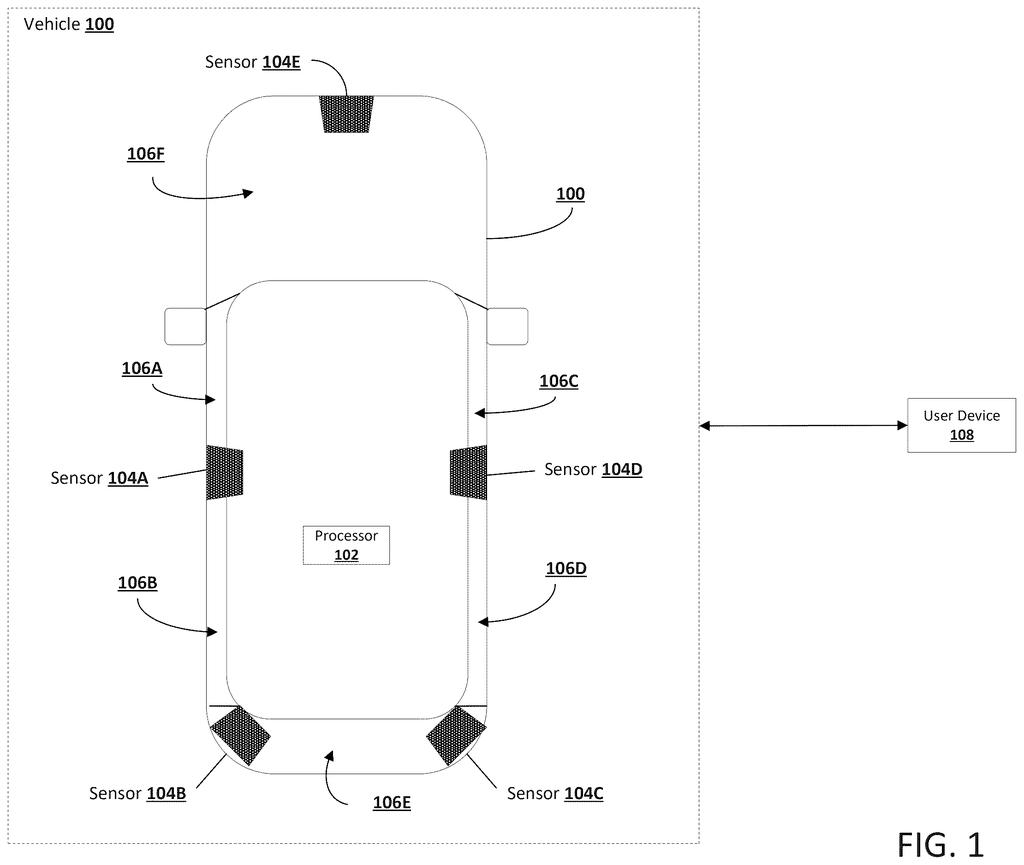
What Tesla's lean-detection door system actually does
You're walking up to your Tesla with your hands full of grocery bags, keys buried somewhere in your bag. Right now, you have to fumble for your phone or the handle. This patent describes a system that would make that problem go away on its own.
The idea is that your phone broadcasts ultra-wideband signals (a short-range radio technology already in many smartphones, used to pinpoint exact positions) and the car listens. When you get close, the car maps exactly where you and your phone are in real space around the vehicle. It then checks whether you've entered a specific "trigger zone" near a door.
Here's the part that makes this different from existing proximity systems: a built-in neural network (a type of AI trained to recognize patterns) watches how your position shifts and cross-references data from a sensor under the seat. If it concludes you're leaning into the car, not just walking past, it opens the door automatically, without any button press from you.
… predict, using a neural network, whether the user is leaning into the vehicle based on the location of the user device, wherein the neural network is trained on training data comprising movement data and sensor data corresponding to a sensor located under a seat of the vehicle …
Translation: An AI model trained on seat sensors and movement data figures out when you are leaning inside.
How UWB signals and a neural network call the door open
The system uses ultra-wideband (UWB) radio signals to pinpoint a user's phone with centimeter-level accuracy around the vehicle. UWB is the same short-range positioning technology Apple uses in AirTag and the iPhone's Precision Finding feature, so this is an established method for exact spatial location, not rough Bluetooth proximity estimation.
Once the car knows where the phone is, it checks whether that location falls inside a predefined trigger zone (think of it as an invisible fence drawn around each door or trunk). Being inside a trigger zone alone does not fire the action; the system goes a step further.
A neural network (an AI model trained to recognize patterns from example data) then analyzes the movement data from the phone alongside readings from a sensor installed under a vehicle seat. The training data captures what it looks like, positionally and physically, when a person is genuinely leaning into the car versus just standing nearby or walking past. That distinction is what prevents false triggers.
If the model predicts the user is leaning in, the system executes an action tied to a moveable closure. That term covers any powered door, trunk lid, frunk panel, or similar component. The patent describes the action as automatic rather than requiring any manual input from the driver or passenger.
Based on determining that the user device is within a trigger zone, the system may execute an action associated with the one or more moveable closures.
Translation: Once your phone enters a specific zone near the car, the doors or trunk automatically open.
What hands-free doors mean for everyday Tesla drivers
For everyday Tesla drivers, the practical payoff is straightforward: no more juggling groceries while hunting for a door handle, and no more standing in the rain waiting for the app to respond. The system is designed to act on physical intent rather than a button press, which means it should feel like the car is reading your mind.
The sensor-under-seat element is the detail worth paying attention to. Checking phone position alone is already done in various keyless entry systems. Adding a seat sensor gives the AI something to cross-reference, which could make the system far more reliable at not opening your door every time a neighbor walks past your parked car. Tesla's run of UWB-based access filings suggests this kind of precision entry is a longer-term investment, not a one-off idea.
Tesla's 38th filing in our Tesla coverage since May follows applications like the lifting screen mechanism and the hidden rear wing.
The useful thing this system is trying to do is tell the difference between you walking toward your car and a stranger walking past it. A door that opens for the wrong person, or at the wrong moment, is not a convenience feature anymore.
The fix is in how the system reads intent. It watches where your phone is pointing, how you are moving, and whether someone is already sitting in the seat, then decides whether opening the door makes sense. That combination is harder to fool than a simple "phone is nearby" check.
If it works, you notice it by never noticing it. The door opens when you reach for it and stays closed when it should. If it does not work, you notice that immediately, which is why the margin for error here is so small.
There are more where this came from
We read every patent application Big Tech publishes and send you the ones worth knowing. Plain English, free, every week.
The drawings
9 drawing sheets from US 2026/0301492 A1 · click any drawing to enlarge


Want this weekly breakdown for a company we don't cover? Patentlyze Pro →
Be the first to weigh in