
Tesla Patents a Faster Method for Teaching Its Self-Driving AI to Focus
Every time a Tesla's self-driving system scans the road, an AI model has to sort through a flood of information and decide what matters. Tesla just filed a patent for a trick that lets that sorting happen faster, without a step that normally wastes a lot of memory.
What Tesla's attention-masking shortcut does for its cars
Every time a self-driving car processes the world around it, an AI model called a transformer runs in the background, weighing which pieces of sensor data are relevant to each other. That process involves a kind of filter called an attention mask, and building that filter the traditional way takes up a large chunk of memory.
Tesla's patent describes a way to run the same filter without ever fully building it. Instead, the system figures out on the fly whether each piece of data should be included or excluded, using just the position of that piece in the sequence. The check gets folded into a calculation that was already happening, so there's almost no added cost.
The result is that the AI can handle more data at once, or run faster on the same hardware, which matters a lot when a car has to make decisions in a fraction of a second.
… generating, by the one or more processors, a score in accordance with a softmax computation and a masking condition based on the row index value and the column index value; and transmitting, by the one or more processors, to an autonomous navigation application, at least one weight based on the score …
Translation: The system calculates attention scores while applying rules to ignore irrelevant data, then sends these weights to the driving software.
How Tesla skips the full mask and still gets the right answer
Transformer models (the same family of AI behind large language models) process sequences of data by scoring how much each element should "attend to" every other element. In self-driving, those elements might be frames of camera data, radar pings, or map features.
The standard approach builds a full attention mask, a large matrix of ones and zeros that tells the model which pairs of data points are allowed to interact. For long sequences, that matrix can be enormous and slow to generate.
Tesla's method skips materializing that matrix entirely. Instead:
- The input matrix is split into smaller chunks called submatrices, one per available processor.
- Each processor is told only the row and column coordinates of its chunk, not the full mask.
- A simple comparison (is this row index greater than or equal to this column index?) decides whether a given data pair should be masked out.
- That comparison is fused into the softmax step, meaning the check happens as part of a calculation the processor was already doing, adding almost no extra time.
The patent specifically covers causal masks (which prevent the model from looking ahead in a sequence) and batched masks (which handle multiple sequences at once). Both are common in real-time AI inference on edge hardware, like the computer inside a vehicle.
This approach supports causal and batched masks with minimal overhead and is well-suited for applications such as autonomous navigation, where computed weights guide downstream decision-making.
Translation: This method handles the heavy math efficiently so self-driving cars can make split-second steering and braking decisions.
What this means for real-time decisions inside a self-driving car
For a self-driving system, the speed of AI inference is a hard limit on safety. A model that takes too long to process a scene may produce a steering or braking decision that arrives too late. Reducing the memory overhead of attention calculations means the same chip can either run faster or handle more complex inputs, both of which help at the margins.
Tesla keeps filing on on-vehicle AI inference This is an internal optimization, not a new sensor or new model architecture. It won't change what the car perceives, but it could reduce the computational cost of perceiving it, which matters most when Tesla's custom AI hardware is already running near capacity during complex driving situations.
Tesla's ninth filing we've tracked since May on our camera-only vision work builds on earlier applications including one mapping still objects nearby and one reading cameras for blind spots.
The shortest path from this patent to a working feature is unusually short. It describes a software-level improvement to AI models Tesla already runs, with no new hardware required and no sensor development needed.
The real question is how much this actually speeds things up in practice. Skipping a memory-heavy step in how the AI weighs information sounds promising, but the document does not say how much of a slowdown that step currently causes on real vehicles.
What is clear is that a company running AI across millions of cars has every reason to file patents on small efficiencies. Tiny savings per decision, multiplied across an entire fleet every day, add up to something that matters even if no driver ever feels the difference.
There are more where this came from
We read every patent application Big Tech publishes and send you the ones worth knowing. Plain English, free, every week.
The drawings
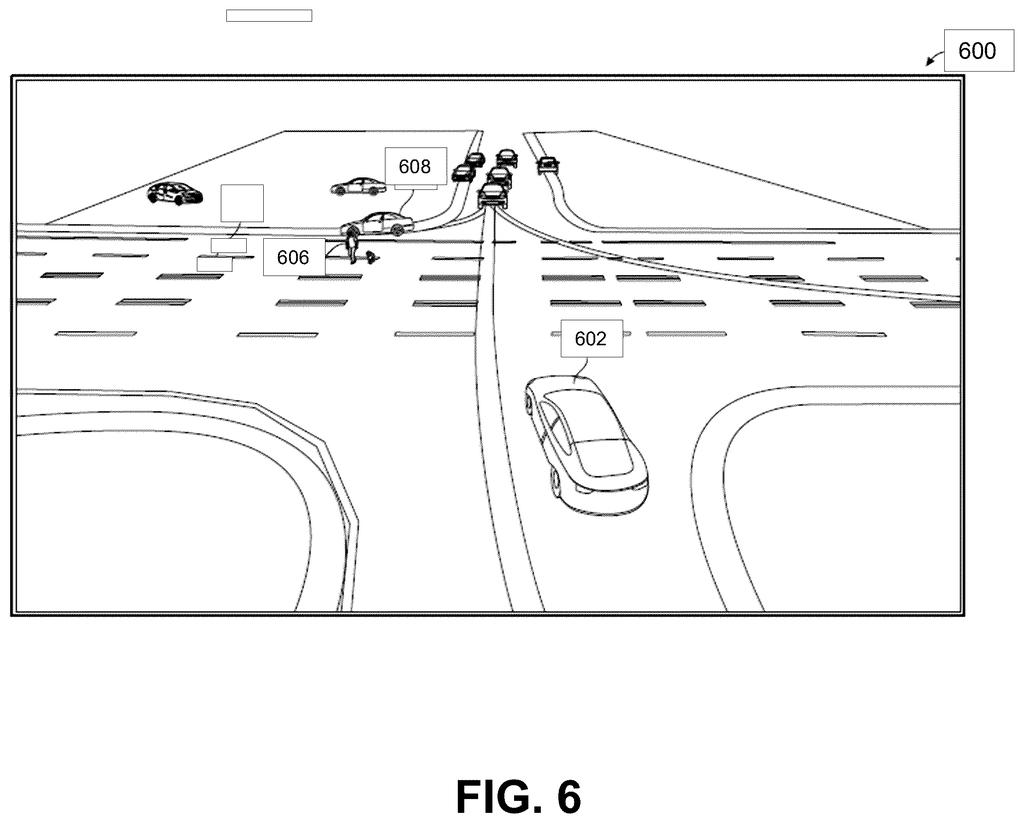
10 drawing sheets from US 2026/0296484 A1 · click any drawing to enlarge


Want this weekly breakdown for a company we don't cover? Patentlyze Pro →
Be the first to weigh in