
Nvidia Patents a Way to Stop AI-Animated Faces From Glitching Outside the Mouth
When an AI animates a talking face, the mouth moving can accidentally ripple into the cheeks, forehead, or chin. Nvidia's new patent is essentially a boundary fence that tells the AI: only the mouth is allowed to move when speech comes in.
What Nvidia's face-animation attention mask actually does
Every time a virtual character opens its mouth to speak, an AI calculates how thousands of tiny points on that face should shift. The problem is that the math often bleeds past the lips, causing subtle twitches or wobbles in places that should stay still.
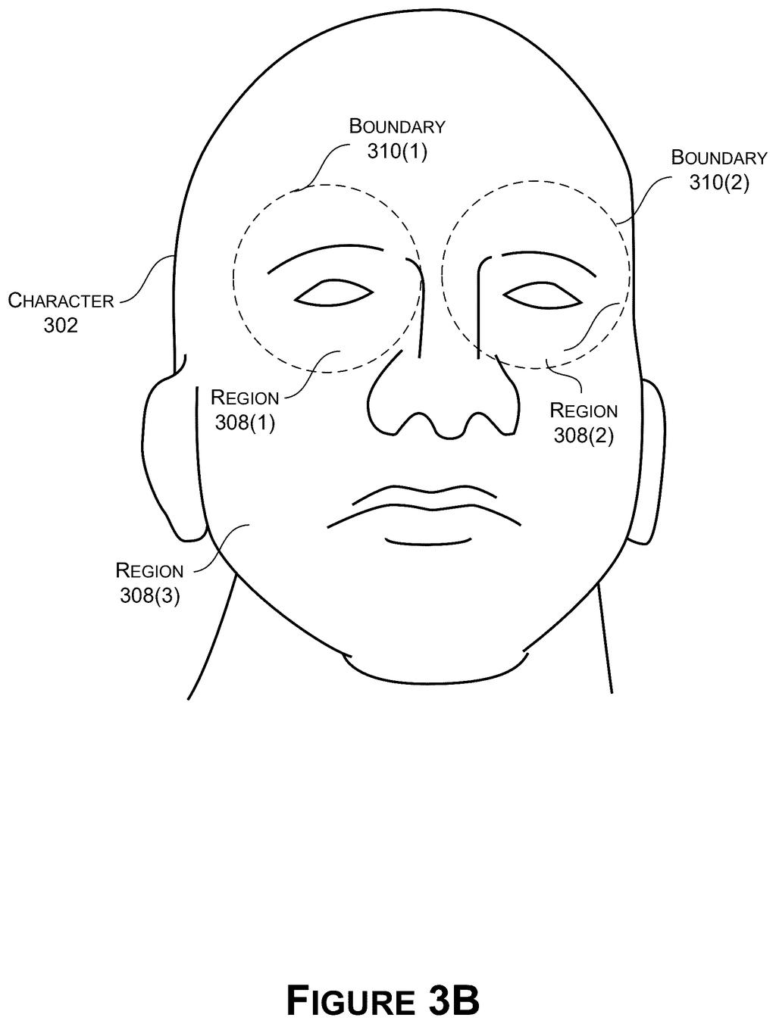
Nvidia's approach adds what you can think of as a mask, not a visual mask you'd see on screen, but an invisible rule that tells the AI to ignore inputs in the wrong zone. When speech audio drives the mouth, the mask forces every point outside the mouth region to zero, so those areas can't move at all. The same idea applies to the eyes: eye-movement data is locked to the eye region only.
The result is a stable, clean animation where each part of the face responds only to the input that belongs to it. You'd notice the difference as a viewer because the character's face would look natural and composed rather than slightly jittery in the background.
… determining, based at least on applying an attention mask to the first values, zero values associated with a first portion of the 3D points that are located outside of a mouth region corresponding to the face of the character; …
Translation: The system applies a mathematical filter to lock down every part of the face outside the mouth so it stays still.
How the attention mask locks down regions outside the mouth
The system represents a character's face as a cloud of 3D points, essentially thousands of tiny coordinates mapped across the surface of a face, a common technique in neural rendering.
When speech audio arrives, one or more neural networks compute a set of first values for every one of those 3D points, describing how much each point should move or change color in response to sound. Without any constraint, those values can show up anywhere on the face, including places like the forehead or temples that have nothing to do with speaking.
The patent's key step is applying an attention mask (a mathematical filter that selectively zeroes out information) to those values. Any point that falls outside the defined mouth region gets its value set to exactly zero, meaning the neural network is told that region is off-limits for speech-driven changes. Only the points inside the mouth region carry their original values forward.
The neural network then uses the surviving values, mouth-region points with real data and everything else zeroed out, to compute final color values for every point on the face. Those color values drive the rendered animation. The same masking logic runs separately for eye movement, so eye inputs only affect the eye region. Each input channel stays in its lane.
… an attention mask may be used to stabilize the motion outside of a specific region of a character-such as a mouth region of the character-that may be caused by audio inputs processed using one or more neural networks.
Translation: Specialized software filters prevent speech audio from accidentally warping parts of the face that should not move.
What this means for real-time avatars and virtual characters
For anyone using a real-time avatar in a video call, a game, or a virtual-reality space, this is the difference between a character that looks alive and one that looks like it has a mild tremor. The wobble problem is subtle but once you see it you can't unsee it, and it makes AI-generated faces feel uncanny rather than convincing.
Nvidia has been filing around neural rendering and avatar technology for some time, and this patent sits squarely in that track. The technique is lightweight enough to apply during interactive rendering, not just in pre-rendered cutscenes, which matters for any product where the character needs to respond to you in real time.
Nvidia's 25th filing we've tracked since May adds to a growing body of work in our text-to-3D character work, following one fixing mid-conversation glitches and one on smaller 3D data files.
The reader-facing payoff here is specific and real: AI-animated faces that don't subtly glitch when the character speaks. That's a problem that exists right now in real-time avatar tools, and anyone who has sat through a video call with a digital avatar has probably noticed something off about the face without being able to name it.
Nvidia's fix is elegant in its simplicity. Rather than training the network harder or adding complexity, they constrain what each input is allowed to touch. That architectural discipline, telling the AI what it cannot do, often produces better results than asking it to learn what it should do on its own.
The practical question is where this surfaces first. Real-time game characters and virtual meeting avatars are the obvious candidates. If this approach works as described, the improvement would be immediate and visible to anyone in the room, which is a rare thing to be able to say about a rendering patent.
There are more where this came from
We read every patent application Big Tech publishes and send you the ones worth knowing. Plain English, free, every week.
The drawings
16 drawing sheets from US 2026/0301288 A1 · click any drawing to enlarge


Want this weekly breakdown for a company we don't cover? Patentlyze Pro →
Be the first to weigh in