
Qualcomm Patents a Way for Phones to Track Movement Using Only Radio Signals
Your phone already picks up dozens of radio signals at any given moment. Qualcomm wants to use those signals, not the motion chip inside your phone, to figure out exactly how far you've moved.
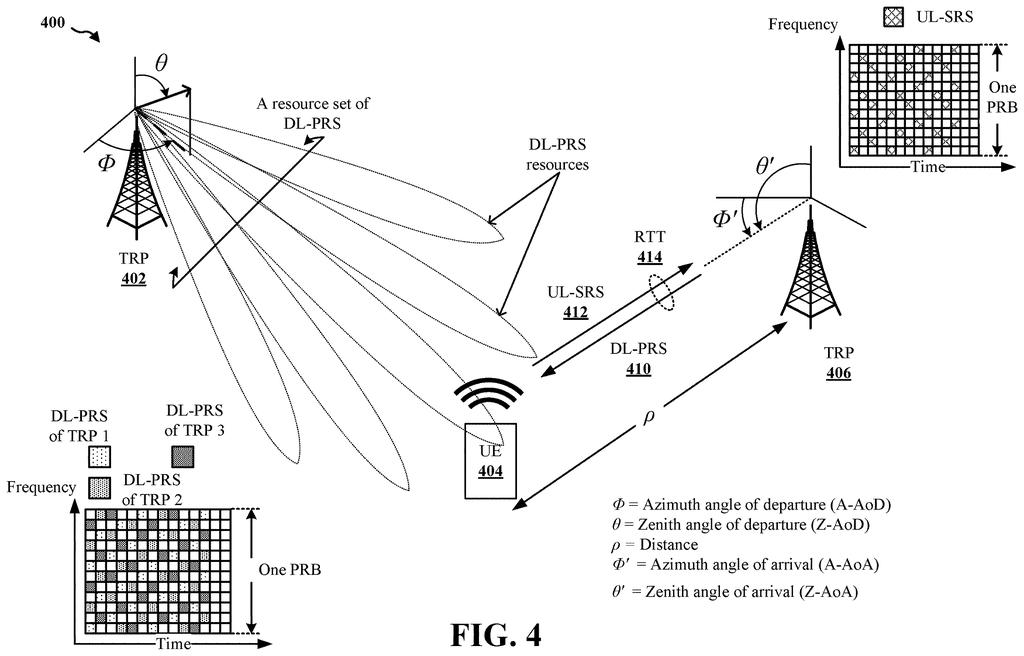
How Qualcomm's radio-only movement tracking works
Imagine you walk from the gate to baggage claim at an airport, and your phone tracks every meter of that trip without ever waking up its motion sensors. That's the direction this Qualcomm patent points.
Right now, phones figure out small movements by consulting an inertial measurement unit (IMU), a tiny chip that senses acceleration and rotation. IMUs are useful, but they drift over time, eat battery, and only work in devices that include them in the first place. Qualcomm's approach would instead use the radio signals your phone is already receiving from nearby network towers and access points, treating the pattern of those signals like a fingerprint for each physical location. Move a few meters, and the fingerprint changes in a predictable way.
A machine-learning model, trained to read those radio fingerprints, would estimate how far and in which direction you've moved. The network sets up the system by first asking your device what it can do, then sending instructions about which signals to listen for.
… receive, from the UE based on the configuration, a set of displacement radio frequency fingerprint positioning (RFFP) measurements or an estimated displacement of the UE.
Translation: The network gets precise movement data back from the phone based on radio signals.
How the network configures and collects displacement data
The patent describes a back-and-forth protocol between a phone (called a UE, or user equipment) and a location server on the network.
- Capability exchange: The network asks the device to report what ML-based displacement features it supports. The device answers with that list.
- Configuration delivery: Based on the answer, the network sends a configuration telling the device which reference signals (RSs, essentially known radio beacons) to listen for and measure.
- Fingerprint measurement: The device collects what the patent calls displacement radio frequency fingerprint positioning (RFFP) measurements, a snapshot of signal characteristics like strength and timing from multiple sources at a given spot.
- Displacement estimation: Either the device's on-board ML model or the server uses the difference between two fingerprint snapshots to calculate how far the device moved, without relying on accelerometers or gyroscopes.
The core insight is that radio signals form a spatial map. A machine-learning model trained on enough fingerprint pairs can learn to read movement directly from signal changes, much like how a person learns to read a map by noticing landmarks.
The protocol is designed to be flexible: the device can send raw measurements up to the server for processing, or it can compute the displacement locally and send only the result.
… estimate the displacement of the UE based on measuring wireless signals, such that the UE may perform accurate displacement estimation accurately without using sensors (e.g., IMUs).
Translation: Phones can track how they move using only wireless signals instead of built in physical motion sensors.
What this means for indoor navigation and device sensors
Indoor positioning is a long-standing pain point. GPS stops working inside buildings, and current alternatives either require dedicated hardware or expensive infrastructure. A system that derives movement from ordinary network signals could improve navigation in airports, hospitals, warehouses, and shopping centers without any extra sensors on the device.
For lower-cost phones that skip the IMU chip, or for situations where the IMU has drifted and become unreliable, Qualcomm's bet on ML-driven positioning could fill a real gap. The tradeoff is that the approach depends heavily on network cooperation: the server has to support the protocol, the right reference signals have to be configured, and the ML model has to be trained on environments that look like the one you're actually in.
Qualcomm's 472nd filing we have tracked since May in our Qualcomm coverage adds to a pattern around on-device AI, following work on routing data across radio channels and training models across phones.
The engineering tradeoff at the center of this patent is a meaningful one. Replacing a dedicated motion sensor with a machine-learning model that reads radio signals is a real cost shift: you remove hardware complexity from the device but add software complexity to the network, and you create a dependency on signal infrastructure that a standalone IMU doesn't need.
That dependency is the fragile part. Radio fingerprints are sensitive to changes in the environment. Rearrange the furniture, add a new access point, or change the number of people in a room, and the fingerprint map can shift enough to throw off a model trained on the old layout. The patent describes the signaling protocol between device and network in detail, but it says little about how the ML models get retrained when environments change.
The protocol design itself is tidy and follows established cellular standards patterns, so deployment inside existing 5G infrastructure is plausible. Whether the accuracy holds up in real, messy indoor environments is the question this patent doesn't answer.
There are more where this came from
We read every patent application Big Tech publishes and send you the ones worth knowing. Plain English, free, every week.
The drawings
14 drawing sheets from US 2026/0304199 A1 · click any drawing to enlarge


Want this weekly breakdown for a company we don't cover? Patentlyze Pro →
Be the first to weigh in