
Qualcomm Patents a Way to Stop Your Phone From Lying About Where You Are
Your phone thinks it has arrived somewhere it hasn't, and fires off the wrong notification. Qualcomm's new patent targets that exact failure by making a device wait and confirm before it claims you're somewhere.
What Qualcomm's zone-and-dwell proximity fix actually does
Every time your phone decides you've arrived at a coffee shop, gym, or store, it's making a judgment call under uncertainty. GPS and cellular positioning are not pixel-perfect; they come with a fuzzy margin of error, and that margin is exactly where things go wrong.
Qualcomm's patent targets a specific, annoying failure: your phone declares you've arrived somewhere when you're actually just walking past on the other side of the street. The fix involves two checks. First, the phone asks whether your distance to the destination falls inside a fuzzy boundary zone, the area where the system genuinely isn't sure if you've arrived or not. Second, it asks how long you've been hanging around in that zone. Only when both tests pass does the phone officially say, yes, you're there.
The practical payoff is fewer false "you've arrived" alerts and more confident ones when they do fire. If you've ever gotten a store notification while driving by at 40 mph, this is the kind of fix designed to stop that.
… determine a distance between the first location of the UE and the second location of the POI based on the obtained first indication; and output a second indication of whether the UE and the POI are within a proximity of one another …
Translation: It measures how far your phone is from a specific landmark and checks if you are actually there.
How the uncertainty zone and dwell timer work together
The patent describes a positioning system built into a mobile device (referred to as a user equipment, or UE, in wireless standards language) that determines whether the device is genuinely near a point of interest (POI), like a store, a friend's house, or a transit stop.
Rather than drawing a single hard circle around the POI and triggering immediately when the device crosses it, the system introduces an uncertainty zone: a ring-shaped buffer area around the POI boundary where the device's calculated position is close enough to the edge that the system can't confidently call it inside or outside. Think of it as a "maybe" band.
When the device enters that maybe band, the system starts a dwell time clock. If the device stays inside the uncertainty zone long enough to satisfy a minimum time condition, the system concludes the device is probably actually near the POI and fires the proximity alert. If the device passes through quickly, it stays quiet.
The key components the patent describes include:
- A location estimate for the device relative to the POI
- A calculated distance between the two
- An uncertainty zone condition that flags the "maybe" region
- A dwell time condition that filters out brief, incidental passes
Both conditions must be satisfied before the system outputs a confirmed proximity indication.
… whether a dwell time of the UE associated with the uncertainty zone condition satisfies a dwell time condition.
Translation: It tracks how long your device stays in that specific area to confirm your location.
What this means for location alerts on your phone
For you as a phone user, the concrete payoff is fewer wrong alerts. Location-triggered notifications, geofenced loyalty rewards, proximity-based check-ins, and "you've arrived" prompts all depend on the phone correctly deciding you're actually at a place. Right now, that decision can misfire badly in dense urban areas or at the edge of a building's GPS shadow, where your phone's sense of its own location is least reliable.
The dwell-time filter is the part that carries the most practical weight. Qualcomm keeps filing on location-awareness improvements for mobile chipsets, and this one is targeted at the messy middle ground where existing geofencing systems most commonly fail. Whether or not apps use this capability depends on whether device makers and developers build on it, but the gap it addresses is real and affects everyday location features.
Qualcomm's 474th filing in our Qualcomm coverage since May adds to a run of radio-focused work that includes predicting signal problems and tracking movement via radio.
The alert that fires when you're still a block away trains you to ignore all location notifications. This patent fixes that by requiring two things before declaring you've arrived: your phone's sense of your position has to be close enough to the destination, and you have to have stayed there long enough for it to mean something.
That combination changes what a notification can actually do. A loyalty reward fires when you're inside the store, not when you drove past. A restaurant check-in prompt appears after you've parked and walked in.
The thresholds will determine everything. A dwell time set too long means the alert arrives after you've already ordered, and a location zone set too loose just moves the false-positive problem half a block down the street. The idea earns trust only if those settings are calibrated to how people actually move through the world.
There are more where this came from
We read every patent application Big Tech publishes and send you the ones worth knowing. Plain English, free, every week.
The drawings
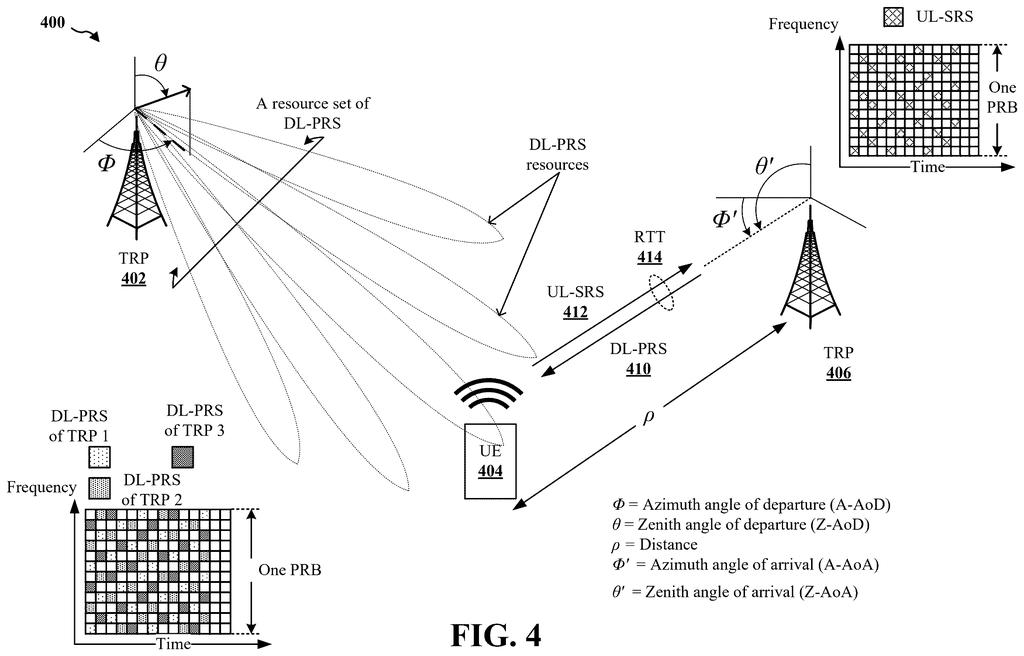
15 drawing sheets from US 2026/0304066 A1 · click any drawing to enlarge


Want this weekly breakdown for a company we don't cover? Patentlyze Pro →
Be the first to weigh in