
Sony Patents a Touchscreen That Physically Pushes Back Wherever You Press
Most touchscreens vibrate the whole display when you tap. Sony's new patent describes something different: a single haptic unit that physically moves to meet your finger, deforming only the spot you're pressing.
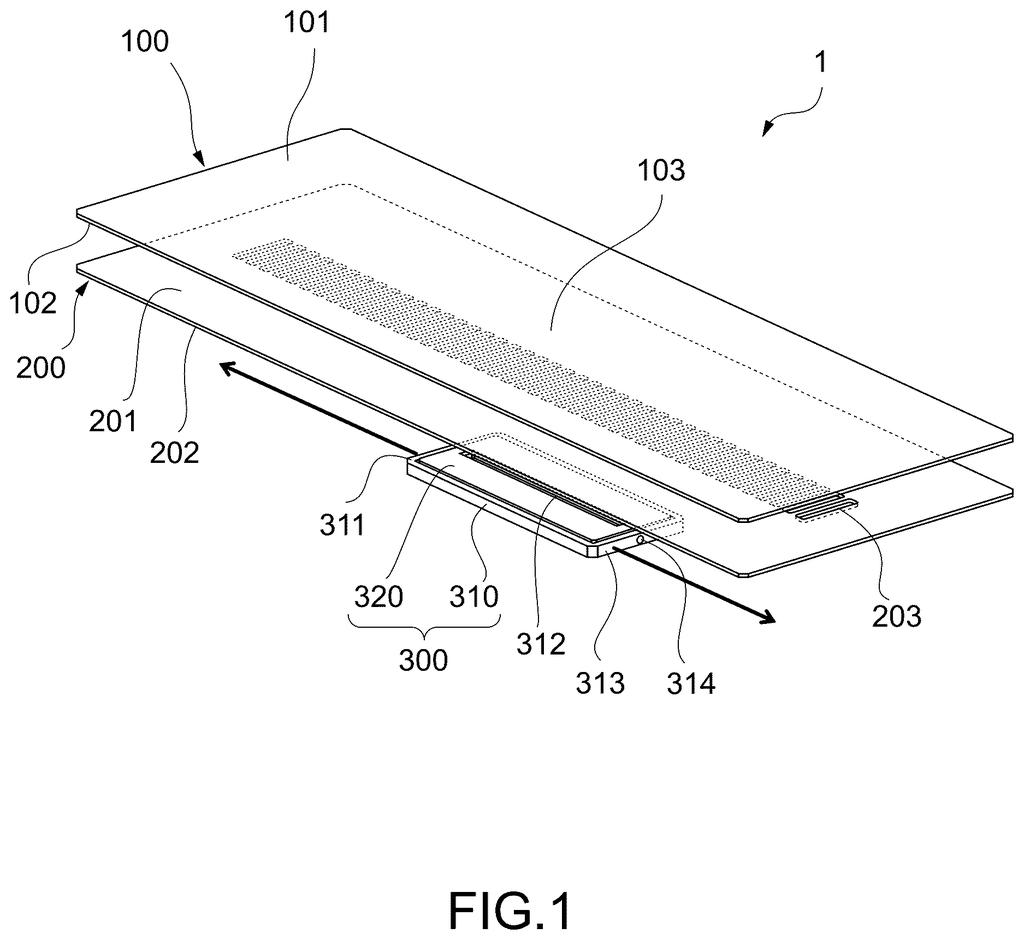
What Sony's shape-shifting touch surface actually does
Imagine pressing a button on your car's dashboard screen and feeling a real, physical click right under your fingertip, not a general buzz through the whole panel. That's the experience Sony is trying to engineer.
The patent describes a flexible surface you can touch, backed by a layer that controls how that surface can flex, and a separate moving unit underneath. When you touch a spot, that unit travels to the matching position and pushes up against the flexible layer, creating localized physical feedback exactly where your finger is.
Right now, most touchscreens use one vibration motor for the entire glass, so the feedback feels the same whether you tap the center or an edge. Sony's approach aims to make each press feel distinct and spatially accurate, which could matter a lot in cars, where you're often touching a screen without looking at it.
a deformable flexible layer that has flexibility, the flexible layer including a front surface that is exposed to be touchable by a user …
Translation: The screen is bendable and the part people actually touch with their fingers.
How the moving haptic unit finds your finger
The system has three stacked layers working together.
The flexible layer is the top surface the user touches. It's made of a pliable material, not rigid glass, so it can be deformed at a specific point without the whole surface moving.
The specification layer sits directly behind the flexible layer. Its job is to constrain and guide how the flexible layer can deform, essentially acting as a structural template that limits movement to the intended spot.
The haptic generation unit is the active component. Unlike a fixed vibration motor, this unit is mechanically mobile. It repositions itself behind the specification layer to align with whatever point on the flexible surface the user is touching, then actuates to push that precise area outward.
The key distinction from conventional haptics is localization. Standard devices use one motor whose vibration spreads across the whole surface. Here, the motor goes to the touch point, so the physical deformation is concentrated. The patent situates this technology in a vehicle context, suggesting Sony sees in-car interfaces as a primary application.
… the haptic generation unit being moved to a position that corresponds to a touch portion of the flexible layer that is a portion touched by the user, the haptic generation unit deforming the touch portion of the flexible layer …
Translation: A mechanical pusher moves right underneath your finger to physically warp the screen.
What this means for in-car and device touchscreens
In a car, eyes-on-the-road is a safety issue, not just a preference. If your screen's buttons feel physically different under your finger based on where they are, you can navigate controls by touch alone rather than glancing down. That's a real, immediate payoff for drivers.
For consumer devices more broadly, this could give flat touchscreens a texture-like quality that current vibration motors can't deliver. Whether Sony ships anything using this system is unknown, but the vehicle patent framing suggests the company is thinking about displays where tactile accuracy has consequences, not just as a novelty feature.
Sony's 90th filing in our Display patent coverage since May follows work like angle-based color correction and a wrist-rotation expandable screen, showing how the company keeps exploring how screens adapt to users.
The practical payoff is straightforward: when you press a button on a car touchscreen, the screen pushes back where your finger lands, not everywhere at once. That small difference means your hand gets real confirmation that the tap registered, without your eyes leaving the road.
The durability question matters most to the person who owns this car in year four, on a hot summer day, after thousands of taps. A moving part inside a screen has more ways to wear out than a fixed one, and car interiors are hard on hardware.
If the mechanism holds up, drivers get a screen that behaves more like a physical button when it counts. If it doesn't, the feature disappears from future models and no one outside the engineering team notices why.
There are more where this came from
We read every patent application Big Tech publishes and send you the ones worth knowing. Plain English, free, every week.
The drawings
12 drawing sheets from US 2026/0299693 A1 · click any drawing to enlarge


Want this weekly breakdown for a company we don't cover? Patentlyze Pro →
Be the first to weigh in