
Google Patents a Smartwatch Method That Forecasts Your Next Irregular Heartbeat Episode
After your smartwatch catches one irregular heartbeat, what if it could tell you when the next one is likely to hit? That's the idea behind a new Google patent for predicting atrial fibrillation before it happens.
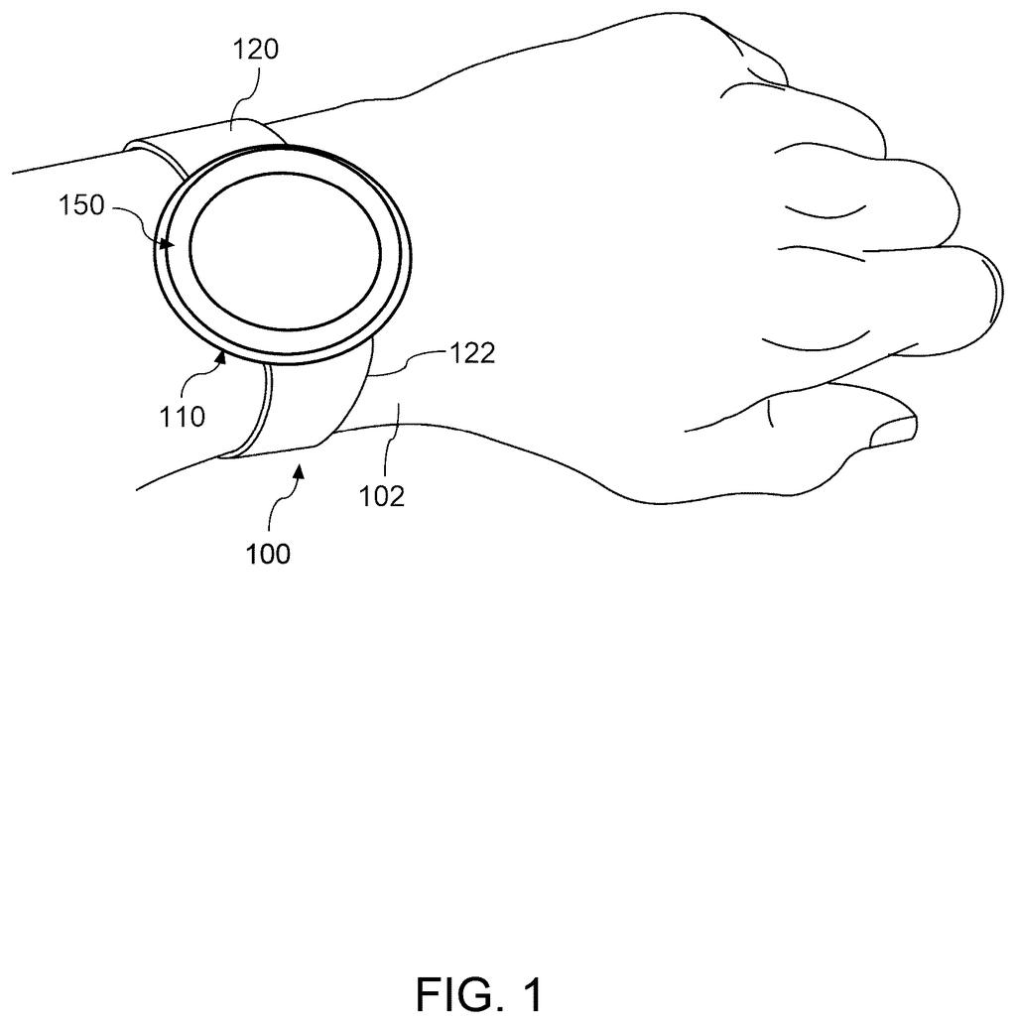
What Google's AFib prediction system actually does
Imagine your watch flags an irregular heartbeat one Tuesday morning. Right now, that's usually where the story ends: you get a notification, maybe call your doctor, and then go back to wondering if and when it'll happen again. Google's new patent describes a system designed to do something more.
After detecting that first irregular heart rhythm event, your wearable keeps a closer eye on your heart for a set observation window. It looks for patterns in when and how often irregular beats show up during that period, then uses those personal patterns to generate a forecast for future episodes.
The key idea is that the system learns your rhythm of irregular rhythms, not just a general population average. If your AFib tends to cluster in the morning or spike every few days, the system is meant to pick up on that and flag it in advance.
determining, via one or more computing devices, a user wearing a wearable computing device has experienced an initial cardiac arrhythmia event based, at least in part, on biometric data obtained from one or more biometric sensors of the wearable computing device …
Translation: The watch figures out you had a heart hiccup using its built-in health sensors.
How the watch spots patterns and builds a personal forecast
The patent describes a four-step process running on a wearable device (think a smartwatch with optical heart-rate and electrical heart sensors).
- Detection trigger: The system first confirms you've had an initial cardiac arrhythmia event (an irregular heartbeat episode, with atrial fibrillation as the primary example) using biometric sensor data from the wearable.
- Observation window: Once that trigger fires, the device enters an active monitoring period, continuously collecting heart-rhythm data to build a picture of how your heart is behaving over time.
- Temporal pattern analysis: The system analyzes the timing and frequency of any additional arrhythmia episodes that occur during the observation window, looking for temporal patterns (meaning time-based regularities, like recurring clusters or predictable gaps between events).
- Prediction generation: Using those personal patterns, the system produces a forecast for when a future irregular heart event is likely to occur.
The patent doesn't name a specific prediction algorithm, leaving room for the system to apply whatever modeling approach fits the observed data. The claim is intentionally broad, covering any wearable computing device with biometric sensors capable of reading cardiac rhythm.
… determining one or more temporal patterns of cardiac arrhythmia events of the user during the observation period …
Translation: The system looks for repeating schedules in how often your heart acts up.
What this means for people living with AFib
For the roughly 6 million Americans living with AFib, the condition's unpredictability is one of the hardest parts. Episodes can arrive without warning and trigger anxiety, medication decisions, or emergency visits. A system that gives even a rough forecast window could help people and their doctors make better decisions about when to be extra cautious, when to take medication, or when a hospital visit might be coming.
On the product side, Google's track record in health-sensing patents makes the Pixel Watch line the obvious home for something like this. The feature would also place Google directly alongside Apple, whose Watch already has FDA-cleared AFib detection. Predicting future episodes, rather than just catching current ones, would be a meaningful step beyond what's currently on the market.
Google's 16th filing we've tracked since May joins earlier applications like one flagging fall risk from sleep and one pairing radar with blood pressure in our wearables that read your body watchlist.
This patent sits unusually close to a shippable feature because it asks for no new hardware. The sensors that detect irregular heartbeats already exist in smartwatches on the market today; what this filing adds is a software layer that watches for patterns over time and tries to forecast when the next episode might arrive.
The longest part of the path to a real product is not engineering, it is clinical proof. Detecting an irregular heartbeat as it happens is one thing; predicting one before it starts is a harder medical claim, and health regulators in the US and Europe would require strong evidence before any company could market that as a health feature.
If the prediction accuracy holds up under that scrutiny, a watch that warns AFib patients hours or days in advance would matter enormously to a large and medically vulnerable group of people. That is a meaningful destination, and the route described here is plausible.
There are more where this came from
We read every patent application Big Tech publishes and send you the ones worth knowing. Plain English, free, every week.
The drawings
8 drawing sheets from US 2026/0294263 A1 · click any drawing to enlarge


Want this weekly breakdown for a company we don't cover? Patentlyze Pro →
Be the first to weigh in