
Google Patents a Way to Measure Blood Pressure Using Radar and a Wearable Together
Google has filed a patent for a blood pressure system that uses radar to watch your heart's aortic valve from across the room, then combines that reading with data from a wrist wearable to calculate your blood pressure without a cuff. No squeezing, no arm bands, just two devices talking to each other.
What Google's radar-plus-wearable blood pressure system does
A smart speaker sits on a nightstand scanning the room with radio waves. You're just standing nearby, and it's already reading something about your heart.
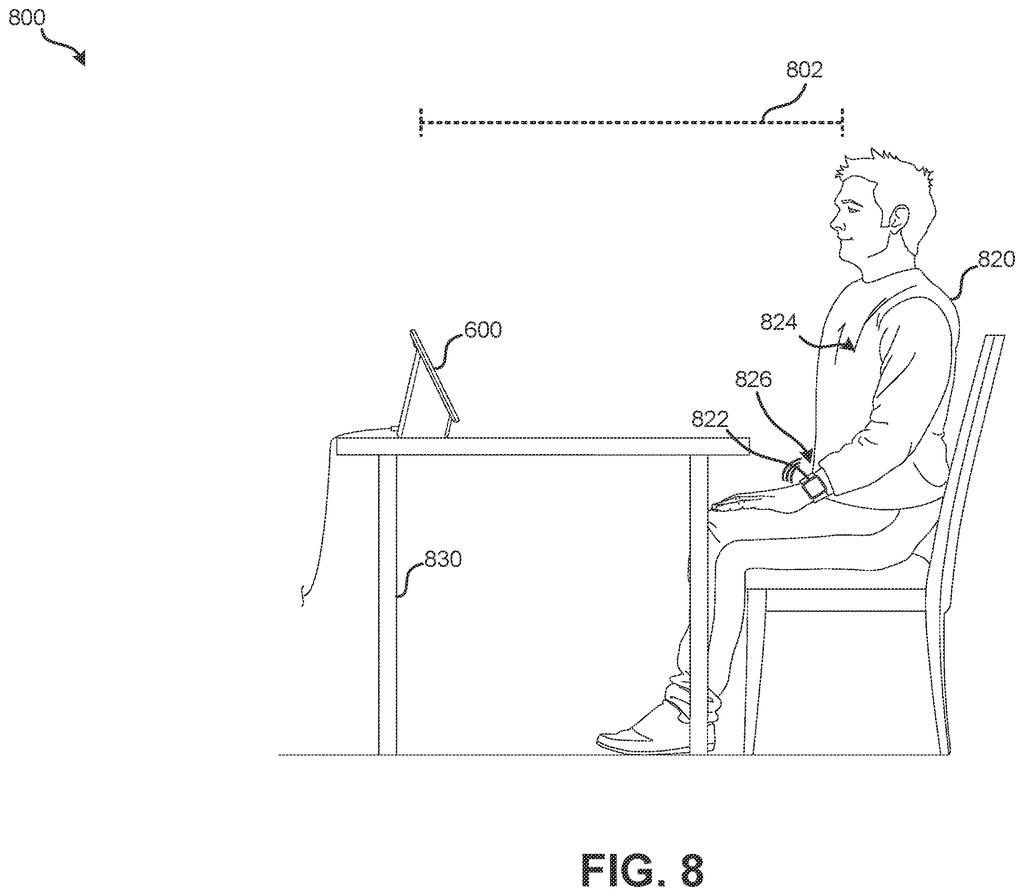
That's the basic picture in this Google patent. A stationary home device, think something like a Nest Hub or a future smart display, emits low-power radar signals toward you. Those signals bounce off your chest and pick up the tiny movement of your aortic valve, the main valve where blood leaves your heart. At the same time, a wearable on your wrist or finger measures how that same pulse of blood arrives at your extremity. The gap in time between those two readings is called pulse transit time, and it turns out that gap is closely tied to how hard your blood is pushing through your arteries.
Put the two readings together, and you get a blood pressure estimate, no cuff required. For the millions of people who are supposed to track their blood pressure daily but rarely do, that kind of frictionless measurement could matter a lot.
analyze the RF reflection signals at a first distance range to detect movement of the aortic valve of the user; identify, based on the detected movement of the aortic valve, a first pulse pressure waveform at the aortic valve of the user; …
Translation: Radar bounces signals off your heart to track how your aortic valve moves.
How radar at your chest and a wrist sensor calculate pressure
The system has two parts working in tandem. The stationary device (a home hub or smart display with a built-in radar chip) continuously emits RF (radio frequency) signals and listens for the reflections. Because radar can detect movements far smaller than a millimeter, it can pick up the mechanical jolt of the aortic valve opening and closing with each heartbeat, even through clothing. This produces a pulse pressure waveform (PPW), essentially a graph of how the heart is pushing blood out.
The mobile device, a smartwatch or similar wearable, measures a second PPW at a distant point in the body, such as the wrist. The time it takes the pressure wave to travel from the heart to the wrist is the pulse transit time (PTT). When arteries are stiff or blood pressure is high, that wave travels faster; when pressure is low, it travels more slowly.
The stationary device receives the wearable's vital sign data and runs the comparison:
- Detect aortic valve movement via radar reflections at a specific distance range
- Identify the first PPW from those radar signals
- Identify the second PPW from the wearable's sensor data
- Calculate PTT as the lag between the two waveforms
- Convert PTT to a blood pressure reading using a calibration model
The result is output as a blood pressure indication, presumably displayed on the stationary device or a companion app.
Using the first PPW and the second PPW, a pulse transit time from the aortic valve to the extremity is determined. Using the PTT, a blood pressure (BP) of the user is determined and an indication of the BP is output.
Translation: It calculates blood pressure by measuring how long a pulse takes to reach your wrist.
What this means for cuffless blood pressure monitoring at home
Blood pressure is one of the most important numbers for cardiovascular health, and one of the most under-monitored. Most people only check it at a doctor's office, which means they can miss chronic high pressure the other 364 days a year. A system that passively takes a reading while you stand at your kitchen counter removes the single biggest barrier: the hassle of a cuff.
For Google, this points toward a health-sensing role for its Nest device line, putting it in direct competition with the health ambitions Apple has been building into the Apple Watch. Google's long bet on passive health sensing is becoming more concrete with filings like this one. The tricky part is accuracy: PTT-based blood pressure estimates require personal calibration and can drift, which is a real limitation any product built on this method would have to address.
Google's 14th filing we've tracked in body-reading wearables since May adds to a run that includes a pulse-based heart risk detector and a fingertip blood pressure sensor.
Getting a reliable pressure reading close to the heart normally requires either a cuff or a second sensor worn on the chest. This design replaces that second sensor with a radar device already sitting in the room, which is clever, but it means the measurement only works when you are close enough to that device and holding reasonably still.
The bigger cost is accuracy over time. Blood pressure estimates based on pulse travel time are well known to drift as body position shifts, as a person's fitness changes, or simply across different users with different physiology. Nothing in this design describes how it corrects for that drift, which is the first question any doctor or safety reviewer would ask.
For a quick morning check at home, built into hardware people already own, the trade is probably reasonable. For anything a clinician would actually rely on, it is not there yet, and Google does not appear to be claiming it is.
There are more where this came from
We read every patent application Big Tech publishes and send you the ones worth knowing. Plain English, free, every week.
The drawings
12 drawing sheets from US 2026/0283485 A1 · click any drawing to enlarge


Want this weekly breakdown for a company we don't cover? Patentlyze Pro →
Be the first to weigh in