
Samsung Patents a Dual-Barrier Hinge System to Keep Foldables Dust-Free
Dust and debris sneaking into the hinge is one of the most common ways foldable phones fail early — and Samsung may have a mechanical fix that doesn't rely on software or materials science alone.
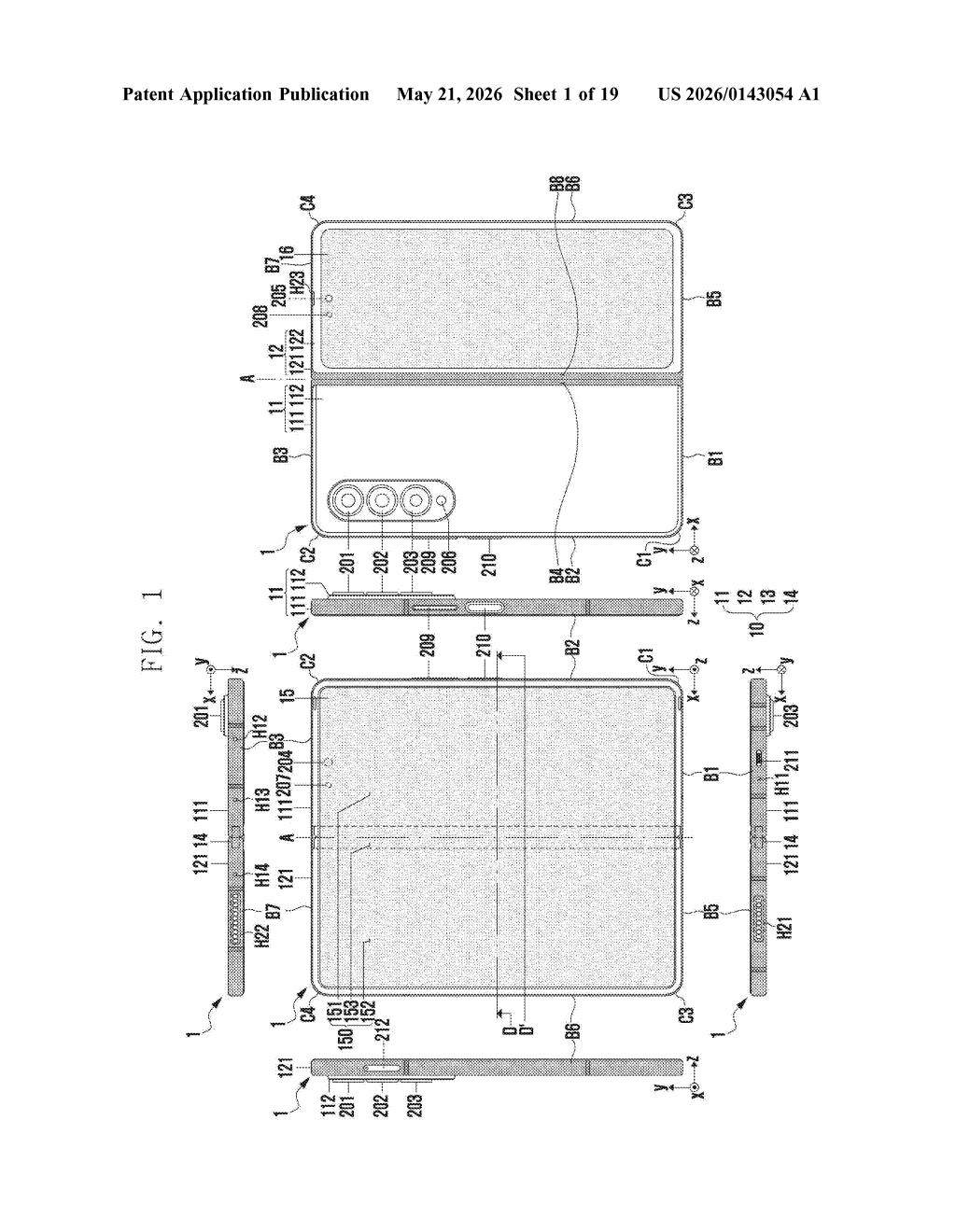
What Samsung's foldable hinge dust barrier actually does
Imagine you fold your phone thousands of times a year. Every time you open or close it, that hinge area creates a tiny gap — and dust, lint, and sand love tiny gaps. Over time, that debris grinds against the flexible display and the hinge mechanism itself, and the phone starts to creak, scratch, or worse.
Samsung's new patent describes a two-part barrier system positioned along the edge of the flexible screen where it meets the hinge. Think of it like two overlapping flaps. In the unfolded position, a flexible first portion sits closest to the screen's edge, covering the gap. In the folded position, a second portion swings in closer to take over that protective role — and the flexible part retreats.
The clever bit is that neither part needs to do all the work all the time. Each one is optimized for one state — open or closed — so the coverage is always snug without either piece being stretched or stressed in the wrong position.
How the two parts swap positions as the phone folds
The patent describes a foldable phone with two housings connected by a hinge module, with a flexible display running continuously across both. The hinge housing — the structural spine connecting everything — anchors two protective components along the display's exposed border at the fold.
The flexible first portion is attached to the hinge housing and designed to lie flush against the display edge when the device is unfolded (flat). In this open state, it sits closer to the border than the second portion, acting as the primary seal against incoming particles.
The second portion — which the patent implies is more rigid or differently shaped — is also mounted to the hinge housing but spaced apart from the first portion, with the display border between them. When the phone folds closed, geometry shifts: the second portion moves closer to the border, becoming the active guard, while the flexible first portion moves away.
- In unfolded state: flexible first portion covers the hinge border
- In folded state: second portion covers the hinge border
- The two parts work in relay, never competing for the same space
The dual-relay design means the seal is always appropriately positioned without requiring a single material to flex and compress through thousands of fold cycles.
What this means for foldable phone durability long-term
Foldable phone durability has been the category's Achilles heel since the first Galaxy Fold shipped in 2019. Hinge ingress — dust and debris getting into the fold mechanism — has caused premature display failures and creaking. Samsung has iterated on this with each generation, adding brushes, tapes, and structural changes, but those solutions are often compromises between sealing and smooth folding.
This patent's relay-style approach is interesting because it's a mechanical solution that adapts to state rather than trying to brute-force a single seal across both configurations. If it works as described, you'd expect it to show up in a future Galaxy Z Fold or Z Flip generation — potentially as a quiet durability upgrade that doesn't get a keynote slide but extends real-world longevity.
This is unglamorous but genuinely useful engineering. Hinge durability is one of the last real barriers to mainstream foldable adoption, and a position-aware dual seal is a more elegant approach than the adhesive brushes and gaskets Samsung has used in prior generations. Worth keeping an eye on.
Get our take in your Top Stories
Liked this breakdown? Add Patentlyze as a preferred source on Google, and our plain-English take shows up more often in your Top Stories the next time Samsung patent news breaks.
There are more where this came from
We read every patent application Big Tech publishes and send you the ones worth knowing. Plain English, free, every week.
Want this weekly breakdown for a company we don't cover? Patentlyze Pro →