
Samsung Patents a Dual-Wire Wall-Mount System for Display Panels
Mounting a flat-panel TV to a wall sounds simple, but keeping the internal chassis, wires, and rear cover locked together reliably is a real mechanical puzzle. Samsung's latest patent proposes a specific wire-hole geometry to solve it.
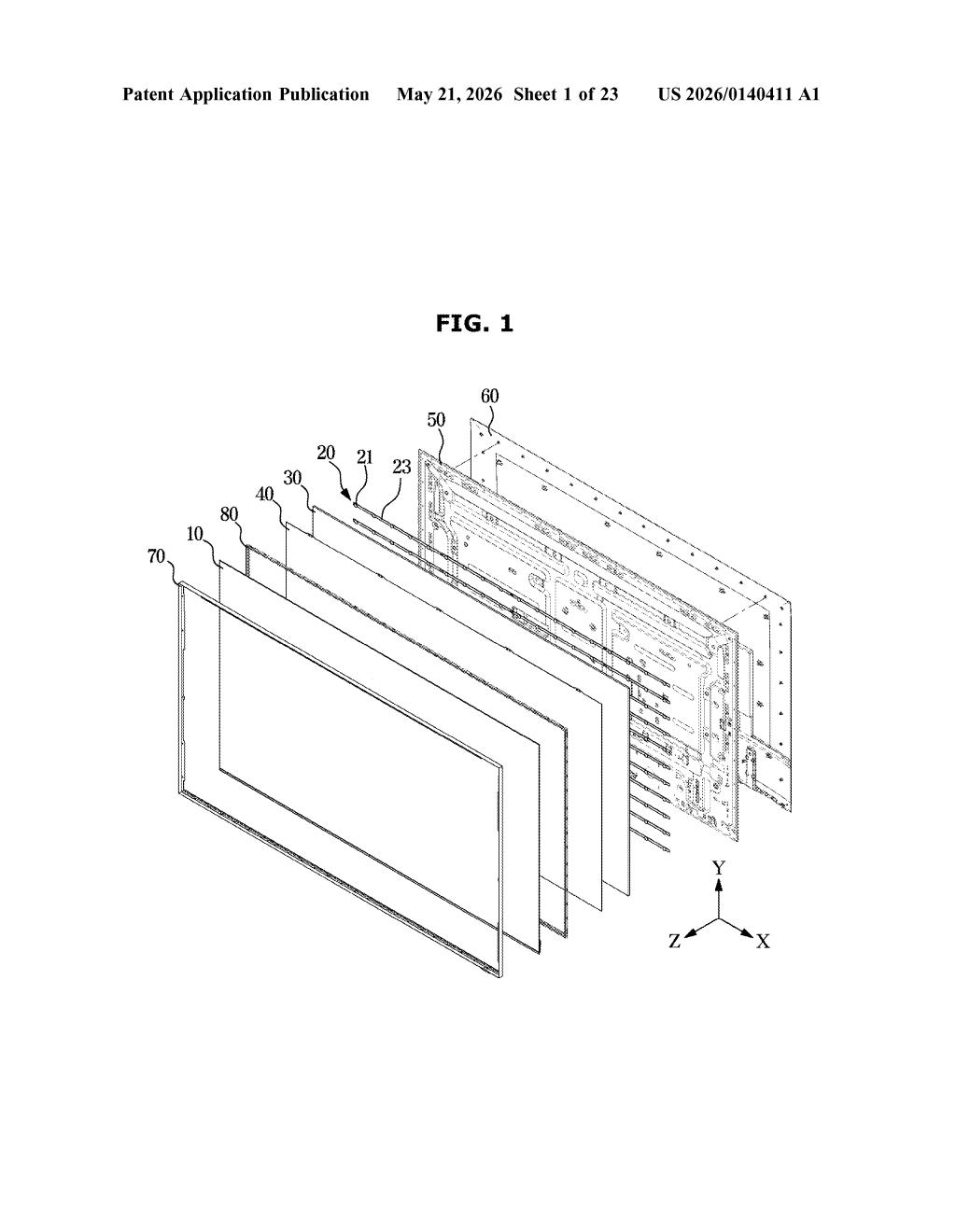
What Samsung's wire-and-hook mounting system actually does
Imagine you're hanging a large Samsung TV on the wall. Behind the screen there's a metal chassis — a structural backbone — and a plastic rear cover that snaps over it. The two pieces need to stay firmly connected, and right now that job is partly done by wires routed through small holes in the chassis.
Samsung's patent describes a more deliberate version of that system. Instead of generic holes, the chassis gets three specifically shaped wire holes: two elongated slots and one triangular hole. A first wire threads through two of the elongated slots; a second wire uses the first elongated slot and the triangular hole. Each shape physically constrains the wire end so it can't slip out accidentally.
The rear cover then has a hook that engages the wire, pulling everything together. The practical upshot is a mounting and assembly system where the right wire goes in the right hole — and stays there — without extra fasteners or guesswork during factory assembly or field installation.
How the shaped wire holes lock each wire in position
The patent describes a display apparatus — essentially a flat-panel TV or monitor — whose rear chassis contains a set of wire holes with distinct geometries designed to accept two different wires in a specific sequence.
- First wire hole: elongated slot that accepts the starting end of either wire.
- Second wire hole: elongated slot that receives the far end of the first wire once its starting end is already locked into the first hole.
- Third wire hole: triangular-shaped, adjacent to the second hole, and designed to receive the far end of the second wire once its starting end is in the first hole.
The elongated shape of the first and second holes lets a wire end slide in and then resist pull-out when tension is applied — similar to how a keyhole mount works. The triangular third hole is the distinguishing detail: its geometry likely provides a different angular constraint, preventing the second wire's end from rotating or backing out under vibration or lateral stress.
The rear cover's hook engages whichever wire is installed, coupling the cosmetic outer shell to the structural chassis through the wire rather than through direct screw attachment. This can simplify disassembly for repair while keeping the cover secure during normal use.
What this means for TV installation and rear-cover design
For most people, this is invisible infrastructure — the kind of engineering that makes a TV feel solid when you knock on the back, or makes a technician's repair job take 10 minutes instead of 30. Getting wire routing and chassis coupling right at scale matters for Samsung because it ships tens of millions of display units a year; a simpler, more foolproof assembly step has real cost and quality implications.
The triangular hole detail is worth noting because it suggests Samsung is trying to encode assembly order into the physical geometry itself — the wrong wire physically can't seat correctly in the wrong hole. That's a meaningful reliability improvement over systems that rely on worker training or color-coded labels alone.
This is unglamorous but genuinely useful mechanical engineering. The triangular-hole trick — using shape to enforce correct assembly sequence — is a clean, low-cost solution to a real manufacturing problem. It won't make headlines at CES, but it's the kind of detail that separates a premium-feeling product from a wobbly one.
Get our take in your Top Stories
Liked this breakdown? Add Patentlyze as a preferred source on Google, and our plain-English take shows up more often in your Top Stories the next time Samsung patent news breaks.
There are more where this came from
We read every patent application Big Tech publishes and send you the ones worth knowing. Plain English, free, every week.
Want this weekly breakdown for a company we don't cover? Patentlyze Pro →