
Nvidia Files Patent for Cleaning Up Grainy Game Graphics Without Tracking Millions of Triangles
Realistic lighting in games starts out speckled and has to be cleaned up using the previous frame. Nvidia's patent describes a shortcut for doing that on curved, rippling objects whose tiny triangles are rebuilt every single frame.
What Nvidia's grain-cleaning patent actually does
Imagine you're playing a game with realistic lighting, and a character's cloak ripples as they run. To draw that lighting fast enough, the computer takes a rough, speckled pass at each frame, so the picture looks grainy, like a photo snapped in a dim room.
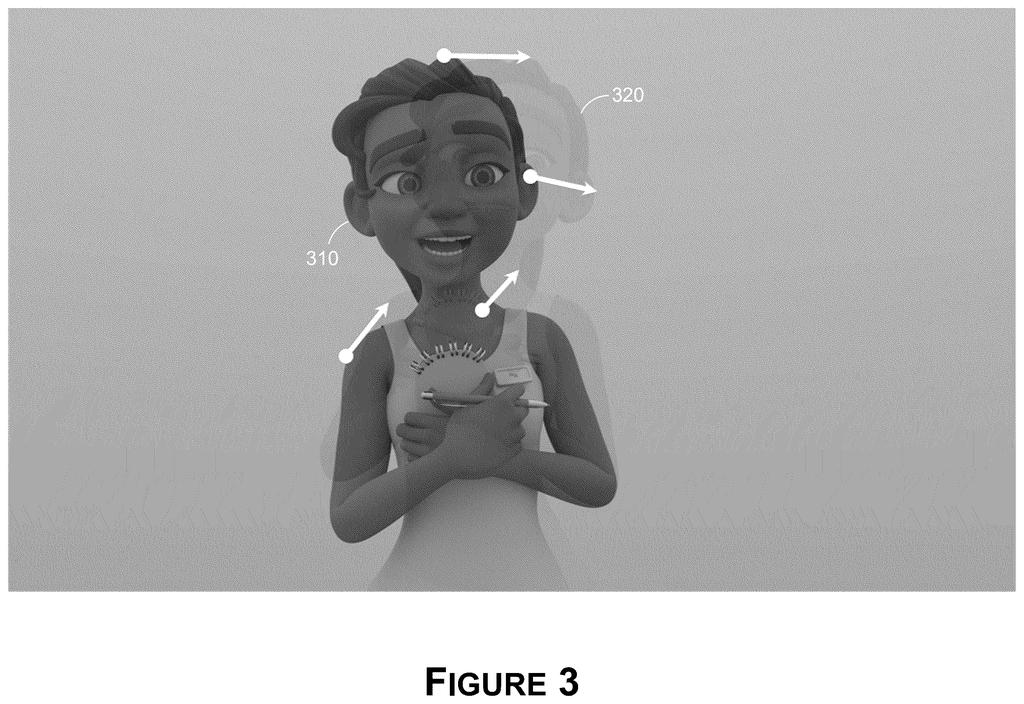
The fix is to borrow detail from the frame before. That only works if the computer knows where each spot on the cloak was a split second ago. Curved objects are built from millions of tiny triangles, and those triangles can be rebuilt differently every frame, so there is nothing steady to follow.
Nvidia's filing has the computer follow the object's coarse underlying frame instead, which keeps the same layout from one frame to the next. From that, it works out where each visible pixel's spot on the surface used to be, so the grainy frame can borrow from the last one and come out clean.
… compute, for the at least one pixel of the one or more pixels based at least on a parametric representation of the current location on the displaced surface corresponding to the pixel, a reconstructed previous location on a limit surface corresponding to the displaced surface in a previous frame …
Translation: It figures out where that pixel was located in the last frame by analyzing the surface math.
How the pixel's past position gets rebuilt
Many 3D objects start as a control cage, a coarse wireframe an artist shapes by hand. A math formula turns that cage into a perfectly smooth limit surface. Graphics chips draw triangles rather than formulas, so at render time the surface is chopped into tiny triangles, sometimes smaller than a single pixel.
Denoising reuses data from earlier frames, which requires a motion vector (an arrow showing how far a spot moved on screen between frames) for each pixel. The filing says storing one per tiny triangle scales badly, and when the triangle layout changes every frame, there is no consistent triangle to compare.
The claims describe this per-pixel routine:
- Find the current 3D spot on the displaced surface (the smooth surface with bumps and fine detail added), for example from stored depth and the camera setup.
- Look up the pixel's saved position within its patch of the cage, which stays fixed between frames.
- Feed that position into the formula using the previous frame's saved cage points to rebuild where the spot sat on the limit surface.
- Compare the two spots as seen on screen to get the arrow, then denoise with it.
The filing also describes handling the bumps by applying a displacement function (such as a texture or a math recipe) to the earlier position, or by measuring the displacement and reusing it. The claims cover frames made by ray tracing or by rasterization.
… motion vectors are computed by comparing 3D locations on a rendered (displaced) surface or by comparing corresponding 3D locations on the limit surface …
Translation: It tracks movement by comparing three dimensional surface points between frames instead of counting millions of tiny triangles.
What this means for game and simulation graphics
If you play games with ray-traced lighting, grain and shimmer on moving characters and curved objects are a familiar annoyance. A cheaper way to track how those surfaces move could mean cleaner images from the same graphics chip, or the same quality with less work for it. The filing frames the benefit as lower processing time and memory use that no longer grows with how detailed the scene is.
The patent also names uses beyond games: film rendering, robot and driving simulation, digital twins and 3D design tools, including Nvidia's own Omniverse and DriveSIM. Those workloads render huge amounts of imagery, so even small savings per frame add up. A patent application is not a shipping feature, and nothing here says when or whether it would reach products.
Nvidia's 40th filing we've tracked in our GPU rendering race watch since July follows pre-loading graphics code and parallel 360-degree image math.
The system works by assuming that animated surfaces keep the same underlying skeleton from frame to frame, which is a reasonable bet for characters and vehicles but a hard limit for everything else. Surfaces that do not follow that structure need a different approach entirely, so this solves one problem rather than all problems.
Rebuilding where each pixel was a moment ago also requires extra math, and the filing acknowledges that some of those position estimates are approximations. A slightly wrong guess leaves a faint smear in the cleaned image, meaning quality is only as good as the approximation.
The trade still reads as worth it. Making cleanup work scale the same way regardless of how detailed a surface gets is exactly how graphics pipelines survive increasingly complex scenes, and a small risk of occasional softness beats a guaranteed slowdown every frame.
Get our take in your Top Stories
Liked this breakdown? Add Patentlyze as a preferred source on Google, and our plain-English take shows up more often in your Top Stories the next time Nvidia patent news breaks.
There are more where this came from
We read every patent application Big Tech publishes and send you the ones worth knowing. Plain English, free, every week.
The drawings
18 drawing sheets from US 2026/0311301 A1 · click any drawing to enlarge


Show the other 10 sheets


Want this weekly breakdown for a company we don't cover? Patentlyze Pro →
Be the first to weigh in