
Nvidia Patents a Fix That Stops GPUs from Doing the Same Image Work Twice
Every time a GPU draws a textured surface, it might decompress the same image data over and over again. Nvidia wants to make that happen once, then remember the result.
How Nvidia's texture cache cuts GPU busywork
Every time your GPU draws a textured surface in a game or 3D scene, it might be unpacking the same compressed image data dozens of times per second. That unpacking takes real computing power, and at high compression ratios it can become a meaningful drain on performance.
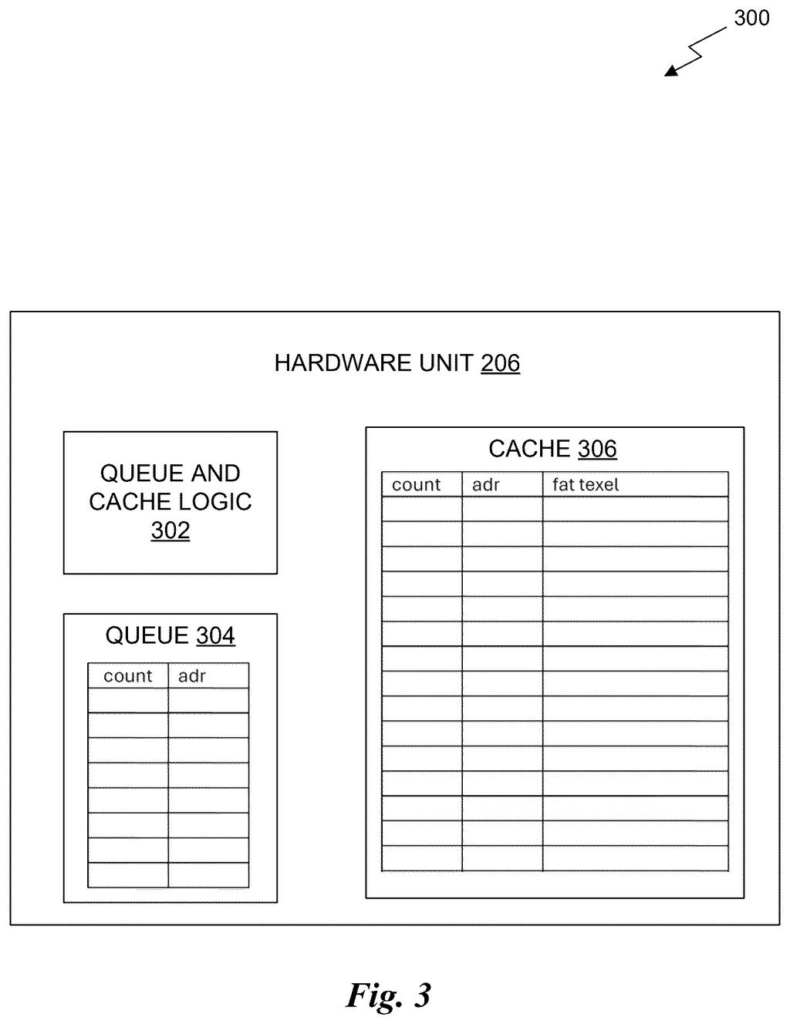
Nvidia's patent describes a cache (a small, fast memory holding recently used results) that sits between the shader code and the full decompression process. Before the GPU bothers to decode a compressed texture, the system checks whether a decoded version is already sitting in that cache. If it is, the GPU grabs it directly and skips the unpacking entirely.
The clever part is that the cache is managed partly in software, meaning developers can influence what stays in it and what gets evicted. That combination of hardware speed and software control is what Nvidia is staking a claim on here.
responsive to identifying a compressed representation of image data that is to be decompressed, determining whether the image data is stored in a cache; when the image data is stored in the cache, accessing the image data from the cache.
Translation: The graphics card checks if it already saved the uncompressed image before trying to decode it again.
How the cache checks before decompressing
Textures in 3D graphics are images mapped onto surfaces to give them color, roughness, or detail. Because high-quality textures are large, they are usually stored in a compressed format that saves memory and bandwidth. But before the GPU can actually use a compressed texture, it has to decompress it, and that decompression is handled by small programs called shader code running on the GPU.
The problem: the same compressed texture block can be requested by many pixels in the same frame, or across multiple frames, causing the same decompression to happen repeatedly. At high compression ratios, each decompression is expensive.
Nvidia's patent describes a software-assisted hardware cache for storing already-decompressed texture data. The flow works like this:
- A decompression request arrives for a specific block of image data.
- The system checks the cache first, using an identifier for that compressed block.
- If the decoded result is already in the cache (a cache hit), it is returned immediately without any decompression work.
- If it is not in the cache (a cache miss), decompression happens normally, and the result is stored for future requests.
The "software-assisted" piece means shader code on the GPU participates in managing the cache, not just hardware logic alone. That gives the system more flexibility in deciding what to keep and when.
The present disclosure provides for a software-assisted hardware cache for texture decompression, which can be used to access already decompressed textures thereby reducing a number of decompressions required to be performed.
Translation: Nvidia built a special memory cache to store unpacked graphics so the processor does not waste time repeating the same work.
What this means for GPU performance in games
For anyone playing a game or running a 3D application, this kind of optimization is invisible but real. Fewer redundant decompressions means the GPU has more headroom to spend on rendering, physics, or AI workloads. At high compression ratios (which are increasingly common as texture quality climbs faster than memory bandwidth), the savings compound.
Nvidia's run of texture and rendering pipeline filings shows where the company sees its GPU efficiency ceiling. This particular patent sits squarely in the shader pipeline, which is the same code path that runs on virtually every Nvidia GPU in games, content creation, and professional visualization. If the approach works at scale, it could lift performance without requiring faster memory or bigger caches.
Nvidia's 37th filing we've tracked in the GPU rendering race since July builds on earlier work like one on filling in missing video frames and one on quieting multi-chip GPU crosstalk.
Claim 1 covers any method that checks a saved copy of already-decompressed image data before doing the decompression work again. That check-first idea is stated without specifying a particular memory layout, compression format, or chip design, which makes the claim unusually wide.
In practice, if granted, that breadth means any graphics pipeline that stores decompressed texture data and consults it before repeating the decompression step could fall within the claim's reach. The one specific wrinkle the claim introduces is that ordinary programmable shader code, the same code developers write to control how surfaces look, participates in managing that saved copy.
Whether that software-participation detail is enough to distinguish the claim from decades of general caching practice is the central question. If it survives that scrutiny, the claim reaches a very large portion of how modern graphics chips handle compressed textures.
There are more where this came from
We read every patent application Big Tech publishes and send you the ones worth knowing. Plain English, free, every week.
The drawings
6 drawing sheets from US 2026/0301111 A1 · click any drawing to enlarge


Want this weekly breakdown for a company we don't cover? Patentlyze Pro →
Be the first to weigh in