
Apple Files Patent for a Phone That Sees Dropped Connections Coming
Your phone usually finds out a connection is dead only after it dies. Apple's filing describes a phone that sees the drop coming and warns the cell tower early enough to move you to a better one.
What Apple's dropped-connection predictor does
You're walking out of a parking garage, mid-call, and your signal starts to wobble. Today your phone mostly waits until the connection actually breaks, then scrambles to find another tower. That's when the call drops or the video freezes.
Apple's filing describes a phone that watches its own signal history and guesses what comes next. It tracks things like how many times it had to retry connecting and how often its data went unanswered, then forecasts a failure before it happens. The phone warns the network, which can hand your connection to a better tower in time.
The phone and the network also agree up front on which AI models to use, and the phone keeps grading its own guesses. If they start going wrong, it falls back to the old method.
… predicting the RLF using the one or more AI based models based on predicting a block error rate (BLER) of one or more reference signals or based on classifying a risk level of the RLF based on a plurality of inputs; …
Translation: The phone uses artificial intelligence to calculate connection error rates and classify the risk of losing signal.
How the phone forecasts a failing signal
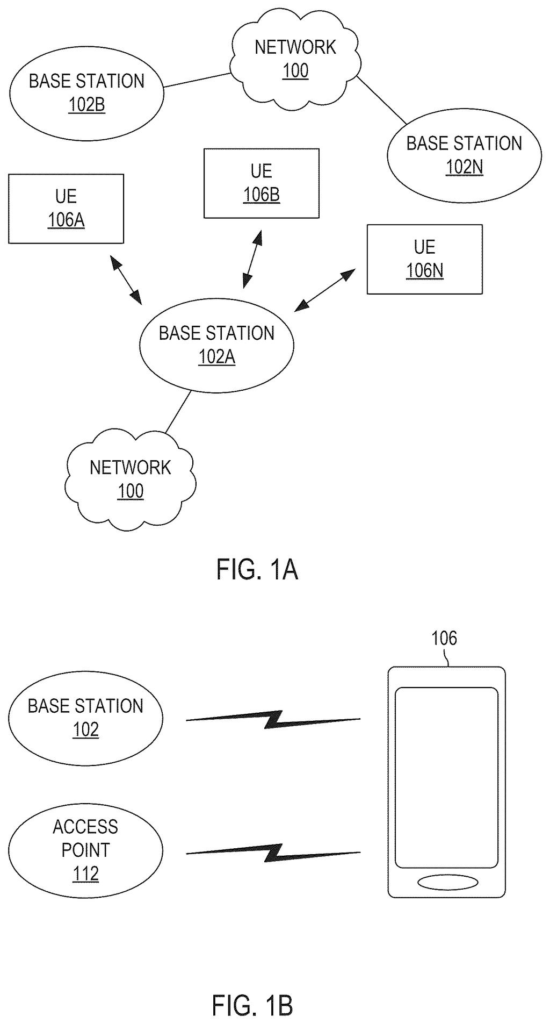
The patent covers a back-and-forth between your phone (the filing calls it user equipment) and a cell tower. The phone first sends a capability report of what it can predict. The tower replies with settings for training AI models, such as the model type (the filing names LSTM and RNN, two designs for spotting patterns over time) and how far ahead to look. The phone trains the models on its own data, or with an offline server, says which are ready, and waits for the tower's activation instruction.
Once active, the phone predicts trouble in one of two ways:
- Forecast the error rate. It predicts the block error rate (the share of data chunks that arrive damaged) from past readings, with a confidence score attached.
- Score the risk. A model weighs inputs such as failed connection attempts, resent data packets, signal readings and repeated unanswered transmissions, then rates how likely a failure is.
In the filing's example, the main link logs five bad-signal warnings, which starts a countdown timer. The phone's forecast says recovery is unlikely, and it reports this through a second cell link in case the main one is too weak. The network then moves the phone to another cell before the countdown ends.
The phone keeps grading itself. If the gap between predicted and actual error rates passes a set limit (the example uses 0.01), it returns to ordinary measurement. A separate claim covers the tower's side of the exchange.
… decoding configuration information, received from the BS, for training one or more AI based models for predicting radio link failure (RLF); …
Translation: The device receives setup instructions from the cell tower to train its drop prediction models.
What this means for phones on patchy signal
If it works as described, the benefit lands where you feel it: fewer frozen calls and stalled maps when you move through patchy coverage, like a train, a parking garage or the edge of town. The phone is not asked to fix the signal, only to give the network a head start on moving you.
It also needs the network's cooperation, since the tower decides when models are trained and switched on, so carriers would have to support it. The filing says the ideas could apply to phones, tablets, wearables and drones. An examiner rejected the claims as filed in a first review, a routine step that usually leads to amendments.
Apple's 543rd filing in our Apple coverage since May adds to a pattern around network load, building on the AI handoff patent and the satellite check-in patent.
Dropped connections are a small daily pain that adds up: a frozen video call, a map that stops loading in a bad spot, a download that restarts. Today's system reacts only after the link has already broken, so there is real room for improvement.
Apple's answer fits the size of that annoyance. A phone that sees trouble coming and tells the tower early can dodge the worst moment, and the filing adds a safety net that falls back to the old method when the AI guesses badly.
The limit is scale. How much you would notice depends on how often your connection truly fails, which for many people is not often. Expect any gain to show up mostly while you are moving through weak coverage, and only if carriers turn the feature on.
Get our take in your Top Stories
Liked this breakdown? Add Patentlyze as a preferred source on Google, and our plain-English take shows up more often in your Top Stories the next time Apple patent news breaks.
There are more where this came from
We read every patent application Big Tech publishes and send you the ones worth knowing. Plain English, free, every week.
The drawings
13 drawing sheets from US 2026/0322701 A1 · click any drawing to enlarge


Show the other 5 sheets


Want this weekly breakdown for a company we don't cover? Patentlyze Pro →
Be the first to weigh in