
Intel Files Patent for Auditing the Chips and Cameras Behind AI Decisions
Intel describes a way to check that the cameras and chips feeding an AI are healthy and honest before anyone trusts what the AI says. Then it grades them and tunes the ones that slip.
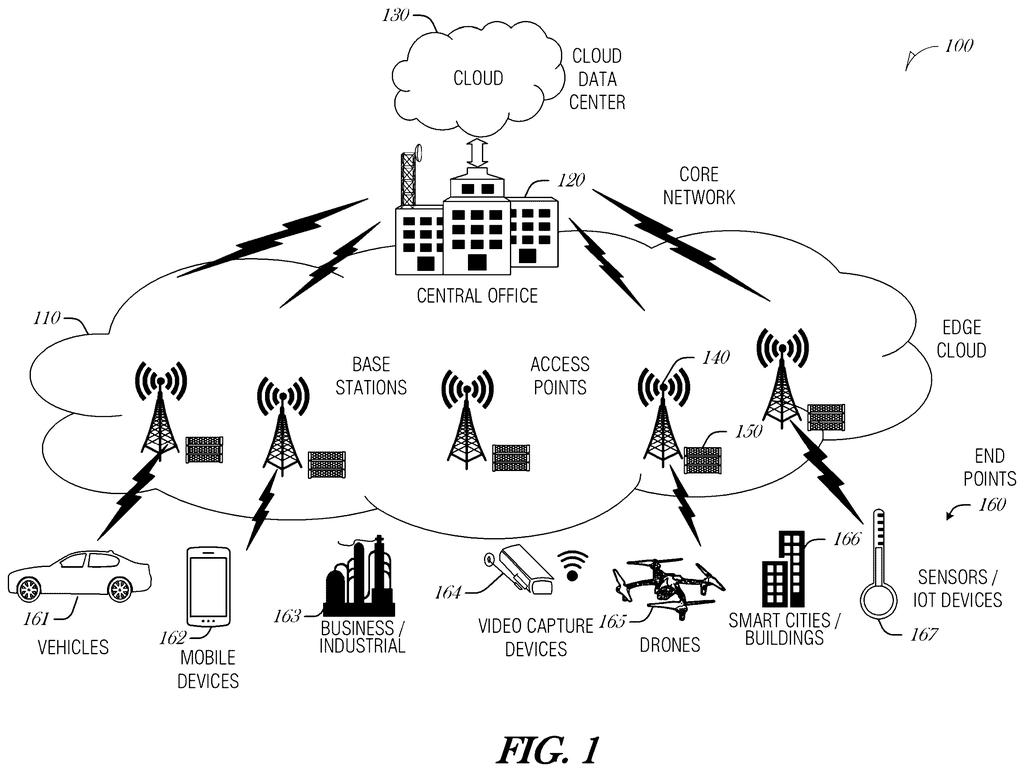
What Intel's AI trust-check system actually does
Imagine an airport security camera flags a traveler as suspicious, and guards rush over. Before anyone acts, you would want to know that the camera, and the chip analyzing its video, weren't tampered with, glitching, or running outdated software.
This Intel filing describes a controller that splits an AI job across several chips and devices. It then collects a signed record from each one about its health and what it did to the data. A separate checker compares those records against the service promises (the speed and reliability a customer was told to expect).
Afterward, the system hands out the equivalent of rewards and penalties. The next time the job runs, a camera might be recalibrated or switched off, or the AI model might be swapped for a different one. Think of it as a report card that changes how the team works tomorrow.
organize a plurality of compute kernels to execute an instance of an artificial intelligence inference pipeline, each of the compute kernels executing on a respective plurality of processing platforms …
Translation: It coordinates different parts of an AI task across multiple computer chips.
How Intel scores each chip in an AI pipeline
The patent covers a controller: a processor plus memory running instructions. It organizes compute kernels (small programs built to run fast on accelerator chips such as GPUs) into one AI inference pipeline (the stage where a trained model produces answers from fresh data). Each kernel runs on its own processing platform.
The controller then reads metadata from each platform. That metadata describes attestation data (proof that a device is what it claims to be and is in a healthy state). The filing also describes optional extras: provenance data (how the data was changed and by which platform) and utilization telemetry (how busy each chip was). The metadata can be encrypted with a homomorphic additive scheme (which lets each stage add its own records without reading the earlier ones), signed by the platform that made it, and stored in a distributed ledger or blockchain.
The metadata goes to an evaluator system, which checks that every platform meets its service level agreement, for example by comparing values to a threshold. Then reinforcement data comes back. This is a set of rewards and penalties, borrowed from reinforcement learning (a branch of machine learning where good behavior is rewarded). It is used to adjust a platform in the next run.
The adjustments named in the claims are:
- Selecting which set of sensors to use
- Disabling a sensor
- Recalibrating a sensor
- Updating the weights given to the model's inputs
- Replacing the AI model with a different one
… transmit the metadata to an evaluator system, the evaluator system to evaluate the metadata to validate that the plurality of processing platforms are compliant with a service level agreement …
Translation: It sends system data to a checker to prove the hardware meets agreed rules.
Why Intel's chip audit matters for AI cameras
When an AI system makes a call that affects you, such as a security alert, a driving decision or a health reading, the answer is only as good as the data and hardware behind it. This filing aims to catch a faulty or tampered camera or chip before its output is trusted. It also leaves an audit trail so someone can later see why the AI reached a conclusion.
The filing also mentions a privacy use: a microphone can be revoked for a single workflow to protect a conversation. It notes that software can make up for hardware limits too, such as sharpening images from a low-resolution camera with AI. This is a patent application, not a product, and the document names no Intel product that would use it.
Intel's 50th filing we've tracked since May in the AI chip wars, this follows one on shifting work mid-job and one on edge AI networking.
You would likely never see this system. It sits in the plumbing behind security cameras and sensors, and its job is to stop a faulty or tampered device from feeding bad information to an AI that people then act on.
The benefit you would notice is a failure that never happens: a false alarm at an airport, or a camera that slowly drifts out of calibration and keeps producing bad readings. The audit trail matters most after something goes wrong, because someone can look back and see which device touched the data.
The ingredients are easy to name: signed device records, service agreements and reward-based tuning. The filing combines them into one workflow. Its value depends on whether anyone deploys it at scale, and as written it reads as sensible infrastructure with little consumer appeal.
Get our take in your Top Stories
Liked this breakdown? Add Patentlyze as a preferred source on Google, and our plain-English take shows up more often in your Top Stories the next time Intel patent news breaks.
There are more where this came from
We read every patent application Big Tech publishes and send you the ones worth knowing. Plain English, free, every week.
The drawings
12 drawing sheets from US 2026/0320432 A1 · click any drawing to enlarge


Show the other 4 sheets


Want this weekly breakdown for a company we don't cover? Patentlyze Pro →
Be the first to weigh in