
Qualcomm Files Patent for a Second AI That Helps Phones Judge Their Wireless Signal
Qualcomm's patent gives a phone's signal-reading AI a coach that retunes its settings every time the antenna setup changes.
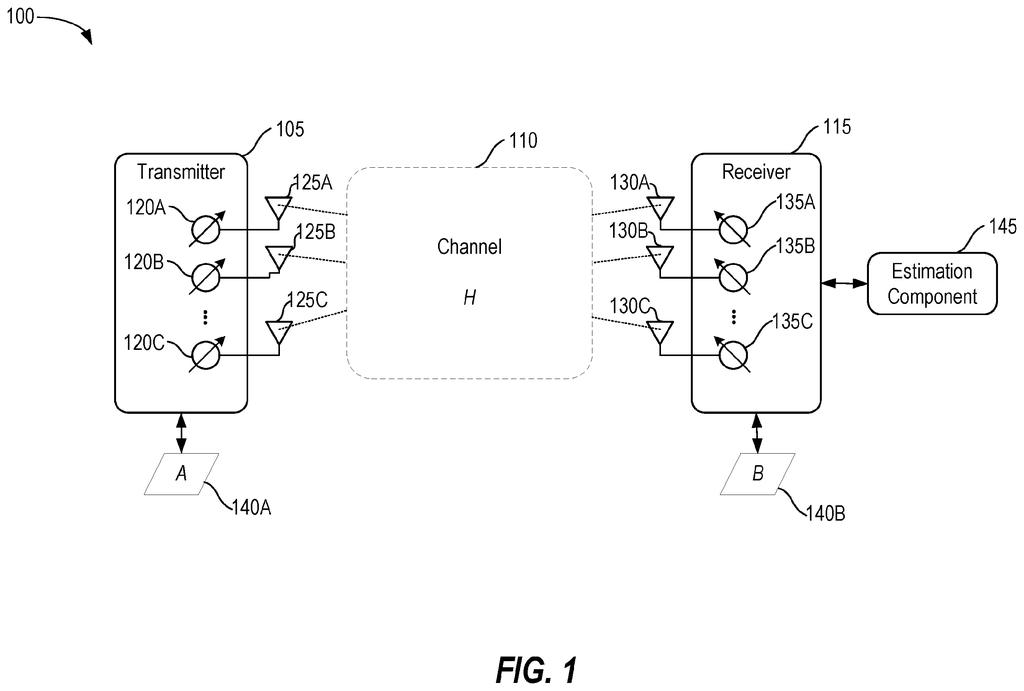
What Qualcomm's two-model signal reader does
Imagine you're walking through a crowded train station, streaming a video on your phone. The signal from the nearest tower bounces off walls, trains and people, and your phone has to keep working out what path that signal took so it can listen properly.
Phones can use AI to make that guess, but an AI tuned under one set of conditions can stumble when the setup changes, such as when the antennas are pointed a different way. Qualcomm's patent adds a second AI whose only job is to retune the first one's settings as conditions shift.
The two models work as a team: one reads the signal, the other keeps adjusting how it reads. The filing describes the broader approach as light enough for low-power devices like phones.
generating a set of layer-specific adaptation parameters using a first machine learning model trained to generate the set of layer-specific adaptation parameters based on a sensing matrix and a learned sparsifying dictionary; …
Translation: A first AI model creates custom adjustment settings by analyzing signal patterns and pre-learned data dictionaries.
How one AI retunes the other, layer by layer
Every wireless link needs a channel estimate: a best guess at how the signal changed on its way from tower to device. In millimeter-wave systems with many antennas, the receiver gets far fewer measurements than it would need for an exact answer, so the guess has to be reconstructed. The patent handles this with two cooperating neural networks.
The second model works as a series of passes (layers). Each pass compares its current guess against the real measurement, nudges the guess, and zeroes out tiny values. That keeps the answer sparse (mostly zeros, with a few strong signal paths). It also learns a sparsifying dictionary, a catalog of basic signal shapes used to rebuild the final estimate.
The first model is the addition. It looks at the sensing matrix (a record of how the antennas were set up for that measurement) and the dictionary, then outputs settings for each layer of the second model:
- Step size: how big a nudge each pass makes.
- Threshold: how small a value must be before it gets zeroed out.
Because those settings are recalculated for each new sensing matrix, they are not frozen at training time. The filing says the two models can be trained together, and a receiver can learn just its half of the dictionary when the transmitter shares the other half. The finished estimate can then drive actions such as beam selection or beamforming design.
A channel estimate is generated (e.g., by the second machine learning model) based on at least one layer-specific sparse vector representation from the generated set of layer-specific sparse vector representations.
Translation: The device evaluates the wireless environment to figure out the quality of the connection.
Why this could matter for phones on 5G networks
Your phone's connection quality depends on how well it understands the radio path to the tower, especially on high-frequency millimeter-wave bands where many antennas must be pointed carefully. A better estimate lets the network choose beams faster and adjust the link more accurately, which are the uses the filing lists for the result.
The filing also pitches the design for power-limited devices, since a compact setup with fewer layers and smaller dictionaries means less computing and less battery use. It gives no performance numbers, so how much real-world gain you would see is unknown. This is a patent application describing a method, and it names no phone or chip.
Qualcomm's 522nd filing in our Qualcomm coverage since May adds to a run that includes radar-style sensing predictions and AI fallback when data drops.
The trade here is simple: Qualcomm spends extra computing on a second AI to buy flexibility. The helper has to produce settings for every layer before the main model can finish its work, and a phone has a tight battery and a tight time budget for each signal reading.
The cost also shows up in training. The pair needs examples where the true state of the signal is known, and the adjuster can only be as good as the situations it saw. A very different environment could throw off both models at once.
Still, an AI that falls apart when the antenna setup changes is a poor fit for a phone that moves all day. Paying a little extra computing to avoid that looks like a reasonable bargain, though the filing gives no numbers, so the size of the cost stays unknown.
Get our take in your Top Stories
Liked this breakdown? Add Patentlyze as a preferred source on Google, and our plain-English take shows up more often in your Top Stories the next time Qualcomm patent news breaks.
There are more where this came from
We read every patent application Big Tech publishes and send you the ones worth knowing. Plain English, free, every week.
The drawings
14 drawing sheets from US 2026/0322654 A1 · click any drawing to enlarge


Show the other 6 sheets


Want this weekly breakdown for a company we don't cover? Patentlyze Pro →
Be the first to weigh in