
Google Files Patent for Turning a Few Product Photos Into Endless Ad Scenes
Google describes an AI that learns one specific product from three to five photos, then drops it into as many staged scenes as you ask for. The pitch is a photo shoot without the studio.
What Google's product-photo patent actually does
A furniture company photographs its new couch in one staged living room, and that single set of pictures has to cover every ad for months. Shooting more scenes means booking a studio, hauling the couch around, and paying a crew.
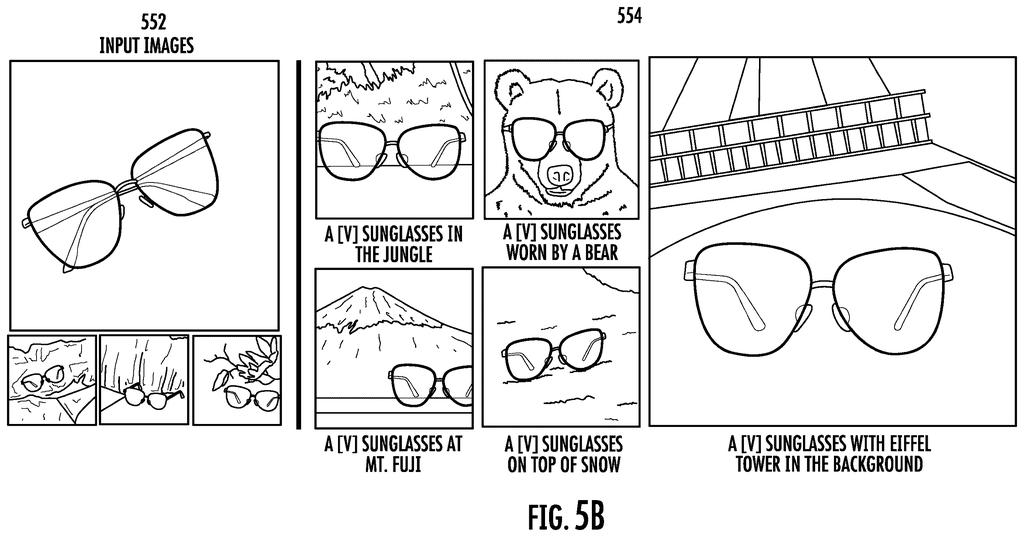
Google's patent application describes a shortcut. You give an image AI three to five photos of one specific product, and it learns that exact item, down to the details that set it apart from every other couch. The system attaches a made-up label to what it learned. After that, a request made of that label plus 'a bright beach house' produces a fresh picture of that couch in that setting.
The system can then score the results for how closely they match the real product and how realistic they look, and keep only the best. Your search results or shopping ads could end up showing the product in a scene picked to suit you.
tuning a set of parameters of the image generation model based on the one or more input images; embedding an association between a model-readable token and the set of parameters within the image generation model; generating a plurality of prompts that comprise the model-readable token …
Translation: The system adjusts the AI using your product photos and links them to a special code word to create new ads.
How Google teaches an image AI one product
Claim 1 covers a computer system that takes photos of one particular object and uses them to adjust a set of parameters (the adjustable numbers inside an AI model that store what it has learned) in an image generation model.
The system then ties those adjusted parameters to a model-readable token, which is a unique made-up label the AI can recognize, a bit like a nickname for that exact item. When a prompt (the text instruction you give an image AI) contains the label, the model renders the object. The rest of the prompt describes the scene.
- Adjust the model by comparing its trial pictures with the real photos using a loss function (a score of how far off the picture is).
- Write many prompts that pair the label with different settings, such as a store, a beach, or a car.
- Generate the pictures and output some or all of them.
- Optionally, score each picture for similarity to the real product and for realism, and keep the best.
The filing says most of the original model can stay frozen during tuning, which protects its general skills and cuts computing cost. It also describes learning a 3D version of the object, drawing a comic strip with a consistent character, and showing several products together.
… tuning one or more parameters for object-specific rendering and can include utilizing the object-specific tuning to render the object in one or more different environments.
Translation: It learns what your specific product looks like so it can drop it into completely new backgrounds.
What this means for shopping ads and search
If this ever shipped, the product photos you see in shopping ads and search results could be generated for you personally instead of shot once for everybody. The filing's own example is a couch placed in a modern, minimalist living room because the system judged you'd like that look. For small sellers, it would also remove the cost of a studio shoot.
The filing lists search results, social media feeds, and ad carousels as places the images could appear. The application is still early: an examiner's first review rejected the claims as filed, which is routine and usually followed by amendments. Even so, it shows how Google describes making product images from a handful of real photos.
Google's 69th filing we've tracked since May in the AI photo editing race follows earlier applications like reaction video capture and style-learning AI art.
Claim 1 is wide on what it covers and narrow on how. It names any particular object, any image generation model, and any set of environments, with no product type and no model type spelled out. Diffusion and token-based models only show up in a later dependent claim.
The narrow part is a three-step recipe: adjust the model using the seller's photos, tie that learning to a label, then write many prompts that include the label. A tool that skips the label step would sit outside the claim language as written.
Claim 1 also calls for a plurality of prompts and a plurality of output images, so a tool that makes one picture per request would need a generous reading to fit. The similarity and realism checks live in dependent claims 3 and 4 as optional add-ons. Bottom line: a well-aimed claim for a business that wants hundreds of ad scenes per product.
Get our take in your Top Stories
Liked this breakdown? Add Patentlyze as a preferred source on Google, and our plain-English take shows up more often in your Top Stories the next time Google patent news breaks.
There are more where this came from
We read every patent application Big Tech publishes and send you the ones worth knowing. Plain English, free, every week.
The drawings
18 drawing sheets from US 2026/0320111 A1 · click any drawing to enlarge


Show the other 10 sheets


Want this weekly breakdown for a company we don't cover? Patentlyze Pro →
Be the first to weigh in