
Samsung Files Patent to Stop AI Chips Sitting Idle While Saving Progress
Saving progress is the one chore that makes a giant AI training run stop and wait. Samsung's patent application tries to shorten that pause by saving to fast memory first and finishing the slow part later.
What Samsung's AI training save point does
A rack of costly AI chips freezes in place every so often so it can save its progress to a drive. Nothing gets computed until the save finishes. If you've ever watched a game stall during an autosave, you know the feeling, except here the meter is running on data center hardware.
Samsung's patent application describes a shortcut. Instead of writing the save straight to a slow drive, the system first drops a copy into a special kind of memory. It is nearly as fast as regular working memory, but it keeps its contents if the power goes out. Training then picks right back up.
While the AI keeps learning, the saved copy is moved in the background to an ordinary drive for long-term storage. Once it is safely there, the fast memory is cleared and ready for the next save.
… transferring, based on unfreezing the state of the model training process, the snapshot from the persistent memory to a storage drive …
Translation: Moving the saved progress file to long-term storage after the training resumes.
How the snapshot hops from memory to drive
The filing covers a method for checkpointing (periodically saving the full state of a training run so it can restart after a crash). Its three independent claims cover a method, a device and a storage medium, all built around the same sequence.
First, the training process is frozen. That means values in memory and registers are held still, and the model's weights and biases (the numbers the AI adjusts as it learns) stop updating. Freezing triggers a request for a block of persistent memory, which the description says could be DRAM backed by a battery or a capacitor so it survives a power loss.
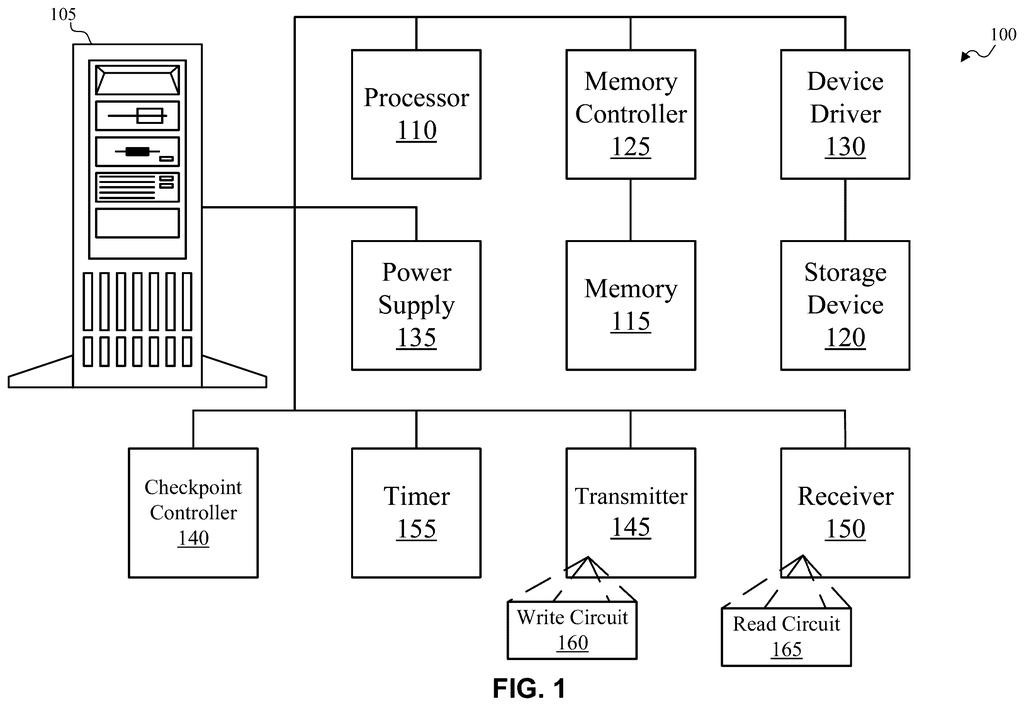
The request goes to a fabric manager, a controller that hands out memory from a shared pool over CXL (a fast link that lets processors share memory using a cache coherent protocol, meaning everyone sees consistent data). The sequence then runs as follows:
- The processor, such as a GPU, saves a point-in-time snapshot into the allocated memory.
- The training process is unfrozen and resumes.
- The transfer of the snapshot to a solid-state drive is scheduled and runs at the same time as training.
- The persistent memory allocation is freed once the copy is confirmed.
The description cites write speeds of 64 to 256 gigabytes per second for the memory, versus about 2 gigabytes per second for some drives, and says adding more memory devices could push this toward 1 terabyte per second.
Why Samsung is going after idle AI chips
If you use AI products, the cost of training the models behind them eventually shows up somewhere, in prices, in limits or in how fast new versions arrive. Samsung's filing goes after one specific waste: expensive chips doing nothing while a save finishes. The description says that training can take hours to months, and that hardware failures are common (it cites about 30% faulty GPUs during some large language model runs), so frequent saves are a necessity.
For Samsung, the angle fits its memory business. The patent leans on CXL memory pools and solid-state drives, two product areas where the company already sells hardware. The filing offers no measured results, so the actual time savings are unproven, but the pitch is clear: shorter pauses, busier chips and faster training runs.
Samsung's 60th filing we've tracked since June in the AI chip wars adds to a run that includes a light-based data transfer chip and a memory-saving AI fix.
The problem here is large and costly. Training a big AI model can run for hours or months on racks of expensive chips, and the filing says failures are common enough that saving progress regularly is a must. Every save leaves those chips standing still, and the waiting adds up on a bill measured in data center time.
Samsung's answer matches the size of that problem. It puts the save in a faster place and pushes the slow part into the background, so the only thing it attacks is the wait. Nothing about the training itself changes.
The filing gives no measured results, so how much time it saves is an open question. The logic is easy to follow, though, and the pain it targets grows with every larger model.
Get our take in your Top Stories
Liked this breakdown? Add Patentlyze as a preferred source on Google, and our plain-English take shows up more often in your Top Stories the next time Samsung patent news breaks.
There are more where this came from
We read every patent application Big Tech publishes and send you the ones worth knowing. Plain English, free, every week.
The drawings
5 drawing sheets from US 2026/0320481 A1 · click any drawing to enlarge


Want this weekly breakdown for a company we don't cover? Patentlyze Pro →
Be the first to weigh in