
Sony Files Patent for a Wearable That Flags Its Own Bad Heart Rate Readings
Your smartwatch will happily show you a heart rate while your wrist is flailing mid-run, even when the number is junk. Sony's patent application has the device grade every heartbeat and admit when it isn't sure.
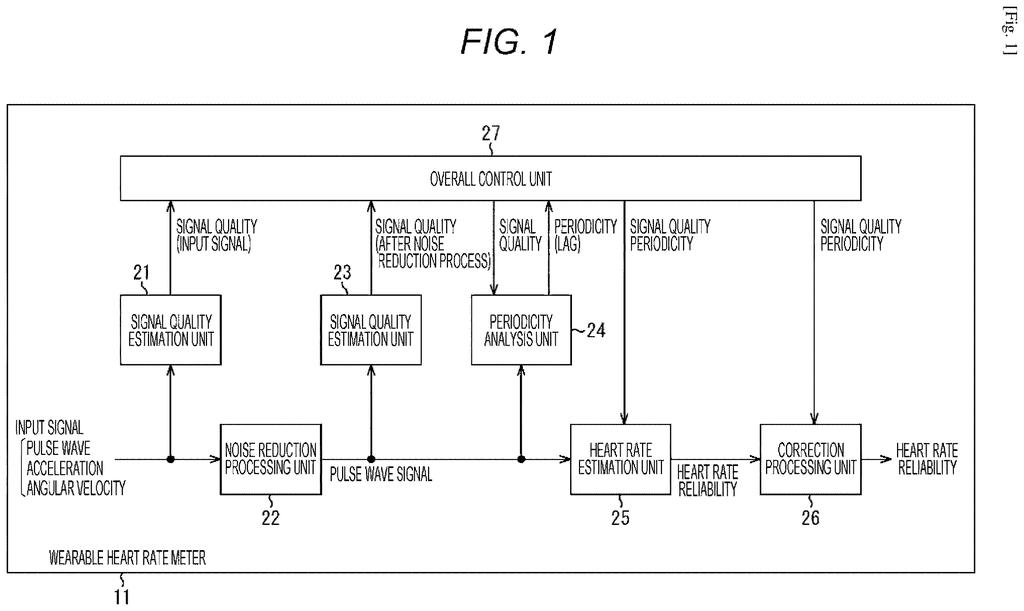
What Sony's heart rate double-check actually does
Imagine you're out on a jog, arm swinging, and your watch suddenly says your heart rate is 190. You know that's wrong, but the watch doesn't. Motion shakes the light sensor against your skin, and the resulting noise can look a lot like a heartbeat.
Sony's filing adds a self-check. The device grades the raw signal from the sensor, cleans it up, then grades it again. Each heartbeat gets a trust score based on both grades.
Beats with a low score get thrown out and replaced with a guess built from nearby beats the device does trust. The filing also describes using those scores to estimate your emotional state, specifically how alert or relaxed you are.
… a heart rate estimator that estimates a heart rate based on the output signal from the noise reduction processor and estimates a reliability of the estimated heart rate based on a result of the estimated first signal quality and a result of the estimated second signal quality.
Translation: The device calculates your pulse while checking how trustworthy its own math is.
How Sony grades each heartbeat twice
The sensor uses photoplethysmography (PPG), meaning it shines an LED into your skin and measures how much light bounces back as blood pulses through tiny vessels. Movement scrambles that signal. The filing calls the result body motion noise, and it can create fake peaks that look like heartbeats.
The chain the patent describes:
- A first signal quality estimator (a trained neural network, meaning software taught from examples) grades the raw signal as good or bad. It learned by comparing readings against a medical electrocardiograph.
- A noise reduction step, such as a filter that uses the device's motion sensors to subtract movement.
- A second estimator grades the cleaned signal to catch leftover noise.
- Optionally, a periodicity check asks whether the signal repeats like a real pulse.
Heart rate comes from the gaps between detected peaks. Each peak gets a reliability score from both grades; when both are good, reliability is high. In one example the scores are 1.0, 0.5 or 0.0. Low-scoring beats are treated as missing and filled in from the nearest trusted beats.
A second version adds a motion check (sleeping, running, walking, sitting) that switches off the extra steps when motion is too strong for the filter to help, or when the signal is already clean, saving power. A third version, covered in claim 14, feeds heart rate and reliability into a model that estimates arousal, one measure of emotional state.
… corrects the estimated heart rate based on the reliability of the estimated heart rate.
Translation: It fixes bad readings when it decides the data cannot be trusted.
Why trustworthy pulse data matters on your wrist
If you wear a watch or earbuds that track heart rate, the practical gain is fewer nonsense readings during exercise, plus cleaner data for features that depend on exact beat timing, like stress or health scores. The filing also describes skipping extra processing when the signal is clean or motion is too wild to fix, which would spare battery.
Sony names no product, and the examiner's first review rejected the claims as filed, a routine step that usually leads to amendments. The emotional-state angle is the most ambitious part: it treats your heartbeat as a clue to your mood, and the quality of that clue depends on this kind of self-checking.
Sony's tenth filing we've tracked since July on body-reading wearables adds to earlier work on earbuds that filter health noise and reading electrical body signals.
You would notice this in the moments you already distrust your watch: a hard workout, a bumpy bus ride, a loose strap. Instead of showing a confident wrong number, the device could patch the bad beats and tell the app how much to trust the result.
That matters most for health features built on tiny differences between beats, because a few false beats can wreck the whole calculation. The power-saving shortcuts help too, since a watch that double-checks everything all day would drain its battery fast.
Whether you ever see it depends on Sony shipping it, and the filing points to no product. If it works as described, the payoff is quiet: fewer absurd spikes in your workout graph and a better basis for mood and stress estimates.
Get our take in your Top Stories
Liked this breakdown? Add Patentlyze as a preferred source on Google, and our plain-English take shows up more often in your Top Stories the next time Sony patent news breaks.
There are more where this came from
We read every patent application Big Tech publishes and send you the ones worth knowing. Plain English, free, every week.
The drawings
15 drawing sheets from US 2026/0332272 A1 · click any drawing to enlarge


Show the other 7 sheets


Want this weekly breakdown for a company we don't cover? Patentlyze Pro →
Be the first to weigh in