
Apple Files Patent for Earbuds That Pause Your Podcast When You Doze Off
Fall asleep with a podcast on and your earbuds could notice, pause it, and back it up a few seconds so you can pick up where you actually drifted off.
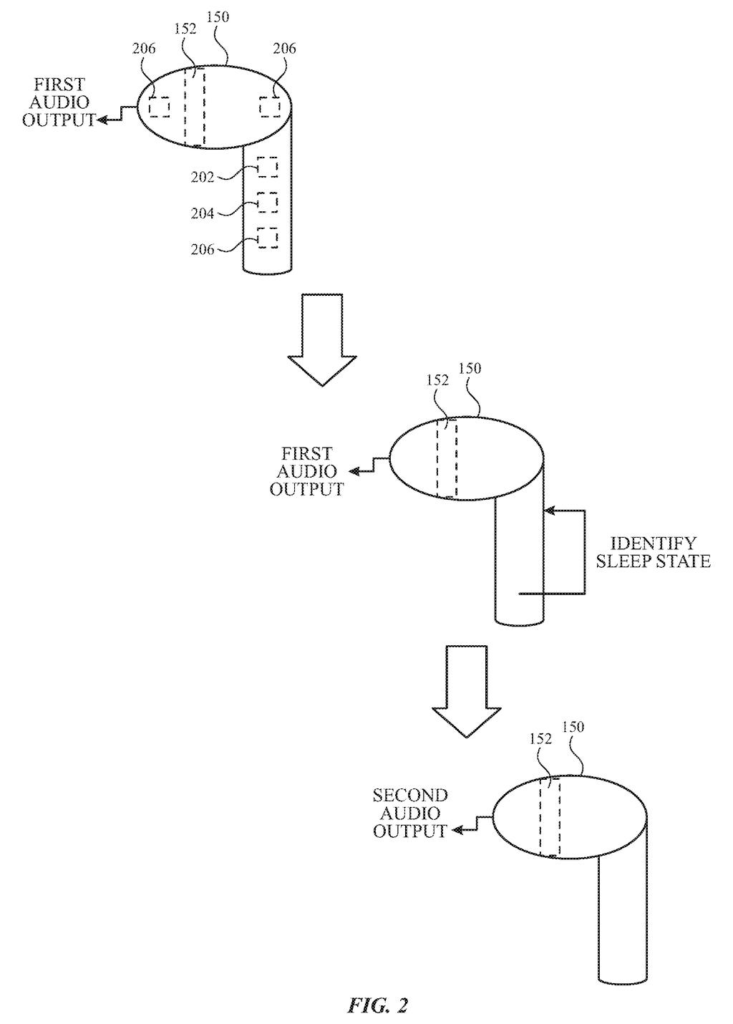
What Apple's sleep-sensing earbuds actually do
Right now, your earbuds have no idea you've fallen asleep. The podcast keeps playing, the music keeps going at full volume, and when you wake up you have no clue where you drifted off. Apple's filing describes earbuds or headphones that notice you have dozed off and change what they do.
Using motion sensors and microphones, the earbuds look for signs like you holding still and your breathing slowing down. Once they think you're asleep, they can pause playback, ease the volume down over a minute or so, or switch to something calmer like white noise. If they pause, they also back up a few seconds so you can restart near the last thing you remember.
They can double check, too. Your phone can wait a few minutes to see whether you're still tapping or moving it before it cuts the audio, so someone sitting still during a movie isn't cut off.
… identifying, by the wearable audio device that is being worn by the wearer while the wearable audio device is outputting the media content with a speaker of the wearable audio device, a sleep state corresponding to the wearer …
Translation: The earbuds figure out you are falling asleep while you are listening to something.
How the earbuds and phone confirm you're asleep
The earbuds or headphones decide you're asleep on their own, using inertial sensors (small motion detectors, like the ones that rotate your phone screen) and microphones that can pick up breathing. A machine learning model, which is software trained on examples, looks for stillness and slowing breaths. It can also tell stages such as light sleep, deep sleep and REM.
The filing covers three separate ideas:
- Media changes: pause playback, rewind it to an earlier spot, lower the volume at a set rate, change the equalization (the balance of bass and treble), or swap in sleep-aid audio like white noise.
- Sound-blocking changes: raise active noise cancellation (ANC, which plays opposite sound to cancel noise), make it react less to sudden noises like a passing train, or stop the two earbuds from coordinating with each other, which saves power.
- Phone check: the phone gets a sleep signal from the earbuds, watches for taps, scrolling or movement over a window of one to a few minutes, and only then decides whether to change playback.
The description adds extras: hearing-protection limits that estimate how much sound you take in while asleep, skipping the whole thing if a second person shares an earbud, and a home hub that could dim lights or lock doors.
Modifying the output may include pausing output of media content, reducing volume, modifying equalization, modifying noise cancellation operations, modifying pass-through audio operations, and/or other modifications.
Translation: Falling asleep can trigger the earbuds to pause your audio, lower the volume, or adjust noise cancellation.
Why sleeping with earbuds in gets safer
If you fall asleep to podcasts, audiobooks or a show, this could mean fewer lost places and fewer wake-ups from loud audio. The rewind detail is one you would feel: the pause lags behind the moment you drifted off, so playback resumes near what you last heard.
For Apple, it gives earbuds a job beyond playing sound: reading your body state and passing it to your phone and home. The filing mentions smart watches and smart rings as other possible sensors, and says the wearer could switch the feature on or off. It is a patent application, so nothing here says it will ship.
Apple's 13th filing we've tracked since May on our Apple health sensor filings, after predicting periods from heart rate and a combined mood and health chart, adds another piece to the picture.
Falling asleep with earbuds in is common, and the usual cost is small: a lost place in a podcast, a drained battery, a sore ear. Pausing and rewinding a few seconds fits that size of problem well.
The bigger problem gets less space in the filing. Hours of loud audio piped into a sleeping ear can damage hearing, and a sleeper has no way to notice. Easing the volume down gradually and softening sharp drum hits is a sensible fix for a real risk.
The reach toward locking your doors or arming an alarm when you nod off solves something few people have asked for. A wrong guess means a house locked around someone who was only resting their eyes. The waiting period before the phone acts shows Apple knows false alarms are the thing to avoid.
Get our take in your Top Stories
Liked this breakdown? Add Patentlyze as a preferred source on Google, and our plain-English take shows up more often in your Top Stories the next time Apple patent news breaks.
There are more where this came from
We read every patent application Big Tech publishes and send you the ones worth knowing. Plain English, free, every week.
The drawings
7 drawing sheets from US 2026/0329524 A1 · click any drawing to enlarge


Want this weekly breakdown for a company we don't cover? Patentlyze Pro →
Be the first to weigh in