
Samsung Files Patent for Car Screens That Slide Together Into One Big Display
Samsung describes two screens that hang from a car's ceiling, each serving its own passenger, until someone taps a button and they slide together into one wide display. Where they stop depends on whether one person or several are watching.
What Samsung's merging car screens actually do
Imagine you're in the back of a car with a friend. Each of you has your own screen hanging from the ceiling, and you're each watching something different. Then you decide to watch a movie together, and you want it bigger than either screen alone.
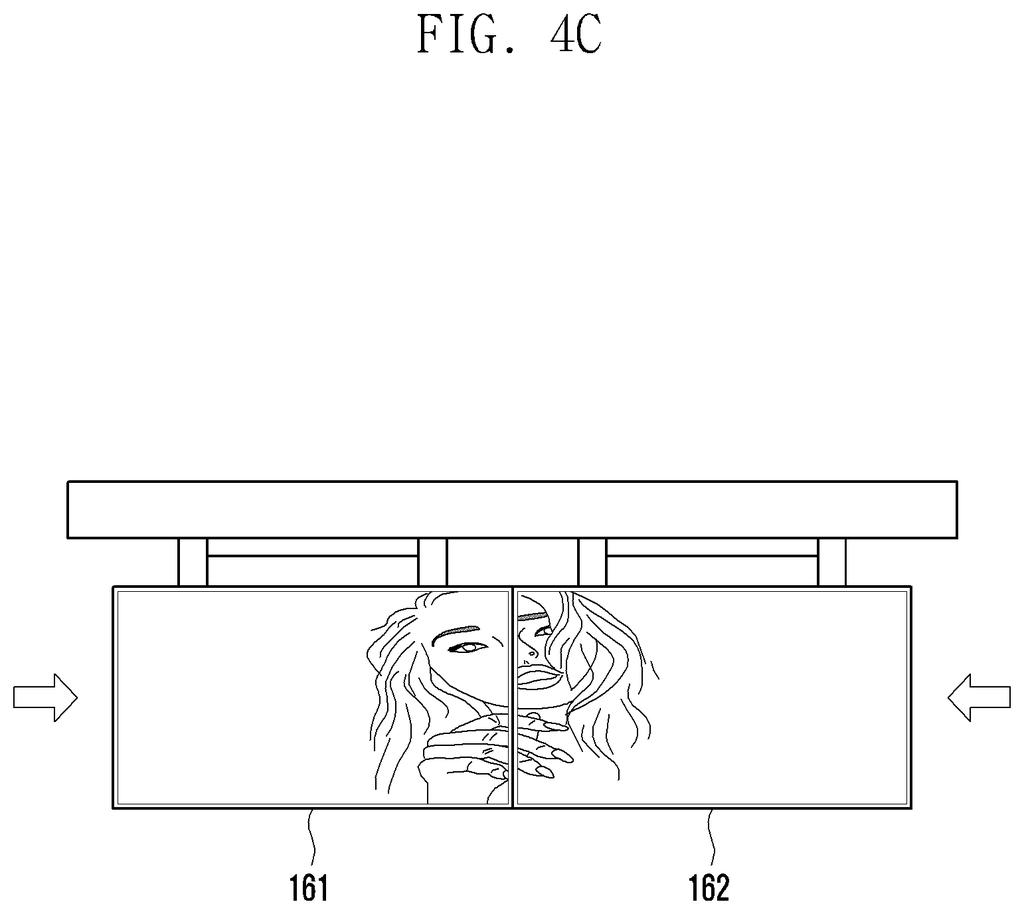
Samsung's filing describes a car where the screens can do exactly that. You pick a mode, the screens tilt to match each other, slide sideways and forward or back until their edges touch, and then they show one picture across both. If you're riding alone, the pair settles in front of you. If you have company, the pair settles somewhere you can both see it.
The filing also covers the small details: on-screen markers that show the screens lining up, and magnets that hold the edges together once they meet.
… adjust a tilt angle of one of the first display and the second display to match a tilt angle of remaining one of the first display and the second display, and move at least one of the plurality of displays such that the first display and the second display are positioned adjacent to each other on a same plane …
Translation: It angles and slides the screens together to form one flat surface for a single driver.
How the screens tilt, slide and lock together
The claims cover a device with at least two displays that start in a default state, where each display's tilt angle (how far it leans back from straight up and down) is adjusted on its own. In the description, these are ceiling-mounted screens in a vehicle, each following the seat and posture of its own passenger.
A user input switches the device into one of two shared modes. In the first mode, for a single user, one display tilts to match the other, and then at least one display moves until the two sit side by side on the same flat plane. In the second mode, for several users, both displays adjust their tilt before they move together. The filing says the two modes can end up in different places: the single-user spot is centered on one person, while the group spot is centered where the viewing areas of several people overlap.
The filing adds supporting features:
- Sensors that find where riders sit, so the device can pick a mode on its own and place the screens about 1 meter from the viewers.
- Indicators on screen, such as dots and lines, that show distance and tilt as the screens line up.
- Magnets or electromagnets on a tab-and-groove edge that hold the screens together.
- A brightness sensor that adjusts the screens to the light in the cabin.
The description also says the second rider can be asked to approve before the screens merge.
Why a bigger back-seat screen is not simple
The practical idea is a back seat that changes with the people in it. Two separate screens suit two people watching different things. One big screen suits a movie night or a shared video call. A car that can switch between the two by itself saves you from craning your neck at a half-sized picture.
The filing is about vehicles, but the same logic could apply to any room with more than one screen. Samsung makes both cars' worth of displays and living room screens, so it's an area it clearly has the parts for. The filing doesn't name any product, and a patent application is not a promise that anything will ship.
Samsung's 123rd filing we've tracked since May in our Samsung display technology work, this follows one on a glasses-free 3D screen and one on strap as screen watch.
The cost here is mechanical. Every motor, hinge and magnet that lets two screens glide together is something that can jam, rattle or wear out in a car that spends years bouncing down roads. Screens hanging from a ceiling also have to move safely around passengers' heads, and the filing says little about that.
The other cost is social. Two people sharing a merged screen have to agree on what to watch, and the filing's approval prompt for the second rider shows Samsung knows it. A shared screen that one passenger can end with a tap is an easy source of back-seat arguments.
The trade is worth it for a premium car with a lot of back-seat space. The group mode, which centers the screen between everyone's sight lines, is the most useful part. For a typical family car, though, the added moving parts probably cost more than a bigger picture is worth.
Get our take in your Top Stories
Liked this breakdown? Add Patentlyze as a preferred source on Google, and our plain-English take shows up more often in your Top Stories the next time Samsung patent news breaks.
There are more where this came from
We read every patent application Big Tech publishes and send you the ones worth knowing. Plain English, free, every week.
The drawings
31 drawing sheets from US 2026/0329345 A1 · click any drawing to enlarge


Show the other 23 sheets


Want this weekly breakdown for a company we don't cover? Patentlyze Pro →
Be the first to weigh in