
IBM Patents a Neural Network That Predicts Quantum Circuit Outputs
Running a quantum circuit is expensive and error-prone — so IBM is training a neural network to predict what a quantum computer would output, without always having to run the hardware itself.
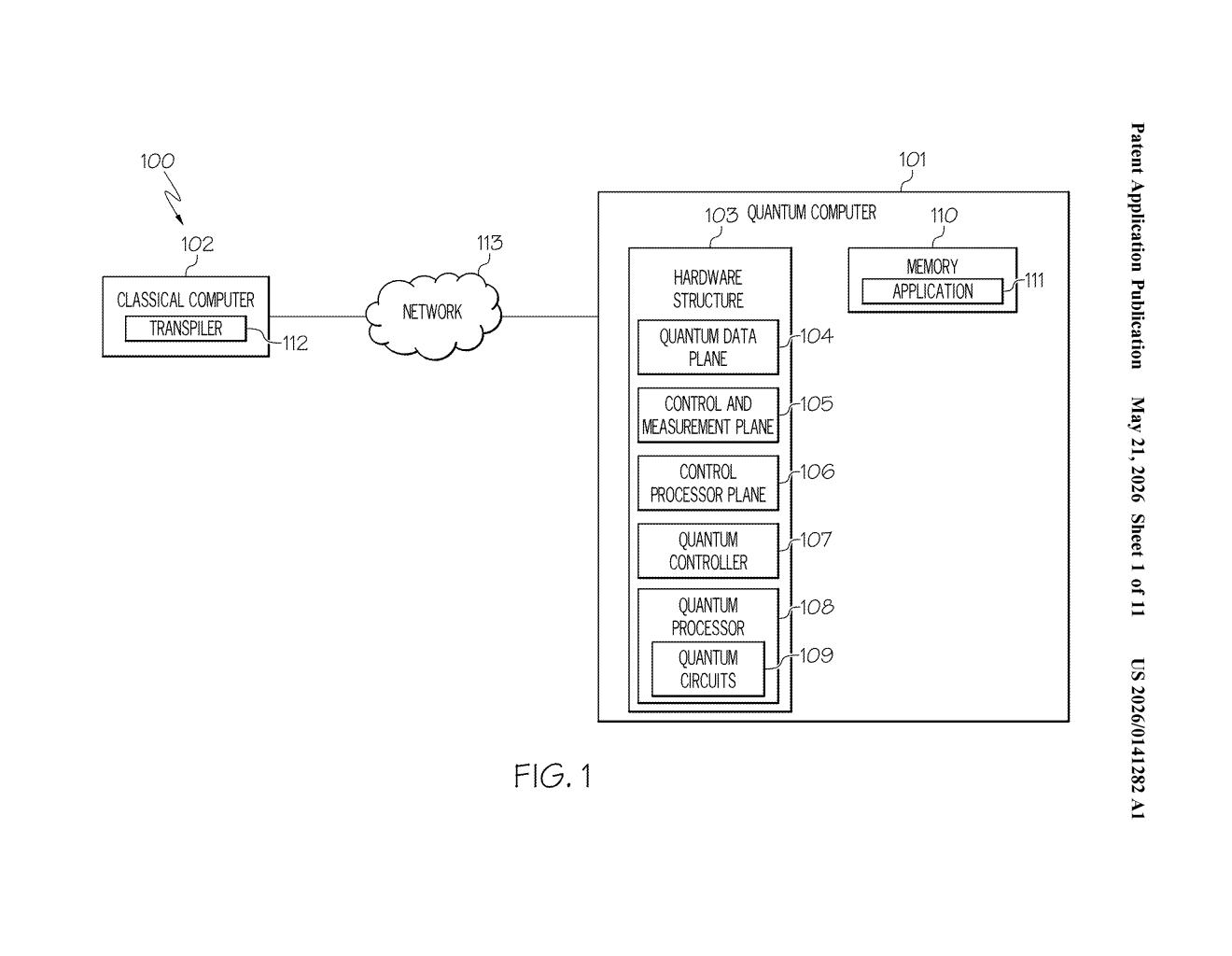
What IBM's quantum-prediction neural network actually does
Imagine you have a calculator that's incredibly powerful but also randomly makes mistakes, and every calculation costs real money to run. Now imagine training a separate AI to watch thousands of those calculations and learn to guess the answer — so you don't always have to fire up the expensive, glitchy machine. That's the core idea here.
IBM's patent describes a system where quantum circuits (the programs you run on a quantum computer) are converted into graph-shaped data structures — think of it like turning a recipe into a flowchart. Those graphs, paired with the actual outputs the quantum hardware produced, become training data for a neural network.
Once trained, that neural network can predict what a quantum computer would output for a given circuit, without necessarily running the circuit every time. IBM suggests this could let engineers simplify circuits before running them — saving time, reducing errors, and making the whole quantum workflow more practical.
How IBM models circuits as graphs to train the network
The patent describes a three-step pipeline. First, quantum circuits are modeled as graphs — each qubit (the quantum equivalent of a classical bit) becomes a node, each quantum gate (an operation applied to qubits) becomes a directed edge. The direction of the edge encodes the order of operations, preserving the circuit's logic in a format a neural network can digest.
Second, the system collects probability distributions from an actual quantum computer running those circuits. Because quantum computers are probabilistic — they don't return a single answer but a spread of possible outcomes — the output is naturally a distribution rather than a discrete value.
Third, those graph representations and their associated probability distributions become a training dataset for a neural network. The network learns the mapping between circuit structure and hardware output, including the noise characteristics of the specific quantum processor.
Once trained, the network can:
- Predict outputs for new circuits without running them on hardware
- Help engineers identify whether a circuit can be simplified or restructured
- Potentially act as a fast emulator that captures real device noise — unlike idealized simulators that ignore hardware imperfections
What this means for noisy, error-prone quantum hardware
Current quantum hardware is noisy — errors accumulate quickly, and running circuits repeatedly to gather reliable statistics is costly in time and compute. A neural network that accurately predicts those noisy outputs could serve as a hardware-aware emulator, letting researchers iterate on circuit design without burning quantum processor time on every experiment.
For IBM, which sells quantum access through its IBM Quantum cloud platform, a tool like this could improve the efficiency of every customer workload running on its systems. It's also a hedge: as quantum hardware scales up and noise profiles become more complex, classical ML models that learn those profiles could become a practical engineering tool rather than a research curiosity.
This is a pragmatic, near-term engineering patent rather than a moonshot. IBM isn't claiming quantum supremacy — it's acknowledging that today's quantum hardware is noisy and expensive to run, and applying a fairly standard graph neural network approach to work around those limitations. The idea of using ML to emulate quantum hardware noise is well-known in the research community, so the novelty here is in the specific pipeline and graph-representation method, not the broad concept. Worth tracking if you're following how classical AI is being used to patch quantum hardware's current weaknesses.
Get our take in your Top Stories
Liked this breakdown? Add Patentlyze as a preferred source on Google, and our plain-English take shows up more often in your Top Stories the next time IBM patent news breaks.
There are more where this came from
We read every patent application Big Tech publishes and send you the ones worth knowing. Plain English, free, every week.
Want this weekly breakdown for a company we don't cover? Patentlyze Pro →