
Adobe Files Patent to Speed Up AI Repair of Blurry, Noisy Photos
Zoom in on a blurry photo and you usually get mush. Adobe's new filing describes repairing it by working from several shrunken copies of the picture, which the company says makes the process faster and more faithful.
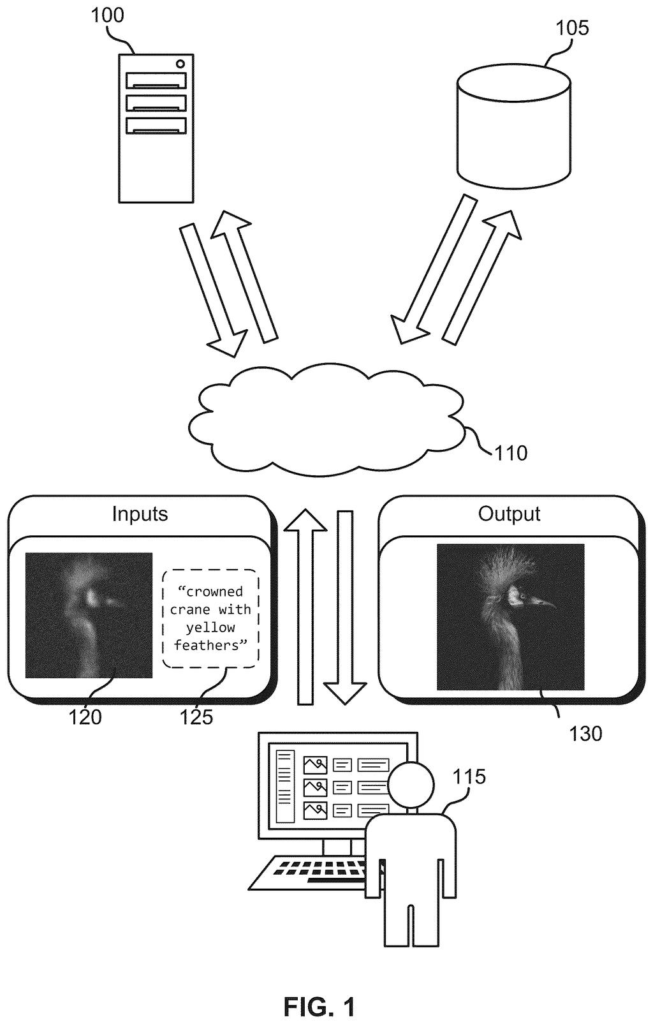
What Adobe's multi-size photo repair does
Every time you zoom in on an old family photo and it dissolves into blur and blocky speckles, you're looking at a damaged image. AI tools can guess at the missing detail, but Adobe's filing notes they can take minutes for a single picture, and they sometimes invent details that were never there.
Adobe's filing describes a different recipe. Instead of working on the full-size picture, the system makes smaller copies of it, from a medium one down to a tiny one, and boils each into a compact summary. The AI then repairs the photo from those small summaries rather than from millions of pixels.
A final step goes back to the original image to pull in fine details, which keeps the result close to what you actually shot. The same pipeline can also sharpen a small picture that was blown up and turned blurry.
… downsampling the input image to obtain a downsampled image; encoding, using an image generation model, the input image to obtain latent image features; and generating, using the image generation model, a restored image based on the downsampled image and the latent image features …
Translation: The system shrinks the photo, analyzes its hidden features, and rebuilds a clean version using both pieces of information.
How the AI rebuilds a photo from tiny copies
The filing covers an AI pipeline that takes a damaged image (blur, grain, JPEG blockiness, or a small picture stretched bigger) and produces a cleaned-up version. Claim 1 boils down to three moves: shrink the image, run the original through an encoder (a network that squeezes an image into a compact set of numbers called latent features), and generate the repaired image from both.
The main example uses three levels:
- Fine level: the full-size image becomes a 52-channel summary.
- Coarse level: a quarter-size copy becomes a 9-channel summary.
- Macro level: a copy shrunk 32 times is kept as a 3-channel image.
These are stacked into one 64-channel package, 32 times smaller in width and height than the original.
A diffusion transformer (an AI that starts from random static and removes it step by step, guided by that package) fills in the missing detail. Because it works on the small package, it has far fewer pieces to process. The filing gives a 64 by 64 map for a 2048 by 2048 image. A decoder then turns the result back into pixels, pulling fine detail straight from the original through skip connections (shortcuts that carry detail past the compression).
A method, apparatus, non-transitory computer readable medium, and system for restoring degraded images and supersampling low resolution images includes obtaining an input image containing degradation artifacts.
Translation: The software takes a damaged or low quality picture and prepares to fix its flaws.
What faster photo restoration means for editors
If you have ever tried to rescue an old scan or a heavily compressed image, you know the trade: tools either do little, or take a long time and add details that were never in your photo. The filing names both problems, slow runs and invented details, and goes after them by working on a much smaller version of the picture while still pulling fine detail from the original.
Adobe's description talks about creative workflows, and photo repair and upscaling fit right into that world. For you, success would mean fixing a blurry shot without a long wait, and getting a result that looks like your photo rather than an AI's guess. It is a patent application, so nothing here says when or whether it will ship.
That makes this Adobe's 55th filing we've tracked since May in the AI photo editing race, a group that includes applications like lip-sync style matching and scene-aware color edits.
Claim 1 is short and wide. It asks for four things: a damaged image, a smaller copy of it, an AI encoding of the original, and a repaired image made from the small copy plus that encoding. It names no shrink ratio, no diffusion model, and no number of encoders.
The 32-times squeeze and the 64-channel package appear only in the description, not in claim 1. Claim 8 asks for three sizes of the image, and a diffusion transformer shows up only in claim 16. So the broad wording covers the general recipe, and the specific engineering sits in the narrower claims.
If the wide wording survived, it would reach many different ways of fixing blurry photos. How well it would hold up is an open question, which is why the narrower claims are where the distinctive ideas live.
Get our take in your Top Stories
Liked this breakdown? Add Patentlyze as a preferred source on Google, and our plain-English take shows up more often in your Top Stories the next time Adobe patent news breaks.
There are more where this came from
We read every patent application Big Tech publishes and send you the ones worth knowing. Plain English, free, every week.
The drawings
14 drawing sheets from US 2026/0340792 A1 · click any drawing to enlarge


Show the other 6 sheets


Want this weekly breakdown for a company we don't cover? Patentlyze Pro →
Be the first to weigh in