
Google Files Patent for an Image AI That Sends Each Photo Piece to a Specialist
Google has filed a patent application for an image AI that cuts a photo into small squares and sends each square to a different specialist, so most of the model can sit idle on any one picture.
What Google's photo-patch specialists actually do
You snap a photo of your dog on a beach and an app has to work out what it's looking at. Many image AI models push every little corner of that picture through the entire model, sand and sky included, and that takes a lot of computing power.
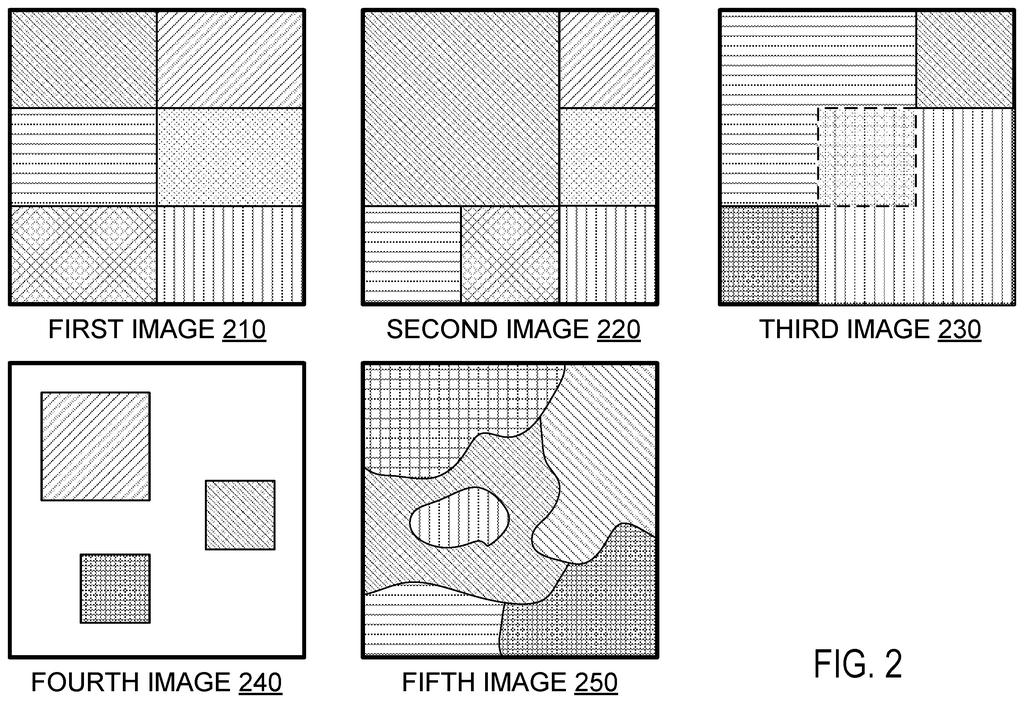
Google's filing describes a different setup. The AI cuts the image into patches (small squares of the picture), and a little router decides which of several expert modules should handle each patch. Each expert is its own chunk of the AI, and it only works on the patches sent its way. For a given photo, some experts can sit idle.
The pitch is that experts can learn to specialize in different kinds of image content, and that the whole model can grow much bigger without getting slower, since only a slice of it runs on any one image.
… assigning the respective representation of each patch to one or more respective expert modules of a plurality of expert modules of the network block …
Translation: The system routes different parts of an image to specialized mini programs designed to handle them.
How the router picks an expert for each patch
The claims cover a neural network (software that learns patterns from examples) built from a stack of blocks. In at least one block, the picture's data is already split into patches, and each patch has its own representation (a list of numbers describing that piece of the image).
Inside that block, three things happen:
- A routing subnetwork (a small helper network) gives every expert a score for each patch, and the patch goes to the expert or experts with the highest scores.
- Each chosen expert processes the patch, and its output is scaled by the routing score.
- The expert outputs are combined into a block output with the same shape as the block input, so the next block can pick up where this one left off.
The description adds training details. During training, random noise is added to the scores so every expert gets a chance to learn. Two penalties, called an importance loss and a load loss, nudge the router to spread work evenly so no single expert hogs everything. A cap can also limit how many patches any one expert handles, and the experts can run in parallel on chips like GPUs or TPUs.
The network's output can be a category (dog or cat), a measurement such as the coordinates of a box around an object, or a description of a video made from several frames.
… determining a plurality of patches of the block input or of an updated representation of the block input, wherein each patch comprises a different subset of elements …
Translation: The software chops a photo into smaller pieces so each section can be analyzed separately.
Why this matters for faster image AI on phones
The practical payoff is cheaper, faster image recognition. If only part of a model runs on each picture, the same hardware can handle more pictures, or a bigger and more capable model can run in the same amount of time. The description specifically mentions phones and tablets with limited computing power, where the amount of work per image can be dialed down after training.
For Google, which runs image AI at huge scale, efficiency gains like this lower costs and delay. The filing is a continuation of an earlier application with a 2021 priority date, and it gives no speed numbers, so how much it saves in practice is unclear.
That makes this Google's 32nd filing we've tracked since May in our AI teams working together watchlist, which already includes one on satellite map answers and one on industry-tuned ad AI families.
You will never see this as a button or a setting. What you could notice is a photo search that answers faster, or a phone that recognizes what's in a picture without draining the battery as quickly. The description names phones and tablets with limited computing power as one place the technique could run.
The filing gives no speed or accuracy numbers, so the payoff stays a promise on paper. Still, the logic is easy to follow: if a model uses only a slice of itself for each picture, the same hardware can do more.
The failure this could prevent is the lag you feel when image AI is too heavy to run quickly. Expect it to matter more to Google's server bills than to your daily routine, but the effects can still reach your camera roll.
Get our take in your Top Stories
Liked this breakdown? Add Patentlyze as a preferred source on Google, and our plain-English take shows up more often in your Top Stories the next time Google patent news breaks.
There are more where this came from
We read every patent application Big Tech publishes and send you the ones worth knowing. Plain English, free, every week.
The drawings
4 drawing sheets from US 2026/0340783 A1 · click any drawing to enlarge


Want this weekly breakdown for a company we don't cover? Patentlyze Pro →
Be the first to weigh in