
Adobe Patents a Condition-Map System for Controlling AI Image Structure
Adobe is patenting a way to give AI image generators a spatial blueprint — a 'condition map' — so the model produces images that match a specific layout or structure, not just a text description. It's the difference between asking for 'a cityscape' and handing the model a rough sketch of exactly where the buildings should go.
What Adobe's condition-map image control actually does
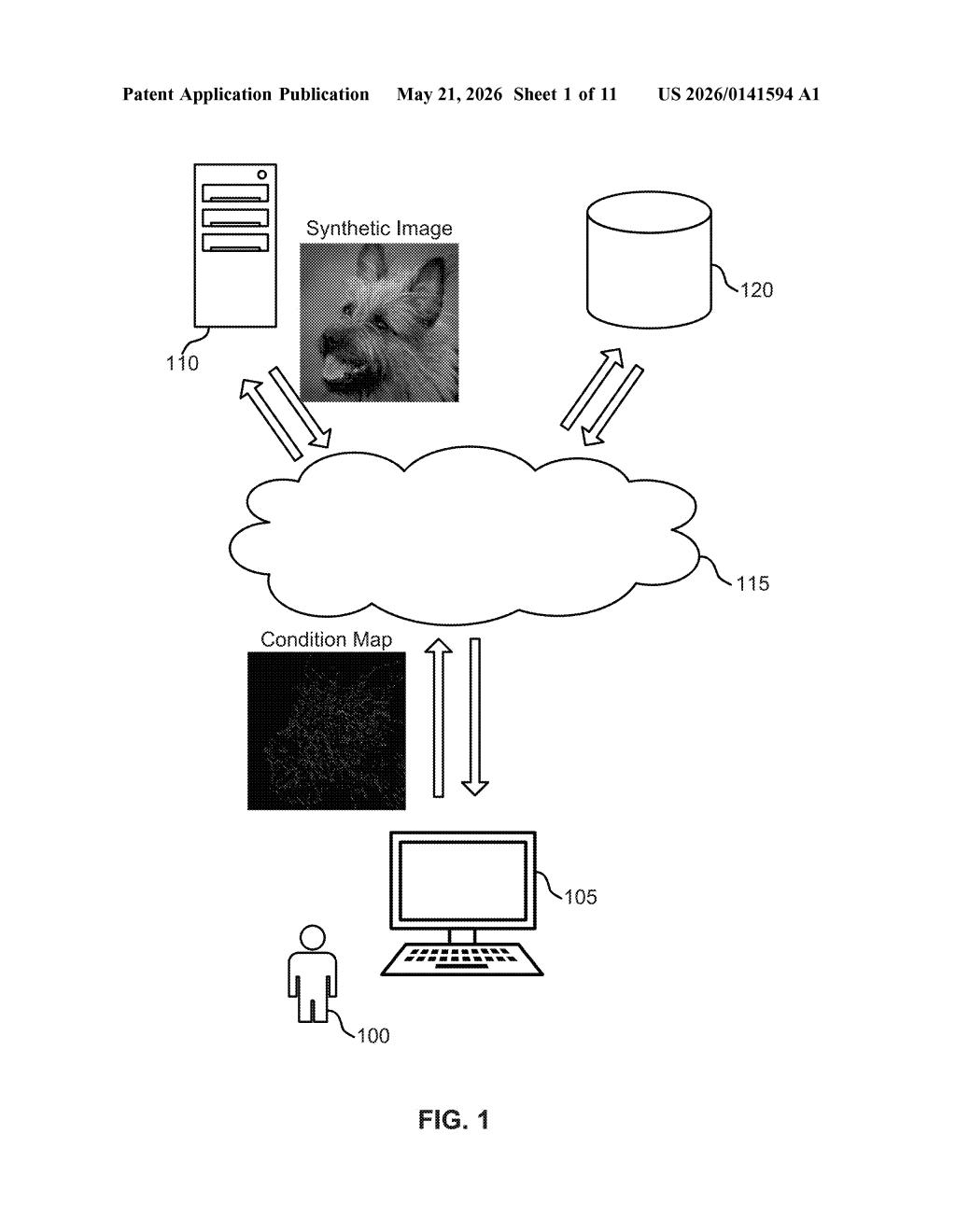
Imagine you're designing a magazine spread and you need an AI-generated photo that fits a very specific layout — sky in the top third, a figure on the left, open space on the right. Just typing a text prompt rarely gets you there reliably. Adobe's patent describes a system that lets you feed the AI a condition map — a spatial diagram of where things should appear in the final image — and the model actually follows it.
Instead of hoping a text prompt nudges the AI in the right direction, you provide a structured guide that encodes your intended image layout. The AI generation model reads that guide, converts it into a sequence of tokens (think of tokens as the building blocks the model works with), and uses them to steer the output image toward your intended structure.
For creative professionals, this is about predictability and control. You're not rolling the dice on a prompt — you're giving the system a map and saying, 'make something that looks like this arrangement, but filled in with real imagery.'
How the condition encoder guides Adobe's transformer output
The patent describes a pipeline with three core stages working together inside a transformer-based image generation model.
- Condition map input: The user or system provides a spatial representation of a target image structure — essentially a layout map that encodes where objects, regions, or compositional elements should appear. Think of it like a wireframe or a rough segmentation mask.
- Condition encoder: A dedicated encoder module converts that condition map into a condition sequence of tokens — a representation the transformer can actually process alongside other inputs. This is the key architectural addition: rather than just appending a text description, the model gets a spatially-aware token sequence that captures layout information.
- Transformer generation: The transformer (the main generative engine) takes both the condition sequence and a preliminary sequence of tokens drawn from a discrete codebook — a fixed vocabulary of visual building blocks — and generates an output token sequence. The discrete codebook approach is similar to what's used in VQ-VAE and VQGAN architectures, where images are represented as sequences of discrete codes rather than raw pixels.
- Decoder output: A decoder converts the output token sequence back into a full synthetic image that reflects the spatial structure specified in the original condition map.
The result is a generative model that respects compositional intent, not just semantic content.
What this means for Firefly's generative layout tools
For anyone using Adobe Firefly or similar generative tools in a professional design workflow, structural control over AI outputs is one of the biggest unsolved pain points. Text prompts are powerful but imprecise — they can generate beautiful images that still land in completely wrong compositions. A condition-map approach would let designers, art directors, and content creators specify layout constraints up front, dramatically reducing iteration cycles.
This also positions Adobe to compete more directly with ControlNet-style conditioning (popularized in the open-source Stable Diffusion ecosystem), but applied to transformer-based architectures like the ones Firefly runs on. If this ships in a product, it could make generative fill and text-to-image tools significantly more useful for production-grade creative work rather than just exploration.
This is a genuinely useful patent that addresses a real workflow problem, not just a theoretical capability. Structural control over generative image output is something designers have been patching together with workarounds for years, and Adobe building it natively into a transformer architecture is a logical and practical move. The interesting signal here is that Adobe is investing in the infrastructure layer of creative control, not just surface-level prompt features.
Get our take in your Top Stories
Liked this breakdown? Add Patentlyze as a preferred source on Google, and our plain-English take shows up more often in your Top Stories the next time Adobe patent news breaks.
There are more where this came from
We read every patent application Big Tech publishes and send you the ones worth knowing. Plain English, free, every week.
Want this weekly breakdown for a company we don't cover? Patentlyze Pro →