
Apple Files Patent for a Phone Camera Hidden Behind the Screen
Your phone's front camera is one of the last things breaking up a clean screen. This Apple patent filing hides it behind the display itself, where the pixels thin out just enough for light to get through.
What Apple's see-through camera spot actually does
Today, anything a phone needs to see or sense with, like a camera, a flash or a fingerprint reader, takes up room on the front, and all those little openings can make a device look cluttered. Apple's filing tries to clear that out by putting the camera behind the screen.
The camera looks out through the display's own pixels (the tiny lights that make up the picture). To let enough light through, the screen has fewer pixels, spaced farther apart, in the patch right over the lens. A layer of printed color sits underneath and has a hole lined up with the camera.
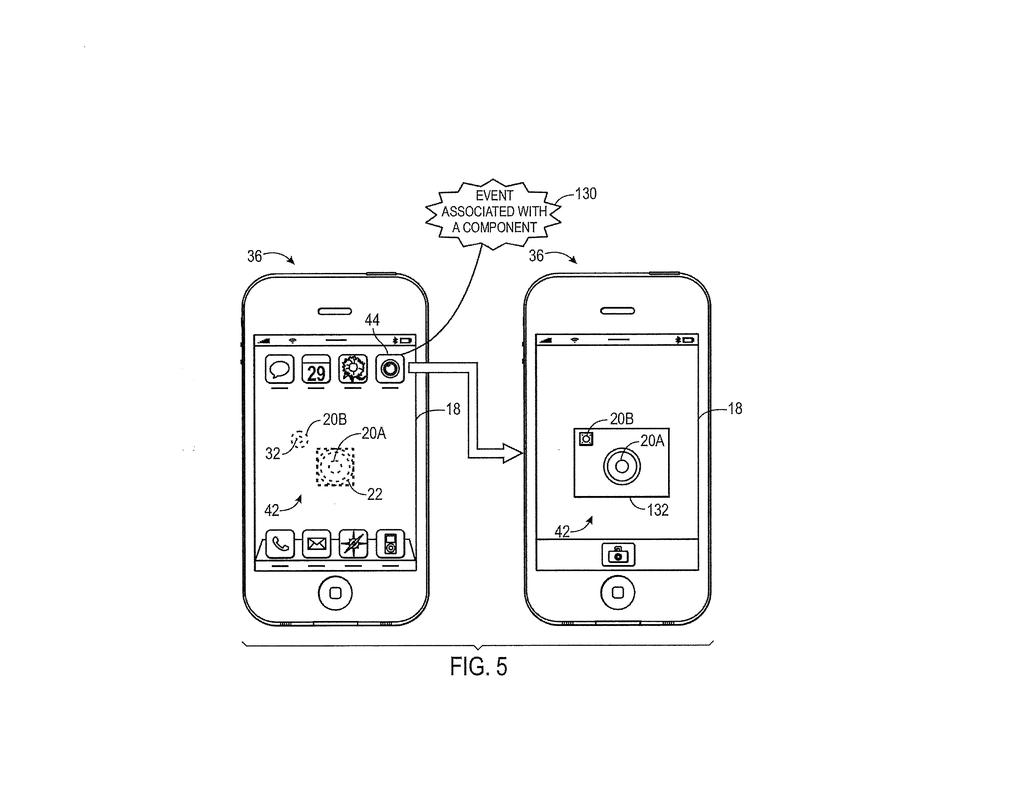
The filing also describes a trick. When you open the camera app, the screen goes dark over that spot so the camera shows up, and when you close the app, the picture covers it again.
… a camera configured to capture images of a user through the array of organic light-emitting diode pixels; and a printed layer having an opening aligned with the camera to allow light to reach the camera through the opening.
Translation: The camera sits under the glowing screen and peers out through a tiny hole in an internal printed layer.
How fewer pixels let light reach the lens
The filing covers a phone-style device with an OLED display (a screen where each tiny pixel makes its own light) and a camera tucked behind it that takes pictures of the user through the pixels. The three independent claims describe the same basic stack in slightly different ways.
- Thinner pixels over the camera: the pixels are spaced farther apart, or packed less densely, in the region over the lens. That leaves gaps where light can pass. The description says pixels may be about 85% transparent, so fewer of them means a clearer path.
- A printed layer with a hole: a layer of solid color sits behind the display, with an opening lined up with the camera so light can reach it.
- Pixels switched off: the camera can capture images while some pixels are turned off, for example when a camera app is launched.
The longer description goes further. It imagines a flash, a fingerprint reader, a light sensor or even a printed logo hiding behind the screen. While the display shows a normal picture over them, they stay invisible. The processor creates a black spot (an area where pixels stop emitting light) to reveal one when needed. It also mentions cutting away part of the polarizer (a layer that cuts glare) over the camera, and leaving some areas, such as corners, with no pixels at all.
… the electronic device includes data processing circuitry configured to determine when an event requesting that the component be exposed occurs.
Translation: Smart software decides the exact moment the screen needs to clear a path so the hidden camera can see you.
Why Apple's hidden camera frees up screen space
If it works, your phone's front could hold more screen and fewer visible holes. The filing says moving parts under the display frees up surface space, which can go to a larger display or a smaller device, and it makes the phone look cleaner because nothing sits on the front until it's in use.
The document admits a trade-off: fewer pixels over the camera means lower resolution in that patch. The filing is also a continuation of an application first filed in 2011, so the idea of hiding parts behind a screen has been in this family of filings for years. Whether any phone ships with it depends on how clean the pictures look through the panel.
Apple's 56th filing we've tracked in our cell phone coverage since May follows one on tap-sensitive camera holes and one on coin-sensing wireless charging.
The camera piece is the closest part of this filing to something a factory could build. Most of what the claims cover is physical: an OLED panel, a patch of thinner pixels over the lens, and a printed color layer with a hole cut into it. That is a change to how the display is made, and phone software plays a small role.
So this is a hardware project first. A phone maker needs a display supplier to produce the special panel, and the camera has to take clean pictures through all that glass and circuitry. The filing says little about image quality, so that part stays an open question.
The shortest route to a product is the simple version: one small see-through patch over the selfie camera, with the rest of the screen left alone. The fancier ideas in the description, like a flash or fingerprint reader that appears on demand, need much more to exist first.
Get our take in your Top Stories
Liked this breakdown? Add Patentlyze as a preferred source on Google, and our plain-English take shows up more often in your Top Stories the next time Apple patent news breaks.
There are more where this came from
We read every patent application Big Tech publishes and send you the ones worth knowing. Plain English, free, every week.
The drawings
7 drawing sheets from US 2026/0360308 A1 · click any drawing to enlarge


Want this weekly breakdown for a company we don't cover? Patentlyze Pro →
Be the first to weigh in