
Apple
Apple · AR / VR · Filed Jul 21, 2026 · USPTO published Nov 12, 2026 · This week's release
Apple Files Patent for Virtual TVs That Cast Colored Light on Your Real Walls
A virtual TV in a headset usually looks pasted onto your room. Apple's filing has it tint your real walls and furniture in the colors of whatever is playing.
- Publication number
- US 2026/0360075 A1(US20260360075A1)
- Applicant
- Apple Inc.
- Filed · Published
- Jul 21, 2026 · Nov 12, 2026
- Inventors
- Stuart M Pomerantz
- Status when we published
- Waiting for an examiner
- Document
- 20 claims
- US classification
- 345/426
- Parent application
- Continuation of 18/623,308 (filed Apr 1, 2024)(18623308)
What Apple's virtual TV glow actually does
Ever noticed how a real TV in a dark room splashes blue and orange across the walls, the couch, and the floor? A virtual TV floating in a headset normally doesn't do that. It just sits there, looking stuck onto the room.
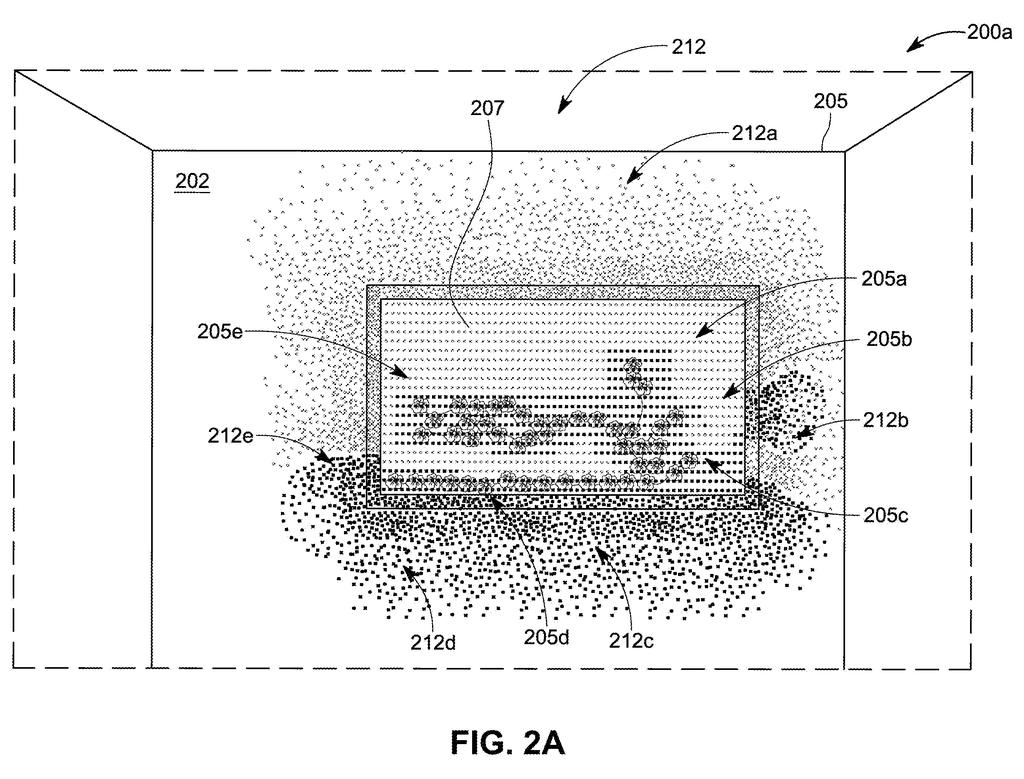
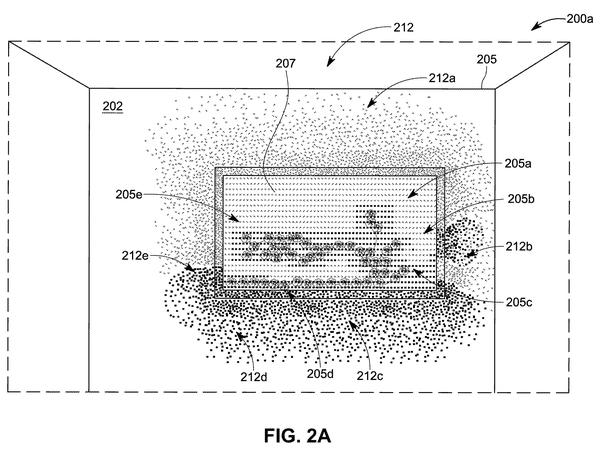
Apple's filing describes a fix. The headset looks at what's on the virtual screen, boils it down to a blurry average color (or one color for the left side and another for the right), and tints the real walls and furniture next to the screen to match. If the movie cuts to a sunny beach, your wall warms up. If it cuts to a night scene, things dim.
The work is done by dedicated chip circuitry that handles every camera frame on its way to the display, so the glow keeps up with your head movement and the picture.
… generating augmented reality video for the display by blending the pass-through video with the virtual content and by modifying at least one portion of the pass-through video with the calculated display attribute from the virtual content.
Translation: The headset mixes camera footage with computer graphics and alters the real video using data derived from the virtual light.
How the headset picks a color for the glow
The headset's outward-facing cameras capture live video of your room (called pass-through video) and show it on the displays in front of your eyes. The patent adds a virtual object that gives off light, such as a virtual movie screen or TV, and makes it light up the room around it.
For each video frame, the device does the following:
- Produces the matching frame of virtual content, meaning what's on the virtual screen.
- Shrinks that frame to a tiny, blurred copy (the description gives 16x16 pixels as an example) and picks a dominant color, or one color for the left side and one for the right.
- Blends the virtual screen into the camera frame using alpha blending (a standard way of mixing two images by setting how see-through each pixel is).
- Tints, dims, or brightens nearby parts of the camera image using that color.
The glow is strongest right next to the screen and fades with distance in the image. Because it works on flat pixels, the device never has to calculate 3D light rays. The description says the blending runs on dedicated circuitry (an ASIC, a chip built for one job) wired between camera and display, at more than 60 frames per second, with less than one frame of delay (under 11 milliseconds at 90 fps).
The filing also mentions virtual lamps and other glowing 3D objects, AI-made effects that ignore real physics (like light pulsing with music), and a room-scan mesh to improve the lighting.
What a glowing virtual screen means for headsets
If you watch movies in a headset, a virtual screen that colors the room around it could make the scene feel less like a sticker on top of your living room. A bright explosion could light up the wall beside the screen, the way a real TV would. Because the effect runs on dedicated circuitry between the cameras and the displays, it can keep pace with fast head movement without slowing the picture.
For Apple, it fits the job of making virtual things feel like they belong in your space. The filing also describes the effect working with photo and web browser windows, and even a playful effect timed to music. The shortcut matters too: working on flat image pixels instead of simulating 3D light rays means fewer resources spent on lighting.
Apple's 131st filing we've tracked since May on our Apple AR glasses watchlist follows one floating video above a laptop and one nudging headphone wearers with another layer of the picture.
Source: US 2026/0360075 A1 at the USPTO (PDF). Full patent text and figures are in the official publication.
Get our take in your Top Stories
Liked this breakdown? Add Patentlyze as a preferred source on Google, and our plain-English take shows up more often in your Top Stories the next time Apple patent news breaks.
Add Patentlyze on Google
One click.
There are more where this came from
We read every patent application Big Tech publishes and send you the ones worth knowing. Plain English, free, every week.
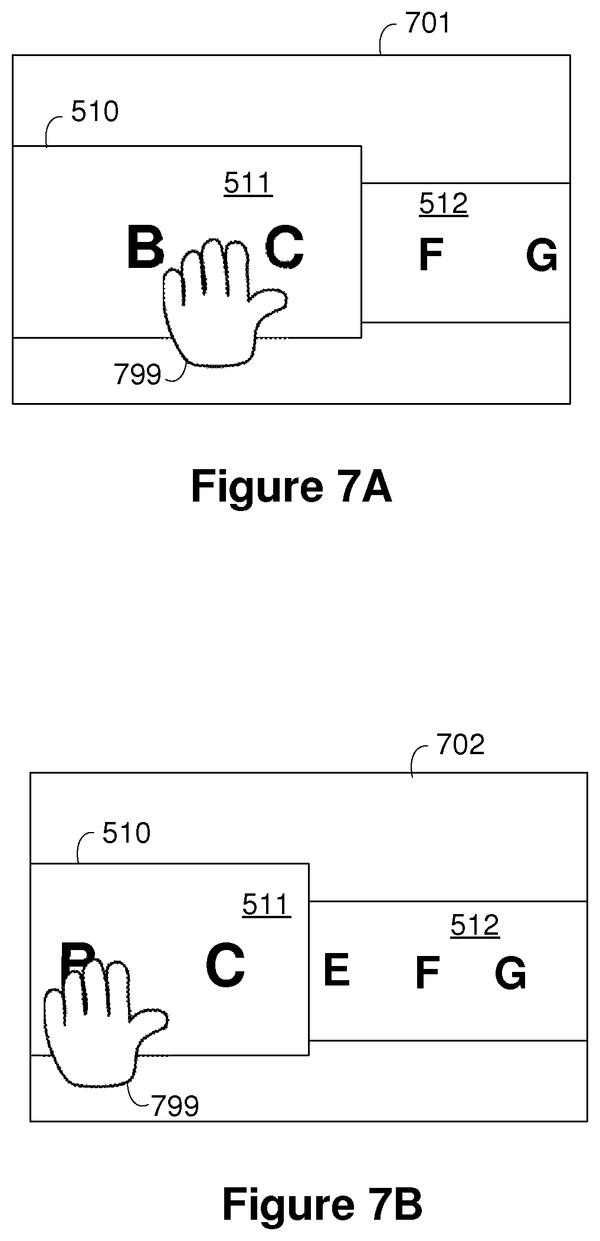
The drawings · 6 sheets
6 drawing sheets from US 2026/0360075 A1 · click any drawing to enlarge


More from Apple
All 672 Apple patents →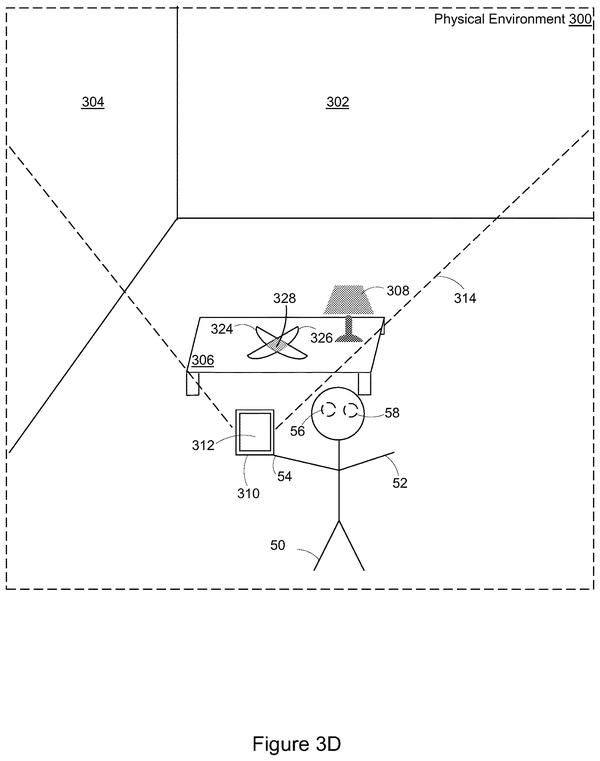
More in AR / VR
All 690 AR / VR patents →
Apple
Apple Files Patent for a Headset Forehead Pad That Slides to Fit Your Face
Apple
Apple Files Patent to Brighten Headset Displays With Two Overlapping Patterns in the Lens
Apple
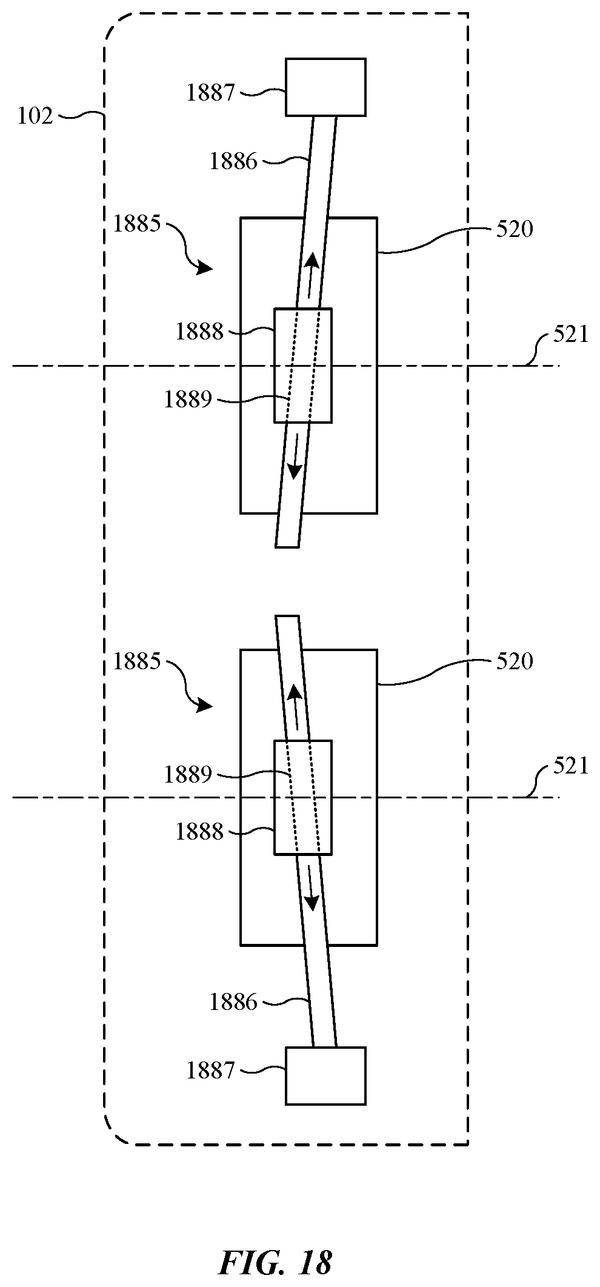
Apple Files Patent for a Headset That Senses When Its Own Frame Bends
Apple
No comments yet