
Apple
Apple · Camera · Filed Apr 29, 2026 · USPTO published Nov 12, 2026 · This week's release
Apple Files Patent for Headphones That Click You Toward Whatever They Need to See
Apple has filed a patent application for camera-equipped headphones that steer your head toward an object using nothing but clicks. When the camera finally has a good shot, a different sound tells you it worked.
- Publication number
- US 2026/0361995 A1(US20260361995A1)
- Applicant
- Apple Inc.
- Filed · Published
- Apr 29, 2026 · Nov 12, 2026
- Inventors
- Manuel C. CLEMENT
- Status when we published
- Waiting for an examiner
- Document
- 24 claims
- US classification
- 348/61
- Parent application
- Claims priority from a provisional application 63802922 (filed May 9, 2025)
What Apple's camera headphones do with clicks
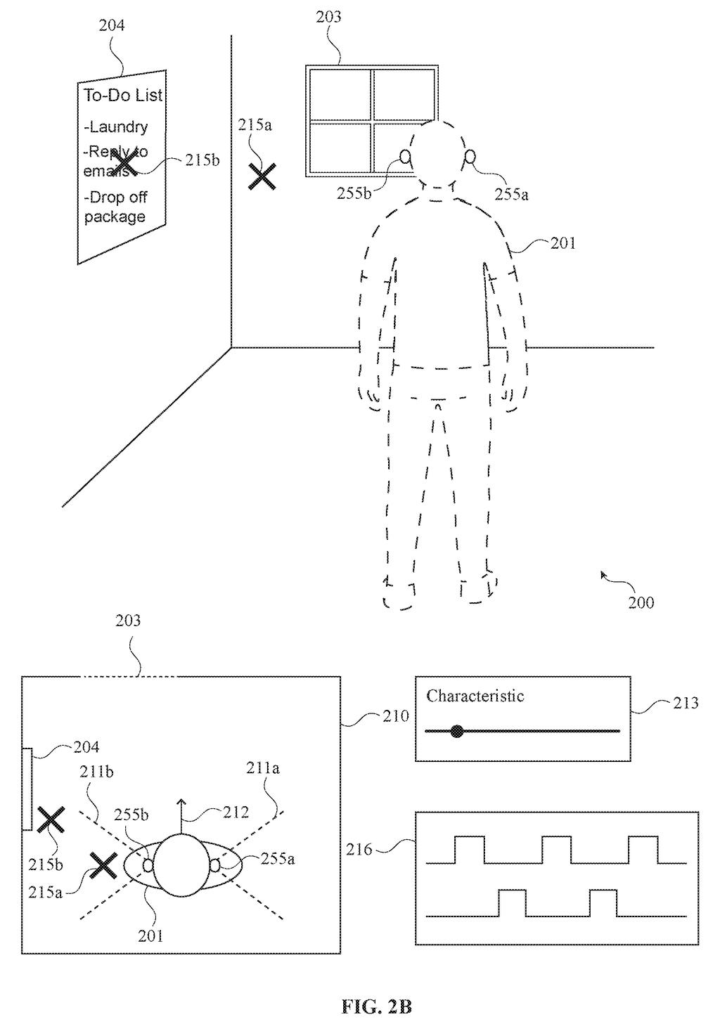
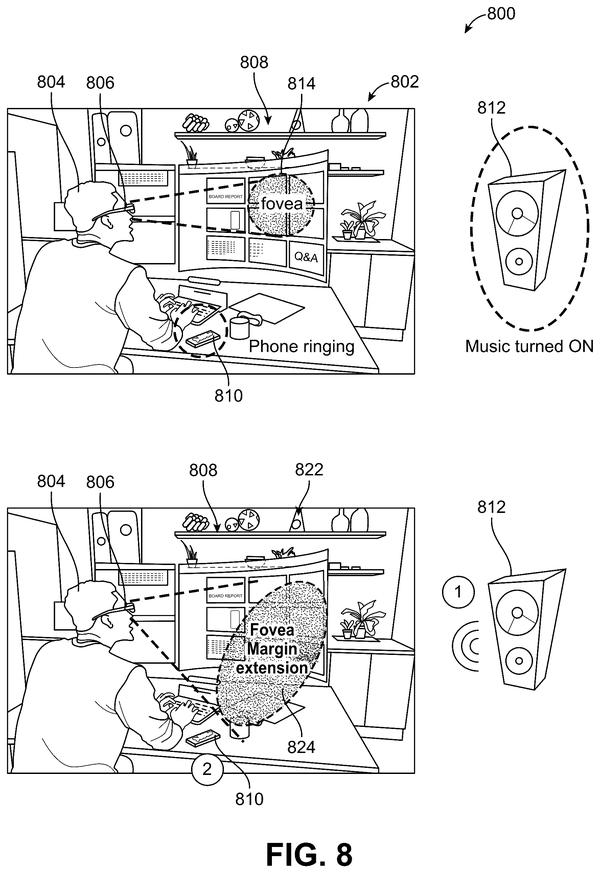
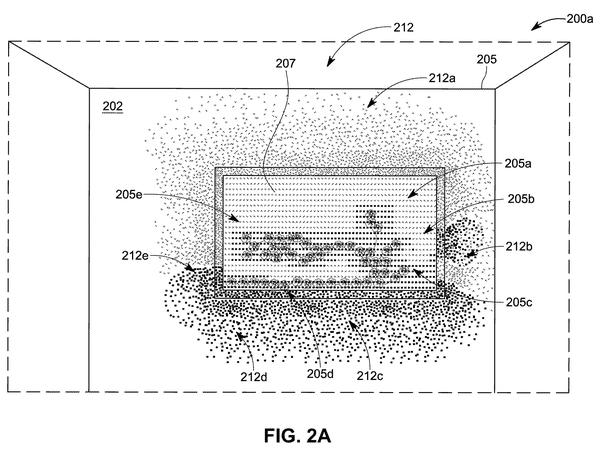
A man wearing headphones with built-in cameras asks, "What's on my to-do list?" The list is taped to the wall on his left, but the cameras are pointed at a window. The headphones can't read what they can't see, and there's no screen to check.
Apple's patent application describes a fix that works entirely through your ears. The headphones play a pair of clicks, and one of them sounds like it comes from where the list is hanging. As you turn your head, the rhythm of the clicks changes, a bit like a game of hot and cold.
Once the camera has a good look, you hear a different sound, such as a ding. Then the device gets to work, for example by reading the list aloud or copying it to your phone.
… provides a first prompt to guide the user to adjust the input device's orientation toward the object. In some examples, if the one or more first criteria are met, a second prompt is issued, confirming that the input device is correctly directed at the object …
Translation: It gives you directions to line up your view and then confirms when you have hit the target.
How the clicks steer your head toward an object
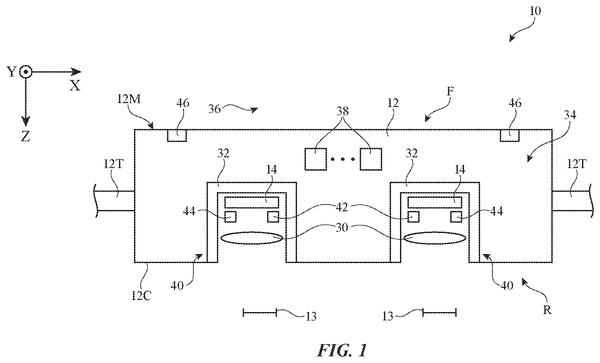
The filing covers a wearable device, such as earbuds, glasses or headphones, with a camera, a speaker and a processor. It takes a picture and checks whether the object you asked about is captured well enough to act on. The patent calls these tests "criteria," and one example is that the whole object is in the frame. The device answers with sound either way.
If the shot falls short, it plays a first prompt. In the main example that is a pair of alternating clicks placed with spatial audio (sound processed so it seems to come from a particular spot in the room). One click seems to come from the object, and the other from the direction the camera is facing. You turn until the two line up. The spacing and loudness of the clicks shift as you get closer, and shift the other way if you turn away.
The filing also describes several variations:
- If the object is outside every camera's view, the device guides you through a full scan in a preset motion.
- If hair or a hat blocks one side's camera, it picks the less obstructed camera and steers you to use that one.
- When the shot is good, a second, distinct sound plays, such as a ding, a bell or a shutter noise.
The action that follows can be reading text aloud, saving a calendar date, playing a song tied to a movie poster, or opening a QR code's website. Some of the work can happen on a paired phone.
Why hands-free aiming matters for Apple's wearables
Phones need your eyes and a free hand. This patent application describes a way to ask for something out loud, hear where to turn, and get a result, all from a device in your ears or on your face. That could help when your hands are full and you want a note read or a date saved.
The filing names earbuds, glasses and headphones as possible hosts for the idea. Whether Apple ever ships anything like it is unknown. Still, the problem it addresses applies to any wearable camera without a screen: you can't tell what it sees. Audio cues are one way to close that gap.
Apple files its 129th application we've tracked on AR glasses work since May, adding to earlier applications like eye sharpness calibration and fixing virtual objects in place.
Source: US 2026/0361995 A1 at the USPTO (PDF). Full patent text and figures are in the official publication.
Get our take in your Top Stories
Liked this breakdown? Add Patentlyze as a preferred source on Google, and our plain-English take shows up more often in your Top Stories the next time Apple patent news breaks.
Add Patentlyze on Google
One click.
There are more where this came from
We read every patent application Big Tech publishes and send you the ones worth knowing. Plain English, free, every week.
The drawings · 10 sheets
10 drawing sheets from US 2026/0361995 A1 · click any drawing to enlarge


Show the other 2 sheets



No comments yet