
Apple
Apple · AR / VR · Filed Jul 20, 2026 · USPTO published Nov 12, 2026 · This week's release
Apple Patents a Fix for Virtual Hands That Jump Between Headset Cameras
When your hand slides from one camera's view into another's, a headset can disagree with itself about where that hand is. Apple's patent application tries to hide that disagreement.
- Publication number
- US 2026/0360010 A1(US20260360010A1)
- Applicant
- Apple Inc.
- Filed · Published
- Jul 20, 2026 · Nov 12, 2026
- Inventors
- Dror Irony, Ariel Landau, Jonathan B. Marsden
- Status when we published
- Waiting for an examiner
- Document
- 20 claims
- US classification
- 382/103
- Parent application
- Continuation of 18/678,997 (filed May 30, 2024)(18678997)
What Apple's camera handoff patent actually does
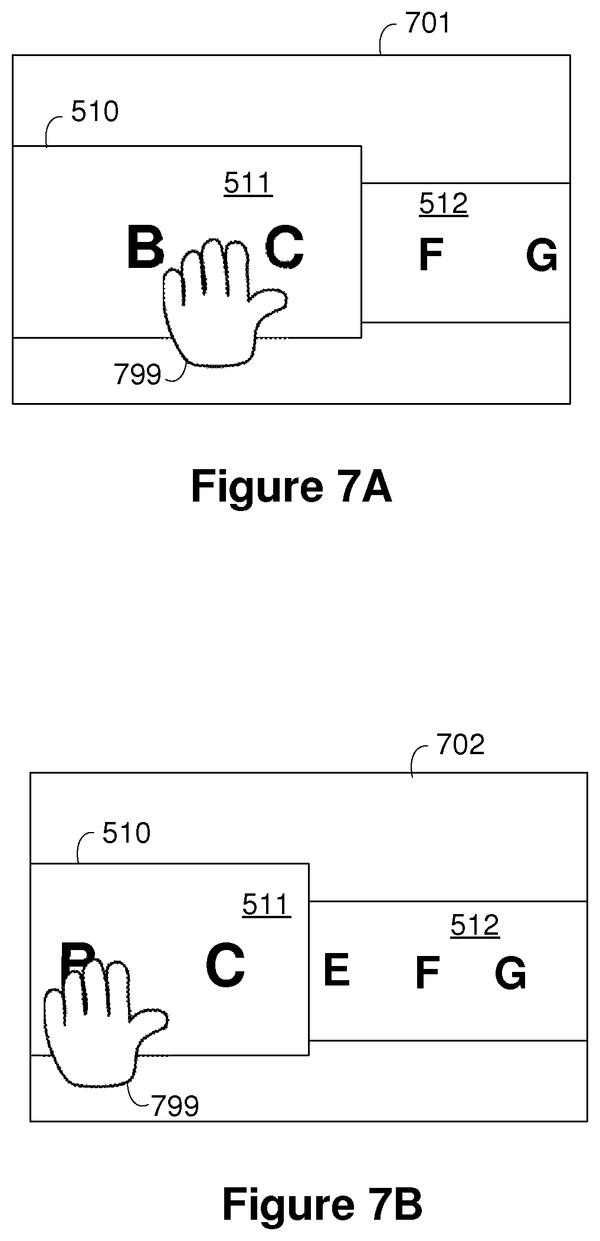
A headset has several cameras, and each one covers a different slice of the room. Your hand drifts from one slice into another as you gesture, and each pair of cameras reports a slightly different spot for it.
That's a problem if a digital copy of your hand is on screen. When tracking switches from one camera pair to the other, the virtual hand can jump a little, like a video that skips a frame. Apple's patent application is about hiding that skip.
The idea: while both camera pairs can see your hand, the device measures how far apart their guesses are. It trusts the main pair, then uses the measured gap to nudge the other pair's readings into line. Your hand glides instead of snapping, and the fingers keep their shape.
… maintaining use of the first position as a position used to track the object based on the object having been previously detected in the first FOV while outside the second FOV.
Translation: The headset sticks with the camera that saw your hand first to prevent the virtual hand from suddenly jumping.
How the headset blends two cameras' views of a hand
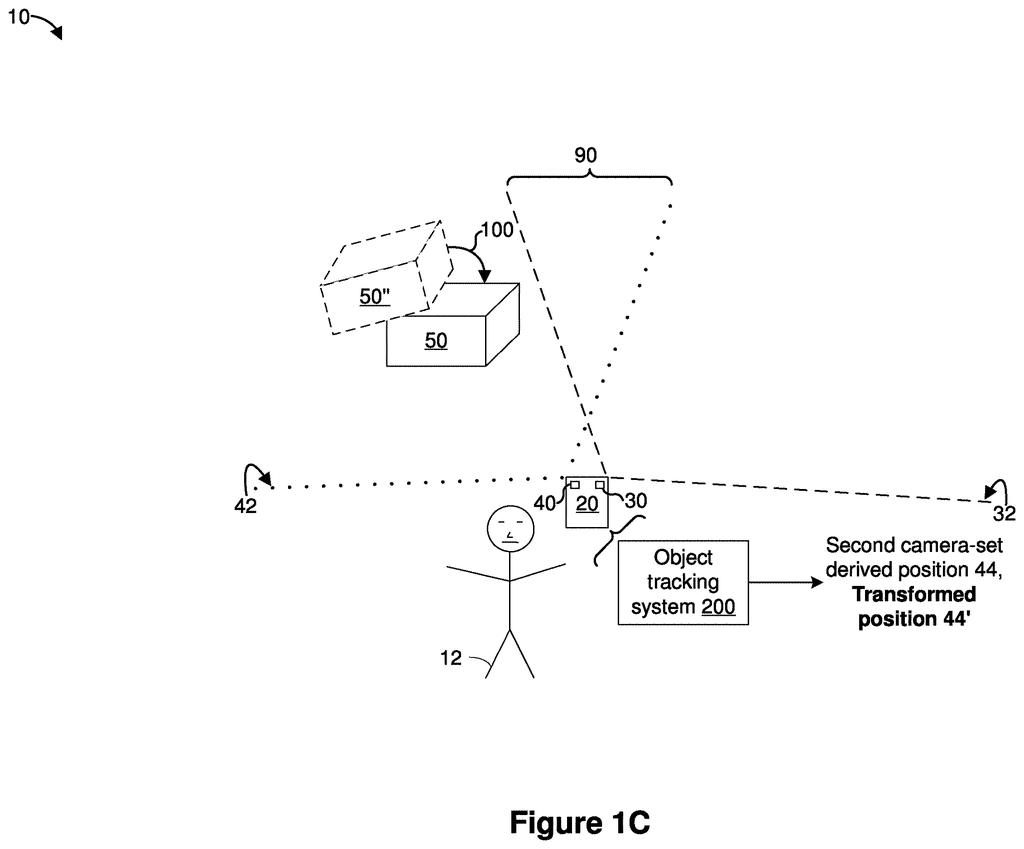
The device has several image sensors grouped into pairs that work as stereo cameras (two lenses that together judge depth, like your two eyes). Each pair has its own field of view, the area it can see. In the filing, the main pair covers what you see looking straight ahead, and a narrower pair covers part of your side vision. Two pairs can even share one camera.
When a tracked object, such as a hand, sits where both fields of view overlap, the device works out a position from each pair. The main claim says it keeps using the position from the pair that saw the object first. A dependent claim gives that position more weight, and the other reading can be thrown out.
While the object is in the overlap, the device also measures the gap between the two positions as a rigid transformation (a shift and a turn applied to the whole object, so a curled hand stays curled). Once the hand leaves the main view, the device applies that stored correction to the side cameras' readings. When the hand returns, a reverse correction fades out over a short time, so there is no snap back.
The correction can be calculated only from points the system is confident about, then applied to every point. One claim applies it only to hand joints above a confidence threshold. The filing names standard math methods (Procrustes and Kabsch-Umeyama) for the calculation.
Why jumpy hands matter for Apple's headset avatars
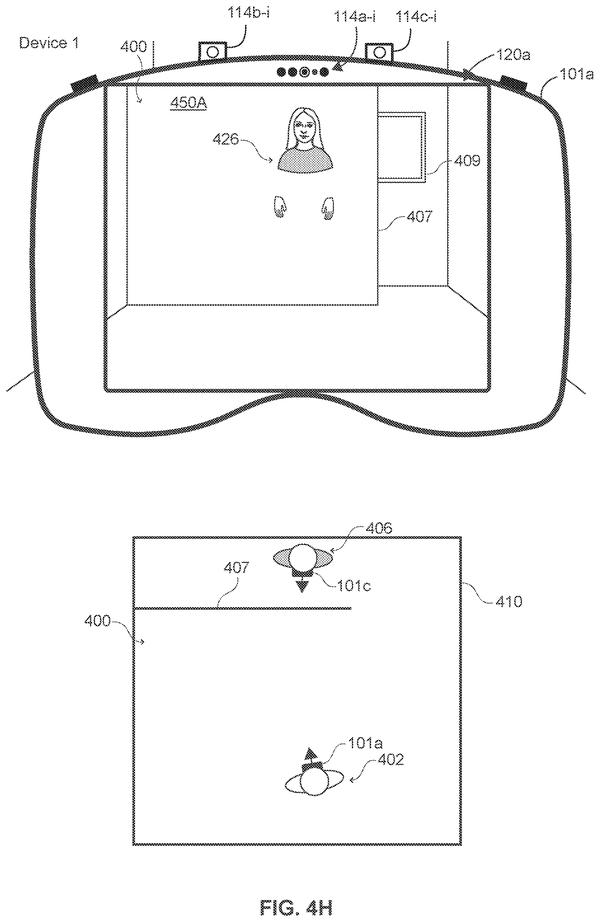
If you use a headset, your hands are the controls and, in some cases, your body language. The filing's own example is you wearing the device while talking face-to-face with someone, with your avatar's virtual hands copying your gestures. A hand that hops sideways whenever it crosses a camera boundary would make that avatar look glitchy.
The fix works from the cameras the device already has, using a correction measured on the fly. The filing also says hand tracking data, including the applied corrections, could be sent to a second person's device. For you, the best outcome is that nothing visible happens: your hands just look like hands.
Apple filed its 132nd application we've tracked in our AR glasses watch since May, adding to earlier work like colored light on real walls and video floating above a laptop.
Source: US 2026/0360010 A1 at the USPTO (PDF). Full patent text and figures are in the official publication.
Get our take in your Top Stories
Liked this breakdown? Add Patentlyze as a preferred source on Google, and our plain-English take shows up more often in your Top Stories the next time Apple patent news breaks.
Add Patentlyze on Google
One click.
There are more where this came from
We read every patent application Big Tech publishes and send you the ones worth knowing. Plain English, free, every week.
The drawings · 7 sheets
7 drawing sheets from US 2026/0360010 A1 · click any drawing to enlarge


More from Apple
All 672 Apple patents →
More in AR / VR
All 690 AR / VR patents →
Apple
Apple Files Patent for Headset Graphics That Sharpen Only Where Both Eyes Look
Apple
Apple Files Patent for a Headset That Senses When Its Own Frame Bends
Apple
Apple Files Patent for a Headset That Leaves Its Computer in Your Pocket
Apple
No comments yet